
ChatGPT prompts for real estate agents work or fail based on one thing: how much specific detail you actually give it before you hit send.
What's Inside

ChatGPT prompts for real estate agents can turn a 30-minute listing description into a 5-minute task, but only if the prompt itself carries real property details instead of a generic request. This complements the broader AI content overview in AI for real estate with copy-paste-ready templates and the compliance guardrails to use alongside them.
Quick honesty note
This is education and practical templates, not legal advice. Always review AI-generated content before publishing, and confirm current disclosure requirements with your broker and local MLS, since these rules are evolving and vary by state.
The Short Answer
The One Principle That Fixes Bad Output
A generic prompt like "write a listing description for a 3-bedroom home" produces exactly what it sounds like: generic, forgettable output. A prompt that includes the property's specific features, the neighborhood name, the target buyer profile, and the desired tone produces something you can actually send or post. Every model, ChatGPT, Claude, or otherwise, responds to the quality of the instruction it receives, not just the request itself.
Before and after
Generic (weak): "Write a listing description for a 3-bed house."
Specific (works): "Write a 3-sentence MLS hook for a 4BR/3BA colonial in Westfield, walk to train, new kitchen, backyard backs to a quiet alley with a detached 2-car garage. Target buyer is a growing family who wants walkability and good schools. Warm, confident tone, open with an emotional hook, not a generic description."
Listing Description Prompts
Copy and customize
Rewrite for a different audience
Social Media Prompts
A week of captions from one listing
A content calendar
Email Prompts
Open house invite
Price reduction, framed positively
Under-contract congratulations
Rewriting One Listing for Different Buyers
One of the more efficient uses of ChatGPT is generating multiple versions of the same property for different audiences rather than writing each from scratch. Feed it the same base facts once, then ask for the first-time buyer version, the downsizer version, and the investor version separately, each one emphasizing different features and using language suited to that buyer's actual priorities.
The Fair Housing Trap Most Agents Miss
ChatGPT doesn't know the Fair Housing Act
ChatGPT can readily produce language like "safe neighborhood," "family-friendly," or specific school references that violate fair housing law, since it has no built-in awareness of these restrictions. The fix is straightforward but easy to forget under time pressure: always strip references to the kind of people who might live in a property, and describe the property itself instead. "Great schools nearby" can become "top-rated school district," but "perfect for families" should be removed entirely rather than softened.
You remain fully responsible for ensuring any AI-generated content complies with fair housing law regardless of how it was produced. Beyond fair housing specifically, several state REALTOR associations now require disclosure when listing content was AI-generated; requirements vary and are evolving, so check directly with your broker and local MLS, and when in doubt, disclose.
Free, Plus, or Teams
ChatGPT's free tier handles most listing, email, and social prompts without issue. The paid Plus tier adds faster responses and image generation tools, useful if you're also creating visual content. The Teams tier adds a meaningful privacy distinction worth knowing about specifically: prompts don't get used to train the underlying model, which matters if you're pasting client details, financial information, or other sensitive data into any prompt.
Common Mistakes (and How to Dodge Them)
- Using generic, one-line prompts. Specific property details, buyer profile, and tone instructions are what separate usable output from bland filler.
- Publishing AI output without review. Every draft needs a human read for accuracy, tone, and fair housing language before it goes anywhere near a listing or client.
- Describing the buyer instead of the property. Phrases implying who "belongs" in a home are a fair housing risk regardless of intent.
- Ignoring evolving AI-disclosure rules. Requirements vary by state and MLS and are changing; check with your broker rather than assuming your market has no rule.
- Pasting sensitive client data into a free-tier prompt without checking privacy terms. If you're handling client financial or personal details, understand which tier actually protects that data.
Frequently Asked Questions
Why does my ChatGPT listing description sound generic?
Generic prompts produce generic output. Including specific property features, the neighborhood name, target buyer profile, and desired tone produces something you can actually use.
Can ChatGPT write fair-housing-compliant listing descriptions?
Only if you review every draft. ChatGPT doesn't know the Fair Housing Act and can produce language implying preferences for certain buyers. Always describe the property, not who might live there.
Do I need to disclose that a listing description was written with AI?
It depends on your state and MLS. Several state REALTOR associations now require disclosure for AI-generated listing content. Check with your broker and local MLS, and disclose when in doubt.
Is the free version of ChatGPT good enough for real estate agents?
Yes, for most listing, email, and social media prompts. Paid tiers add faster responses, image tools, and, at the Teams level, a privacy distinction relevant to handling client data.
Can I use one ChatGPT prompt to write a listing for multiple buyer types?
Yes. Provide the same property facts once, then ask for separate versions for a first-time buyer, a downsizer, and an investor, each emphasizing different features.
How much time can ChatGPT actually save on marketing content?
Commonly cited savings include listing descriptions dropping from around 30 minutes to 5, and social captions moving from a daily time drain to a batched 15-minute session.
Specific Prompts, Then a Human Review
ChatGPT prompts for real estate agents work when they carry real detail, property facts, buyer profile, tone, and length, rather than a vague one-line request. Use the templates above as a starting point, customize the bracketed details for your actual listing, and always review the output for fair housing language before it reaches a client or an MLS. The tool saves the time. The judgment still has to be yours.
Take This Further
Books by Nwaeze David to help you build real wealth through property.
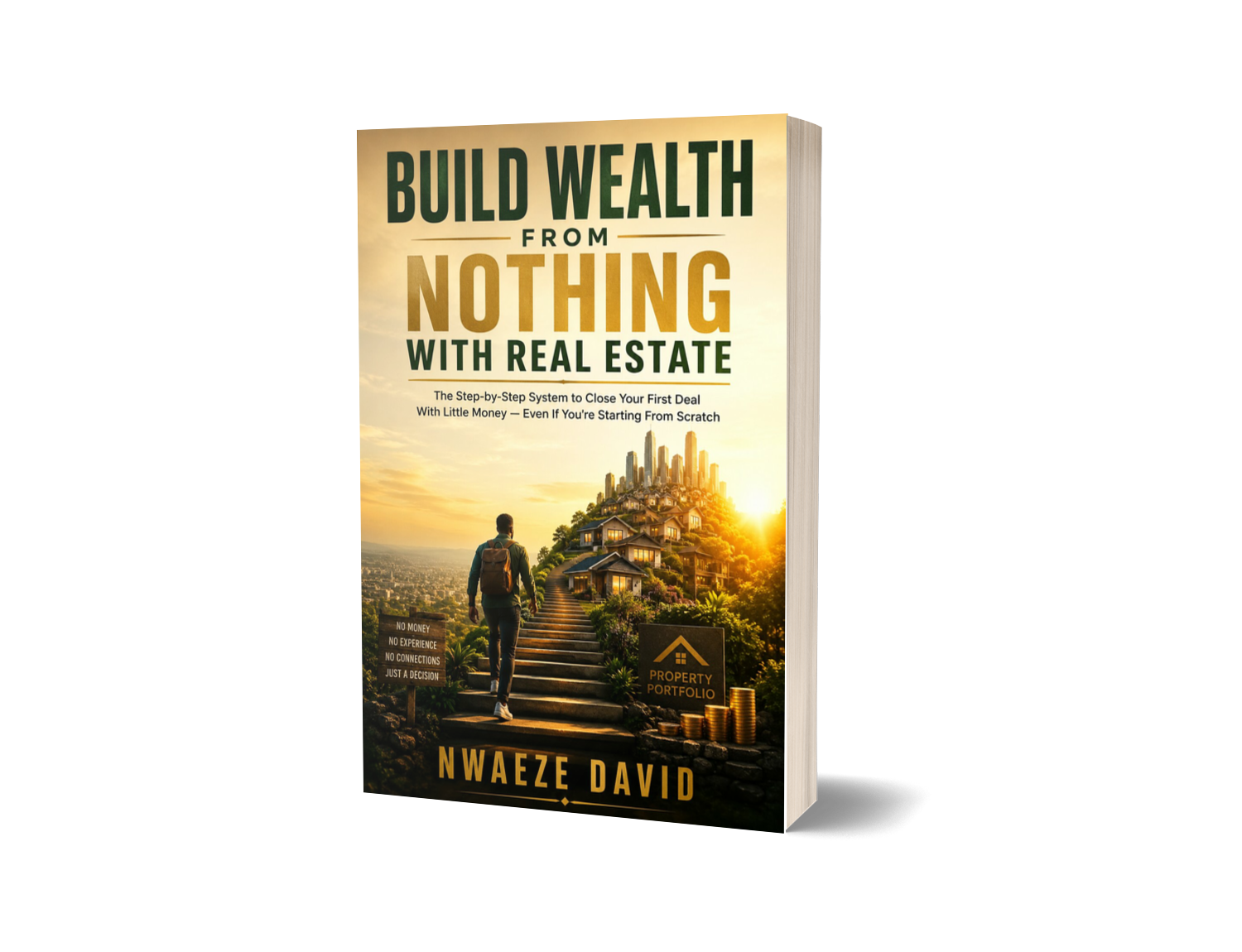
"You don't need a big deposit, perfect credit, or family money to build wealth in real estate. You need a system, the resourcefulness to work it, and the courage to start."
Get Your Copy →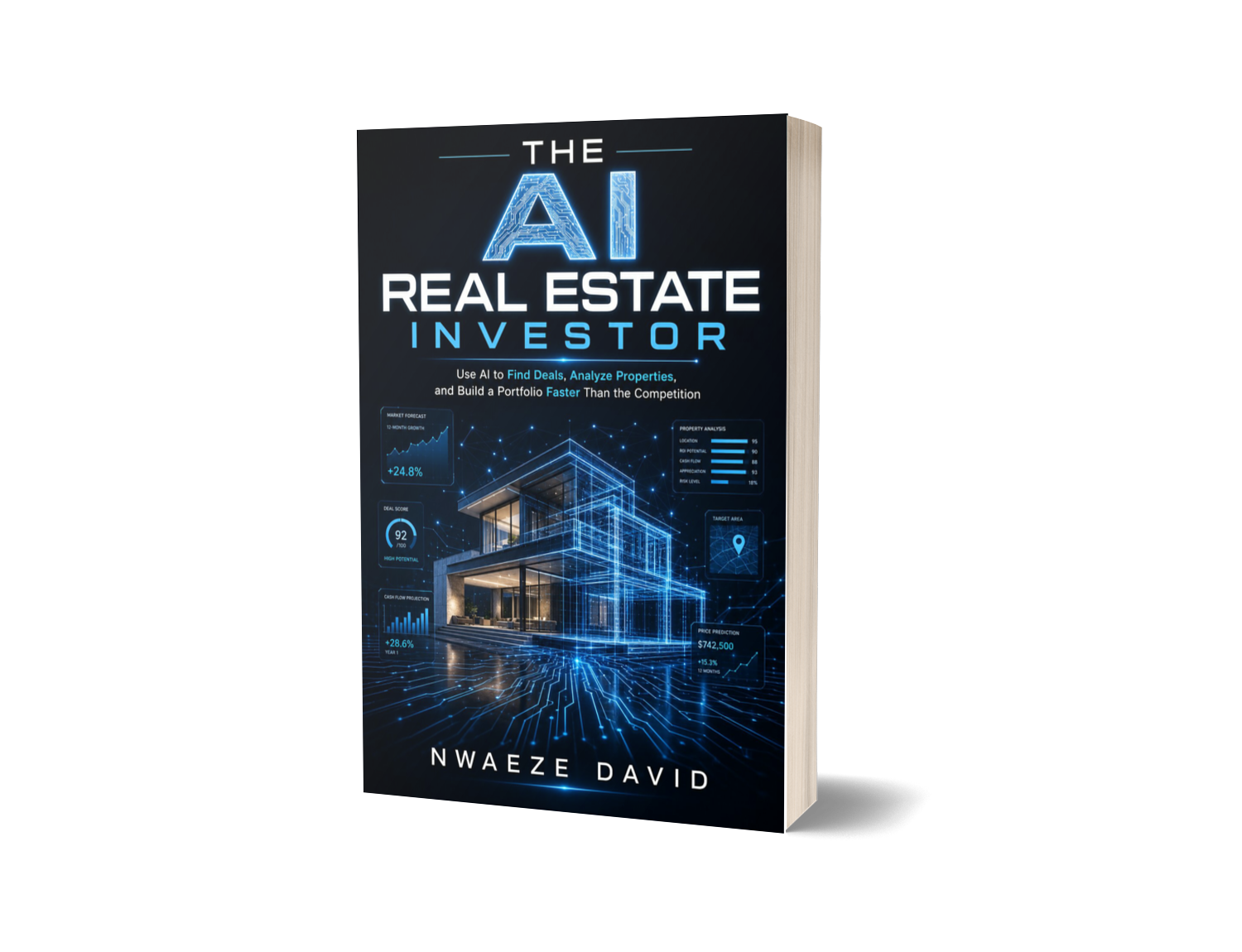
"The AI Real Estate Investor gives you that system. It shows you exactly how to point AI at the parts of your business that actually make money."
Get Your Copy →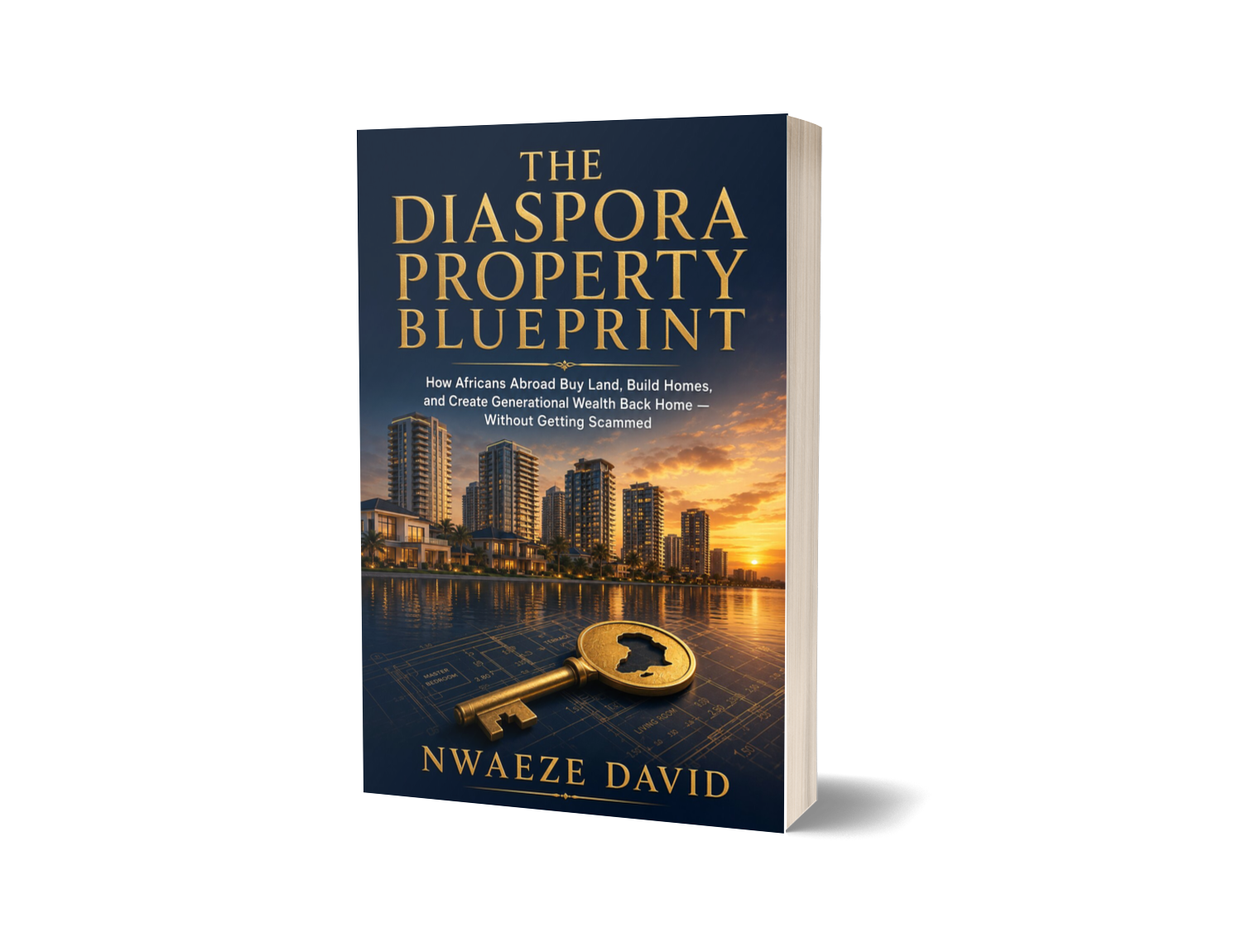
"The Diaspora Property Blueprint is the complete, step-by-step system for buying land and building wealth back home safely, from anywhere in the world."
Get Your Copy →Get more prompts and workflows that actually work
Join the newsletter for practical AI and automation lessons for property professionals, then step inside AIpreneur Academy for the full prompt library and the systems built around it.
Keep learning: AI for real estate · best AI real estate description generators · how to automate your real estate business with AI.
Education and practical templates only, not legal advice. Always review AI-generated content for accuracy and fair housing compliance before publishing or sending. AI-disclosure requirements vary by state and MLS and are evolving; confirm current rules with your broker.

Written by
Nwaeze David
Nigerian digital entrepreneur, educator and author of three real estate books. He writes practical, honest guides for new investors, working realtors and Africans building back home from abroad.


