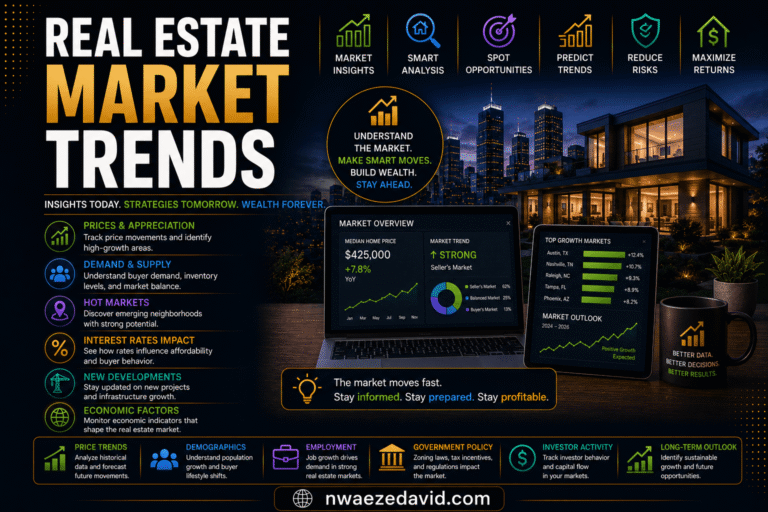
Will the housing market crash comes down to a specific, checkable question: are today's conditions actually similar to what caused 2008, or does the fear just feel similar because prices are high and buying feels hard?
What's Inside

Will the housing market crash is one of the most persistent questions in real estate, understandably, since 2008 left a lasting mark on how people think about housing risk. The honest answer from most economists as of current data: unlikely, for specific, checkable reasons rooted in what actually caused 2008 in the first place, not just a general sense that things feel expensive right now.
Quick honesty note
This is education, not financial advice. Specific equity and supply figures below reflect data available as of research, recheck current numbers before relying on this analysis, market conditions shift.
The Short Answer
What Actually Caused the 2008 Crash

A housing crash typically involves a specific combination: rapidly falling prices, distressed borrowers, foreclosures, and severe credit problems, not simply high prices or a slow market. In the lead-up to 2008, lenders approved loans for borrowers with low credit scores and no down payment, often requiring little to no documentation to verify income or assets.
Many buyers were also placed into adjustable-rate mortgages with initially low rates that jumped substantially after the first few years, and lenders frequently didn't clearly explain those terms upfront. When rates reset, many homeowners could no longer afford their payments, and widespread foreclosures followed.
Why Today's Conditions Are Structurally Different
Those specific lending products, no-down-payment loans, minimal-documentation approvals, and poorly explained adjustable-rate resets, are largely gone from today's mortgage market, and most mortgage lenders now require meaningful down payments and thorough income verification. As one industry executive put it, today's environment is fundamentally different from 2008: homeowners hold record levels of equity, lending standards are sound, and inventory remains constrained rather than oversupplied. Comparing the financial health of consumers and the banking industry between 2008 and today has been described as comparing apples and oranges, the underlying structure of the market simply isn't the same.
The Equity Cushion, Explained
Why high equity matters more than high prices
Today's average homeowner holds just under $300,000 in home equity. That cushion means sellers can afford to lower their asking price to close a deal without going underwater on their mortgage, a meaningfully different position than many owners faced heading into 2008, when far thinner equity, or none at all, left little room to absorb any price decline. A market where sellers CAN cut prices without financial ruin behaves very differently from one where they can't.
The Specific Indicators That Would Actually Signal Trouble

Swipe to see more →
| Indicator | 2008 buildup | Current conditions |
|---|---|---|
| Months of housing supply | Roughly 13 months, more than double the healthy average | Roughly 4-5 months nationally, closer to a balanced market |
| Lending standards | Minimal documentation, no down payment common | Meaningful down payments and income verification standard |
| Homeowner equity | Thin or negative for many recent buyers | Near record levels for the typical homeowner |
A genuine warning sign would look like a real economic shock, a significant stock market decline or a sustained, sharp rise in unemployment, severe enough that homeowners broadly couldn't afford their mortgage payments and were forced toward foreclosure rather than a sale. That combination, not simply high prices or a slower-moving market, is what a real crash setup requires.
Affordability Crisis Is Not the Same Thing as a Crash
It's worth holding two things as true at once: affordability genuinely is a real, serious challenge for many buyers right now, and that challenge is a fundamentally different problem from the specific lending and distress conditions that actually produce a crash. Wanting prices to fall isn't the same as evidence that they will, and conflating "expensive" with "about to collapse" leads to bad decisions in both directions, waiting indefinitely for a crash that current data doesn't support, or panicking unnecessarily about an existing home's value.
Common Mistakes (and How to Dodge Them)
- Assuming high prices alone signal an imminent crash. A crash requires a specific combination of distressed lending and widespread borrower inability to pay, not simply an expensive market.
- Comparing today's market to 2008 without checking the actual lending standards. The specific products that caused 2008 are largely gone from today's market.
- Overlooking the role of homeowner equity. Record equity levels give sellers room to adjust prices without financial distress, a meaningfully different dynamic than 2008.
- Treating affordability frustration as proof of a coming crash. These are related but genuinely different problems.
- Waiting indefinitely for a crash that current data doesn't support. This can mean missing years of decisions based on a scenario that hasn't materialized.
Frequently Asked Questions
What actually caused the 2008 housing crash?
A combination of risky lending, loans approved with little income verification and no down payment, and adjustable-rate mortgages with initially low rates that jumped substantially, often without lenders clearly explaining the terms. When rates reset, many homeowners could no longer afford their payments, leading to widespread foreclosures.
Is today's housing market similar to 2008?
Most economists say no. The specific lending products that caused 2008, no-down-payment loans and minimal-documentation approvals, are largely gone, and homeowners currently hold significantly more equity than in the lead-up to 2008.
What would actually signal a coming housing market crash?
A genuine economic shock, a significant stock market decline or a sharp, sustained rise in unemployment severe enough that homeowners broadly couldn't afford mortgage payments, combined with a level of oversupply well beyond today's more balanced inventory.
Why does homeowner equity matter for crash risk?
High equity gives sellers room to lower asking prices to close a sale without going underwater on their mortgage. Thin or negative equity, more common heading into 2008, leaves far less room to absorb a price decline.
If housing is unaffordable, doesn't that mean a crash is coming?
Not necessarily. Affordability challenges and the specific lending and distress conditions that cause a crash are different problems. A market can be genuinely expensive without having the ingredients for a collapse.
Should I wait to buy a house until the market crashes?
Given that most current data doesn't support an imminent crash, waiting indefinitely for one carries its own real cost, particularly if it means missing years of decisions based on a scenario that hasn't materialized.
Watch the Mechanism, Not the Mood
Will the housing market crash is best answered by checking the specific mechanism that actually causes one, risky lending, thin equity, and a real economic shock, rather than how expensive or difficult the market currently feels. Current data doesn't show that combination in place. Real affordability challenges are worth taking seriously on their own terms, without treating them as proof of a collapse that the underlying numbers don't support.
Take This Further
Books by Nwaeze David to help you build real wealth through property.
"You don't need a big deposit, perfect credit, or family money to build wealth in real estate. You need a system, the resourcefulness to work it, and the courage to start."
Get Your Copy →
"The AI Real Estate Investor gives you that system. It shows you exactly how to point AI at the parts of your business that actually make money."
Get Your Copy →
"The Diaspora Property Blueprint is the complete, step-by-step system for buying land and building wealth back home safely, from anywhere in the world."
Get Your Copy →Get help thinking through your own timing
Join the newsletter for practical, no-hype breakdowns of what's actually happening in real estate, then step inside the private community where we talk through what current conditions mean for your specific decision, crash fears included.
Keep learning: real estate market trends & predictions for 2026 · how interest rates affect real estate prices · is now a good time to buy a house?.
Education only, not financial advice. Home equity levels, lending standards, and housing supply figures shift over time; figures here reflect data available as of research and are marked for verification where noted. Consult a financial professional before making a decision based on housing market conditions.

Written by
Nwaeze David
Nigerian digital entrepreneur, educator and author of three real estate books. He writes practical, honest guides for new investors, working realtors and Africans building back home from abroad.