
Buying land in Nigeria without getting scammed means understanding that land carries risks a finished house doesn't: no one is living there to notice if it gets sold again, and government plans for that empty plot can outlast whatever paperwork you were shown.
What's Inside
- The short answer
- Why this deserves its own guide
- Government acquisition land, the scam unique to empty plots
- The multiple-sale scam, and the legal point most buyers get wrong
- Document forgery and how to actually catch it
- Verification that actually protects you
- Common mistakes
- Frequently asked questions

Buying land in Nigeria without getting scammed starts with recognizing why land specifically, more than a finished house or apartment, attracts a distinct set of fraud patterns. A completed property has an occupant, a visible structure, a history that's harder to fully fabricate. An empty plot has none of that, which is exactly why it needs its own dedicated verification approach.
Quick honesty note
This is education, not legal advice, and this is real money with real fraud risk. Specific statistics, enforcement examples, and procedural details below should be reconfirmed; consult a licensed Nigerian lawyer directly before any land purchase.
The Short Answer
Why This Deserves Its Own Guide
Real estate scams are estimated to cost Nigeria more than $4 billion annually, and only about 3% of Nigerians reportedly hold genuinely valid land titles. That second figure matters more than it might first appear, it means an unverified title isn't a rare edge case, it's closer to the statistical norm, which is exactly why land purchases specifically warrant this level of caution regardless of how confident the seller seems.
Government Acquisition Land, the Scam Unique to Empty Plots

Land can be earmarked years before anyone builds on it
Governments regularly designate large areas for future infrastructure, a road, a railway, a housing estate, a power plant, sometimes years or decades in advance. This is called a committed acquisition. Fraudsters target these designated but still-empty areas specifically, carve out plots, and sell them cheaply to buyers who have no way of knowing the land is already spoken for.
Years later, when the government moves forward with its original plan, structures built on that land can be demolished with no compensation to the buyer, since the land was never legitimately available to purchase in the first place.
The only reliable way to catch this before you pay is a charting search at the Surveyor-General's office, which checks whether a specific parcel falls within a designated government acquisition area. This step is easy to skip because the land looks like any other empty plot, and that's precisely why it's one of the most commonly overlooked checks in the entire process.
The Multiple-Sale Scam, and the Legal Point Most Buyers Get Wrong
In this pattern, a seller with genuinely valid documents sells the same plot to more than one buyer, collecting full payment from each before disappearing. It's a straightforward, well-documented scam, but the legal mechanics behind it are commonly misunderstood in a way that costs buyers dearly.
Paying first does not protect you. Registering first does.
Under Nigerian law, the true owner in a multiple-sale dispute is generally the first person to register their title at the government registry, not necessarily the first person who paid the seller. A buyer who pays quickly but delays formal registration can lose the land entirely to a later buyer who registers first, even if that second buyer paid after them. This is why completing registration promptly after purchase isn't a bureaucratic afterthought, it's the step that actually determines legal ownership if a dispute arises.
Document Forgery and How to Actually Catch It

Document forgery accounts for a significant share of land fraud in high-demand corridors, with forgers using increasingly sophisticated printing, counterfeit stamps, and forged signatures to produce documents that appear authentic to an untrained eye. Specific red flags worth treating seriously:
- A "certified true copy" that can't be confirmed through the actual government workflow it claims to come from.
- Survey plan numbers that don't validate when checked against official registry channels.
- Stamp duty "receipts" that are screenshots or show payment to a personal bank account rather than the official government channel.
- Pressure to accept documents without letting your lawyer run a formal search, or explanations like "the original is with the lawyer" or "the owner is abroad" used to avoid independent verification.
The strongest title document in Nigeria is the Certificate of Occupancy, government-issued, identifying the holder and specifying the purpose and duration of the grant. If land already carrying a C of O is being resold, the transaction must also be backed by Governor's Consent, the specific legal evidence that the state has approved that transfer, a C of O alone from a previous owner is not sufficient on its own for a resale to be valid.
Verification That Actually Protects You
- Verify the seller's physical presence, a company operating from a real, checkable office with a documented history of completed projects is meaningfully different from one that exists only through social media messaging. A recent enforcement case involved an agent operating with no physical office, no verifiable track record, and pressure-driven urgency, a pattern that shows up consistently in cases like this.
- Have an independent lawyer submit formal search requests to the relevant land authority directly, rather than accepting the seller's own documentation at face value.
- Treat any resistance to this verification process as a decisive red flag, not an inconvenience to work around.
For the fuller step-by-step document verification process, see how to verify property documents in Nigeria, and for the broader remote-purchase mechanics, how to invest in nigerian real estate from abroad.
Common Mistakes (and How to Dodge Them)
- Assuming an empty plot carries less risk than a finished property. It often carries more, precisely because there's no occupant or visible history to catch problems.
- Skipping the charting search because the land "looks" available. This is the only reliable way to catch government committed-acquisition land before you pay.
- Believing that paying quickly protects your claim. Registration priority, not payment speed, generally determines ownership in a multiple-sale dispute.
- Accepting a "certified true copy" or screenshot without independent verification. These are among the most common forgery tactics specifically because they look convincing at a glance.
- Treating a seller's urgency or excuses as normal. Reluctance to allow formal, independent verification is one of the clearest, least subtle warning signs available.
Frequently Asked Questions
What is government committed acquisition land in Nigeria?
Land that has been designated by the government for future infrastructure use, sometimes years in advance. Fraudsters sell plots in these areas as if free and clear; when the government eventually acts on its plan, structures built there can be demolished with no compensation.
How can I check if land is under government acquisition before buying?
A charting search at the Surveyor-General's office checks whether a specific parcel falls within a designated government acquisition area, and should be completed before any payment is made.
If a plot is sold to multiple buyers, who legally owns it?
Under Nigerian law, ownership generally goes to the first person to register their title at the government registry, not necessarily the first person who paid the seller.
What are the warning signs of a forged land title document?
A "certified true copy" that can't be confirmed through official channels, survey plan numbers that don't validate, stamp duty receipts paid to a personal account, and pressure to skip independent lawyer verification.
Is a Certificate of Occupancy enough proof of ownership when buying resold land?
Not on its own. If land already carrying a C of O is being resold, the transaction also needs Governor's Consent, the specific legal evidence that the state has approved that particular transfer.
What should I do if a seller resists letting my lawyer verify documents?
Treat it as a decisive red flag rather than a minor inconvenience. Legitimate sellers with genuine documentation generally have no reason to resist formal, independent verification.
Verify Before You Pay, Not After
Buying land in Nigeria without getting scammed comes down to treating an empty plot with more suspicion than a finished property, not less. Run a charting search for government acquisition status, understand that registering fast matters more than paying fast, insist on independent document verification, and walk away from any resistance to that process. The verification takes time and costs a small fee. The alternative can cost everything.
Take This Further
Books by Nwaeze David to help you build real wealth through property.
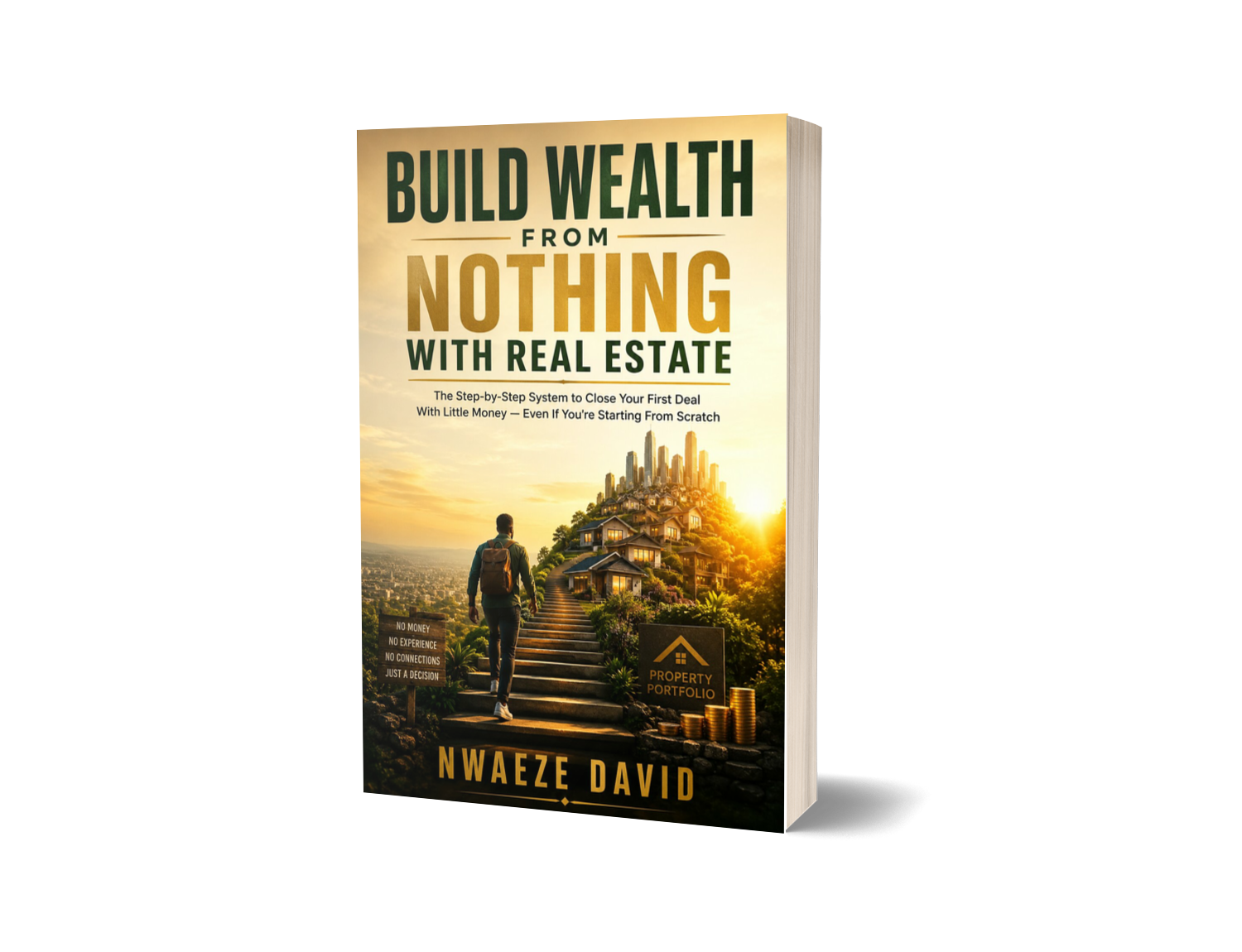
"You don't need a big deposit, perfect credit, or family money to build wealth in real estate. You need a system, the resourcefulness to work it, and the courage to start."
Get Your Copy →
"The AI Real Estate Investor gives you that system. It shows you exactly how to point AI at the parts of your business that actually make money."
Get Your Copy →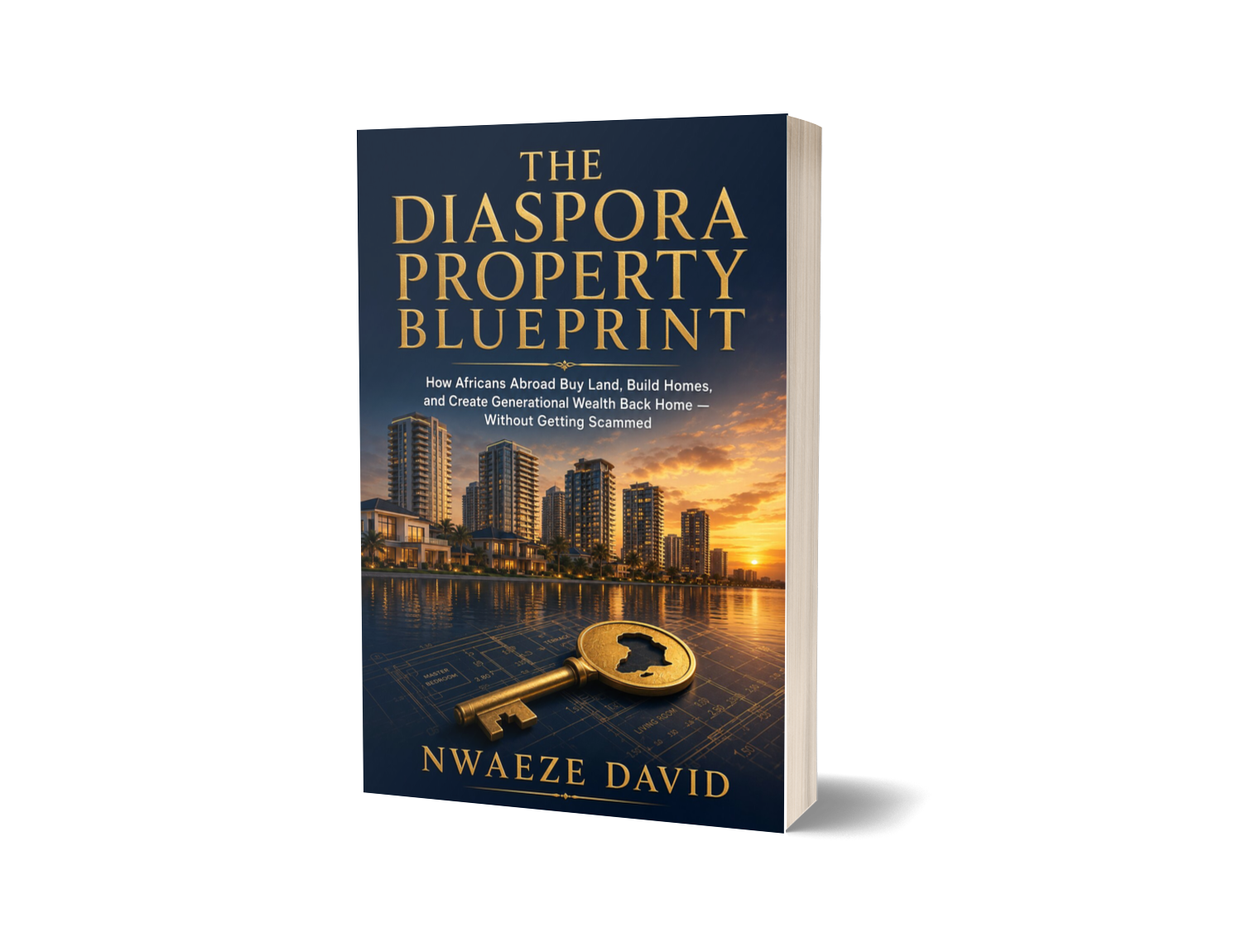
"The Diaspora Property Blueprint is the complete, step-by-step system for buying land and building wealth back home safely, from anywhere in the world."
Get Your Copy →Get help verifying land before you commit
Join the newsletter for practical, no-hype breakdowns of investing back home, then step inside the private community where diaspora investors help each other check documents and vet developers before money moves.
Keep learning: diaspora real estate investment · how to verify property documents in Nigeria · how to invest in nigerian real estate from abroad.
Education only, not legal advice. Statistics, enforcement examples, and procedural details referenced here change and are marked for verification where noted. This is real money and real fraud risk; consult a licensed Nigerian lawyer directly before any land purchase.

Written by
Nwaeze David
Nigerian digital entrepreneur, educator and author of three real estate books. He writes practical, honest guides for new investors, working realtors and Africans building back home from abroad.


