Loading...

How to Become a Real Estate Agent
Some links here are affiliate links. If you use them, I may earn a small commission at no extra cost to you. I only point to services I trust or have researched properly.
Becoming a real estate agent is one of the few careers you can start without a degree, without years of training, and without a boss deciding your ceiling. It is also a lot harder to make real money at than the recruiting flyers admit. Here is the honest version.
What's Inside
- What it actually takes to become an agent
- The licensing process, step by step
- How much it costs
- How long it takes
- Choosing your first brokerage
- Agent vs broker vs Realtor
- How agents actually get paid
- How much agents really make
- Your first 90 days
- Tools that shorten the learning curve
- Common mistakes new agents make
- Frequently asked questions

How to become a real estate agent is a simple question with a deceptively simple answer: pass a state-approved course, pass an exam, find a broker, and you are licensed. Most people can do that in two to four months for a few hundred dollars, no college degree required.
What the flyers do not say is what happens after you get the license. This guide gives you both halves honestly: the exact steps to get licensed, and the real numbers on income, timeline, and what actually separates the agents who make it from the roughly three in four who do not survive year one.
Read this before you spend a dollar
This is education, not a guarantee of income. Licensing rules, costs, and typical earnings vary by state and change over time. The figures below come from national data and industry reporting, but your results depend on your market, your effort, and your systems. Confirm current requirements with your state's real estate commission before you enroll in anything.
What It Actually Takes to Become an Agent
In short: To become a real estate agent, you complete a state-approved pre-licensing course (hours vary widely by state), pass a state licensing exam, clear a background check, and affiliate with a sponsoring broker. Most people finish the whole process in two to four months for a few hundred to just over a thousand dollars, depending on the state.
No degree, no prior experience, and in most states you do not even need to be a resident or citizen, just legally authorized to work. That low barrier to entry is exactly why real estate attracts so many career-changers, and exactly why competition never really thins out. What separates a license from a career is everything covered from here on.
The Licensing Process, Step by Step
The exact hours and fees differ by state, but the path is nearly identical everywhere.
- Check your state's basic requirements. Almost universally: at least 18 years old, a high school diploma or equivalent, and a valid Social Security Number or work authorization.
- Complete your pre-licensing course. A state-approved course delivered online, in a classroom, or live-streamed. Required hours range from around 40 in Massachusetts to 180 in Texas, so check your state's exact number.
- Pass the background check and fingerprinting. Most states require this before or alongside your application.
- Submit your application. Along with your course certificate, fingerprint clearance, and the state fee. Processing typically takes one to two weeks.
- Pass the state licensing exam. Usually split into a national section and a state-law section, each needing roughly 70% to 75% to pass, administered through a testing center such as Pearson VUE or PSI.
- Find a sponsoring broker. You cannot practice independently as a new agent. Every state requires you to "hang your license" with a licensed broker before you can work.
- Complete any required post-licensing education. Many states require additional hours (commonly 30 to 90) within your first one to two years, on top of the pre-license course.

For the full state-by-state breakdown and where to find your local requirements, see how to get your real estate license.
How Much It Costs
Budget for more than just the course. Here is a representative range across a few states to show how much this swings.
| State | Pre-license hours | Typical total cost |
|---|---|---|
| Massachusetts | 40 | Low, course + ~$31 exam fee |
| Florida | 63 | $270 – $690 |
| Virginia | 60 | $400 – $800 |
| North Carolina | 75 | $473 – $1,138 |
| Texas | 180 | $786 – $1,416 |
Whatever your state, the total usually breaks into four buckets: the pre-licensing course (the biggest lever you control), the background check and fingerprinting, the exam fee (commonly $40 to $100 per attempt), and the state application fee.
On top of that, budget for your first year of business: brokerage fees, MLS and association dues, E&O insurance, and basic marketing. Many new agents underestimate this second number, not the license itself.
How Long It Takes
Most people go from zero to licensed in two to four months, faster if you study full-time, slower if you are doing it around a job. The course itself is usually the longest single piece; the application and exam scheduling typically add another two to four weeks combined.
Choosing your course matters more than the price tag
Pass rates, course quality, and included exam prep vary a lot between providers, and a cheap course that leaves you unprepared for the exam costs more in retake fees and lost time than a slightly pricier one with a strong pass rate. A course like Online Real Estate Pre-Licensing Course bundles exam prep in from the start. Compare providers properly in best real estate schools & online license courses.
Choosing Your First Brokerage
This decision shapes your first two years more than almost anything else. You are choosing between two different bets: a brokerage with strong training and mentorship but a smaller commission split, or a 100%-commission brokerage with little support but none of your money held back.
New agents usually do better starting with real mentorship, even at a worse split, because the knowledge you are missing costs more than the percentage you are giving up.
Ask every brokerage you interview with the same questions: what training do new agents actually get, is there a real mentor or just a manual, what does the commission split look like as you grow, and what fees (desk fees, tech fees, franchise fees) come out before you see a cent. Get the split and fees in writing.
Agent vs Broker vs Realtor
These three words get used interchangeably, and they should not be. A real estate agent holds a state salesperson license and must work under a supervising broker. A broker has completed additional education and experience requirements and can operate independently or supervise other agents.
A Realtor is simply an agent or broker who has joined the National Association of Realtors and agreed to its code of ethics, it is a membership, not a license level.
Full breakdown of the licensing and career differences in real estate agent vs broker.
How Agents Actually Get Paid
Agents earn commission, not salary, which is exactly why income is so uneven. Commission is negotiable and set between the agent and their client, not by any law or association. Since the 2024 industry settlement, buyer's agents negotiate their fee in a written agreement before touring homes, rather than seeing it advertised on the MLS.
Total commission has commonly run in the mid-5% range in recent data, split between the listing side and the buyer's side. That commission then splits again between the agent and their brokerage, anywhere from a 50/50 split for new agents up to 90/10 or better for established top producers. Full mechanics in real estate agent commission.
How Much Agents Really Make

Here is the part most course sellers leave off the page. According to the National Association of Realtors' most recent Member Profile, the median Realtor earned about $59,200 in gross commission income, with net income after expenses considerably lower.
That headline number hides a brutal early curve: agents with two years of experience or less reported a median gross income of just $8,100, and roughly 62% of new agents made less than $10,000 in their first year.
| Experience | Median gross income |
|---|---|
| 2 years or less | ~$8,100 |
| All Realtors (median) | ~$59,200 |
| 16+ years | ~$88,500 |
Income here tracks one thing: transactions closed, not seniority or how nice your business cards are. That is also the honest reason a widely cited industry figure puts new-agent attrition at around three in four leaving within the first year.
The agents who do not become part of that statistic almost always share one thing, a defined lead-generation and follow-up system running from day one, not a plan to "wait for referrals to come in."
The license gets you in the door. It does not get you a single client. Nobody tells you that on the sales page for the course.
See the full income breakdown by state and specialty in how much do real estate agents make?.
Your First 90 as a Real Estate Agent
This is the window that decides whether you become a statistic or a career. Spend it building the machine, not waiting for it to build itself.
- Build your database before you need it. Every person you know is a potential client or referral. Get them into a simple system on day one.
- Get a CRM immediately. Most new agents lose their first leads simply because nothing reminded them to follow up. Do not learn this lesson the expensive way.
- Pick two lead sources and commit. Your sphere plus one more channel, content, social, or outbound prospecting, run consistently for at least six months before judging it.
- Shadow or partner with a producing agent. Nothing replaces watching a real transaction happen, if your brokerage allows it.
- Track your numbers weekly. Contacts made, appointments set, offers written. What gets measured in the first 90 days becomes the habit that carries you past year one.

The full playbook for building consistent leads and follow-up once you are licensed lives in how to grow your real estate business.
Tools That Shorten the Learning Curve
A few tools do more for a brand-new agent than any amount of hustle alone. A CRM to catch every lead, a scheduling and e-signature tool to look professional from day one, and increasingly, AI to help you draft listings, follow-up messages, and social content without needing a marketing team. See the full starter stack in best real estate software and tools and how new agents are using AI specifically in AI for real estate.
Common Mistakes New Agents Make
- Picking a brokerage on commission split alone. A great split with zero training often nets less than a worse split with real mentorship.
- Waiting for the phone to ring. Licenses do not generate leads. Systems do.
- Underbudgeting the first year. The license is the cheap part. MLS dues, insurance, and marketing add up fast.
- Skipping a CRM. The single biggest reason early leads quietly disappear.
- Quitting at month four or five. Momentum in this business usually shows up around month six to twelve. Most people who fail stop right before it turns.
- No niche. Trying to be everything to everyone from day one makes your marketing forgettable.
- Ignoring the numbers. Agents who track contacts, appointments, and conversions catch problems early. Agents who do not, find out why business is slow only after it already collapsed.
Frequently Asked Questions
How long does it take to become a real estate agent?
Most people complete the process in two to four months. This includes finishing your state's required pre-licensing course (which can range from about 40 to 180 hours depending on the state), passing the background check, and passing the licensing exam. Studying full-time speeds this up; fitting it around a job typically stretches it toward the longer end.
How much does it cost to get a real estate license?
Costs vary widely by state, typically between about $270 and $1,400 or more, covering the pre-licensing course, background check and fingerprinting, exam fee, and state application fee. Your course choice is usually the biggest cost variable. Beyond licensing, budget separately for your first year of MLS dues, insurance, and marketing.
Do I need a college degree to become a real estate agent?
No. Most states only require you to be at least 18 years old with a high school diploma or equivalent, plus legal authorization to work. This is part of why real estate attracts so many career-changers, though the low barrier to entry also means competition never really thins out.
How much money do real estate agents actually make?
According to the National Association of Realtors' Member Profile, the median Realtor earns roughly $59,200 in gross income, but agents with two years of experience or less report a median of only about $8,100, and roughly 62% of new agents earn less than $10,000 in their first year. Income climbs substantially with experience, reaching a median around $88,500 for agents with 16 or more years, since pay tracks transactions closed, not time in the business.
What is the difference between a real estate agent and a broker?
An agent holds a state salesperson license and must work under a supervising broker. A broker has completed additional education and experience requirements and can work independently or supervise other agents. A Realtor is a separate designation entirely, an agent or broker who has joined the National Association of Realtors and agreed to its code of ethics.
Is becoming a real estate agent worth it?
It can be, but it rewards a specific type of person: someone willing to treat the first year like building a small business, not taking a job. The low licensing cost and short timeline make it accessible, but the income data shows a steep early curve, with most of the payoff arriving after year two or three for agents who build real lead-generation and follow-up systems rather than waiting for referrals.
Get Licensed, Then Get to Work
Becoming a real estate agent is genuinely one of the most accessible career changes available: no degree, a few months, a few hundred dollars. Making a real income from it is the part nobody hands you on a certificate.
Treat the license as the entry ticket, not the finish line, build your systems in the first 90 days, and the honest numbers above become your floor to beat, not your ceiling.
Take This Further
Books by Nwaeze David to help you build real wealth through property.
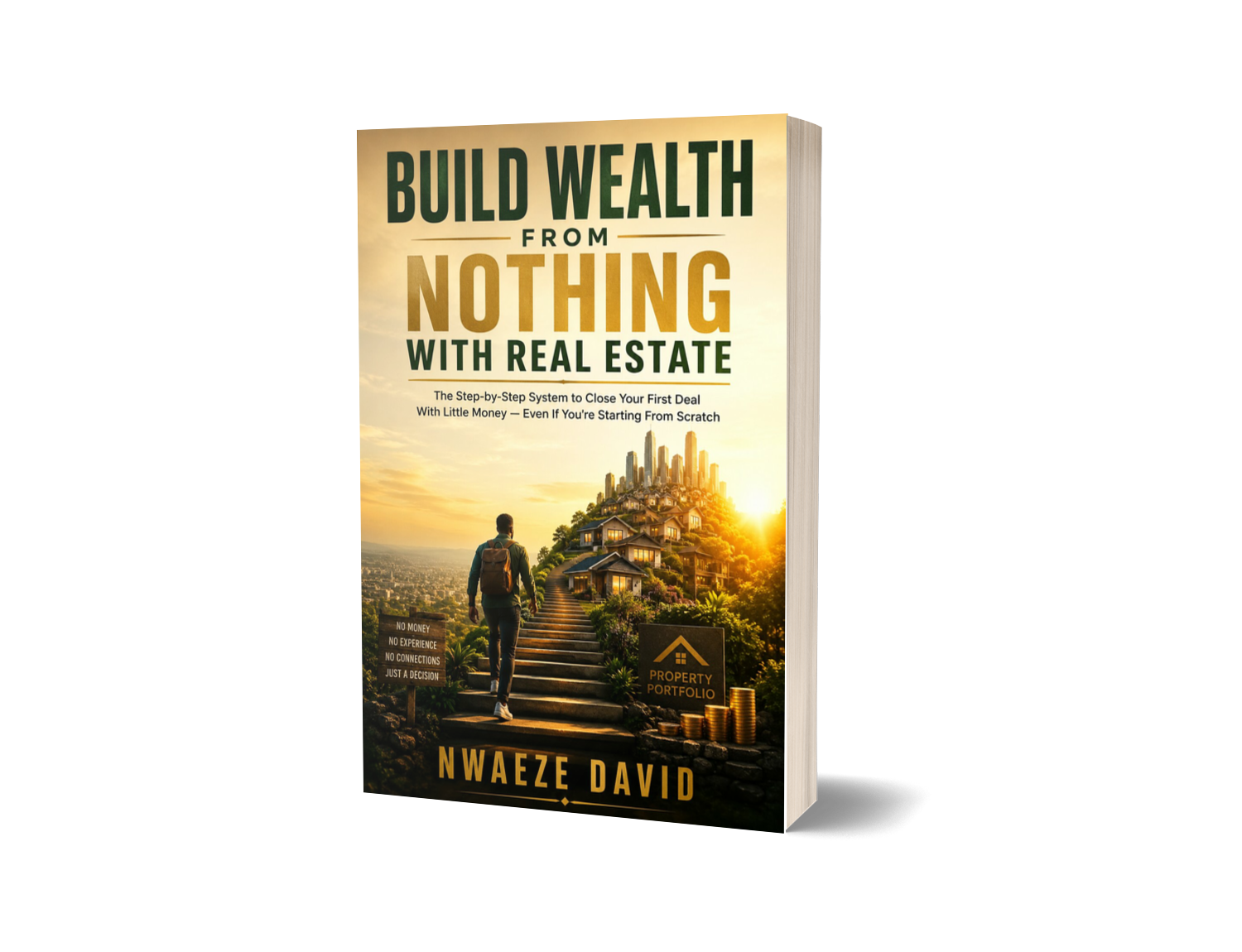
Beginner Wealth Building
Build Wealth From Nothing With Real Estate
"You don't need a big deposit, perfect credit, or family money to build wealth in real estate. You need a system, the resourcefulness to work it, and the courage to start."
Get Your Copy →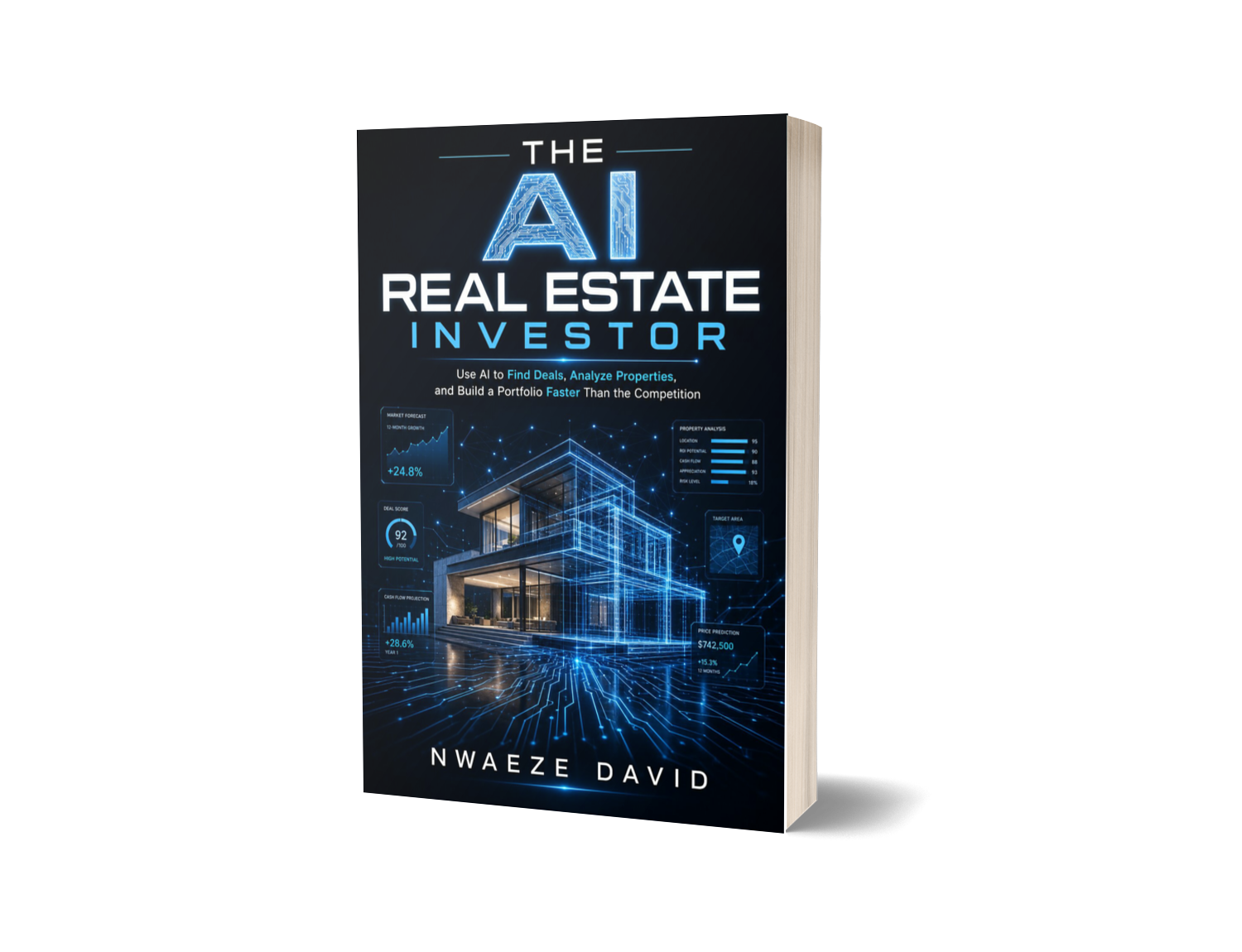
AI & Automation
The AI Real Estate Investor
"The AI Real Estate Investor gives you that system. It shows you exactly how to point AI at the parts of your business that actually make money."
Get Your Copy →
Diaspora & Africa
The Diaspora Property Blueprint
"The Diaspora Property Blueprint is the complete, step-by-step system for buying land and building wealth back home safely, from anywhere in the world."
Get Your Copy →Get the career moves most new agents learn too late
Join the newsletter for practical, no-hype lessons on building a real estate career and real wealth through property, then step inside the private community where working agents share the systems that actually carry you past year one.
Keep learning: how to get your real estate license · how much do real estate agents make? · best real estate schools & online license courses · real estate agent commission · how to pass the real estate exam on your first try.
Education only, not a guarantee of income or career outcomes. Licensing requirements, costs, and typical earnings vary by state and change over time. Figures cited are drawn from national industry data and are medians, not promises, individual results depend heavily on market, effort, and business systems. Confirm current requirements with your state's real estate commission before enrolling in any course.