How to become a successful real estate agent starts with an honest look at the numbers most recruiters skip. Get the first year right financially, and the rest of this becomes a business problem you can actually solve.
What's Inside

How to become a successful real estate agent is less about talent and more about surviving the specific financial gap almost every new agent underestimates.
This guide covers the honest numbers, the well-documented reasons agents actually fail, and what genuinely separates the ones who make it to year three and beyond.
Quick honesty note
This is general business guidance, not a guarantee of income or results. Income and industry statistics below come from NAR Member Profile survey data where cited, and these update annually. One widely repeated statistic is specifically flagged as disputed rather than presented as fact, see below.
The Short Answer
In short: Success in real estate is mostly a function of surviving the first 12 to 18 months financially while building a consistent, systematic approach to prospecting, not a matter of talent or personality.
Agents with two years or less of experience earn a median of just $8,100 annually according to NAR's own survey data, which is why financial planning before you start matters as much as any sales skill.
The Honest Challenge Nobody Tells New Agents

You have likely heard some version of "87% of real estate agents fail within five years." Worth knowing: the exact origin of that specific figure is genuinely disputed.
Inman, a respected industry trade publication, has reported that no verified data actually backs it up, calling it more of an industry legend repeated by coaches and brokerages than a confirmed statistic. Treat it as directionally true, attrition is real and significant, but not as a precise, sourced number.
Swipe to see more →
| Experience level | Median annual income |
|---|---|
| 2 years or less | $8,100 (62% earned under $10,000) |
| All Realtors (median) | $58,100 gross, ~$36,600 net after expenses |
| 16+ years experience | $78,900 or more |
| Top producers in major metros | $200,000+ |
This is the real, better-documented statistic worth planning around. Most new agents will not break $30,000 in their first year, and the realistic ramp to consistent income commonly runs 6 to 18 months. That is not a failure of the profession, it reflects the time it genuinely takes to build a pipeline from nothing.
Why Agents Actually Fail
- Undercapitalization. Running out of personal savings before the pipeline matures, commonly cited as the single biggest cause.
- No defined lead-generation system. Waiting for referrals to appear rather than working a consistent process. See how to get real estate leads.
- Treating it like a salaried job. Real estate is an entrepreneurial venture requiring active, self-directed prospecting, not a role where work simply arrives.
- No mentor or coach in the first 24 months. Learning everything from scratch through trial and error takes longer and costs more.
- Transactional thinking instead of building a database. Treating each deal as isolated rather than building the referral relationships that compound over years.
- Unrealistic income expectations going in. Believing six figures in year one is likely, when the median data says otherwise.
What Separates the Agents Who Make It
- Save a real financial runway before starting, commonly six to twelve months of living expenses, to survive the ramp-up period without panic decisions.
- Treat prospecting as non-negotiable, not something you get to when things are slow. Consistency compounds; sporadic effort resets to zero.
- Find a mentor, coach, or strong brokerage support system in the first two years rather than learning everything the expensive way.
- Pick a niche early rather than trying to serve everyone. See how to build a personal brand as a real estate agent.
- Build a real database and nurture it, rather than treating each closing as a one-time transaction with no follow-up.
The Habits of Agents Who Reach Year Three

- Time-blocked prospecting, a protected, recurring block of time for lead generation activity that does not get sacrificed to busywork.
- Fast, disciplined follow-up on every lead and inquiry, not just the ones that feel promising.
- Tracking real numbers, not just closings: calls made, appointments set, conversion rate at each stage.
- Budgeting for taxes and marketing as fixed costs, not afterthoughts, since agents are independent contractors responsible for both.
- Reviewing and adjusting quarterly rather than assuming a system that isn't working will fix itself.
Common Mistakes (and How to Dodge Them)
- Starting without a financial runway. This alone accounts for a large share of early exits, independent of talent or effort.
- Believing the scary statistic without the real numbers behind it. Plan around the documented income data, not an unverified industry legend.
- Going it alone for the first two years. A mentor or strong brokerage compresses the learning curve meaningfully.
- Chasing every lead source at once instead of building consistency. A smaller number of channels worked reliably beats scattered effort across many.
- Treating a slow month as a reason to stop prospecting. The slow months are exactly when consistent prospecting matters most for the pipeline three months out.
FAQs on How to Become a Successful Real Estate Agent
Is it true that 87% of real estate agents fail?
That specific figure is widely repeated but its exact origin is disputed. Inman, an industry trade publication, has reported no verified data actually backs it up. Attrition in the profession is genuinely significant, but the number itself should be treated as directional rather than a precise, sourced statistic.
How much do new real estate agents actually make?
According to NAR's own Member Profile survey data, agents with two years or less of experience earn a median of just $8,100 annually, and 62% earned under $10,000. Most new agents will not break $30,000 in their first year, with a realistic ramp to consistent income commonly taking 6 to 18 months.
How much money should I save before becoming a real estate agent?
A commonly cited benchmark is six to twelve months of living expenses, enough to survive the ramp-up period without being forced into panic decisions or leaving the profession before the pipeline has time to mature.
What is the biggest reason real estate agents fail?
Undercapitalization, running out of personal savings before the business becomes self-sustaining, is commonly cited as the single biggest cause, often combined with an undefined lead-generation system and unrealistic income expectations going in.
Do I need a mentor to succeed as a new real estate agent?
Not strictly required, but strongly associated with better outcomes. Agents with a mentor, coach, or strong brokerage support system in their first two years tend to compress their learning curve significantly compared to learning everything through trial and error alone.
How long does it take to become a successful real estate agent?
Most sources point to a realistic ramp of 6 to 18 months to reach consistent income, with income tending to grow substantially over the first several years as an agent's database, referral network, and systems mature.
Plan for the Real Numbers, Not the Scary Legend
How to become a successful real estate agent starts with respecting the actual financial gap between licensing and consistent income, not an unverified statistic meant to scare you.
Save a real runway, treat prospecting as non-negotiable, find a mentor, and give the business the 12 to 18 months it genuinely needs to start working.
The agents who make it are not the ones who never struggled, they are the ones who planned for the struggle in advance.
Take This Further
Books by Nwaeze David to help you build real wealth through property.
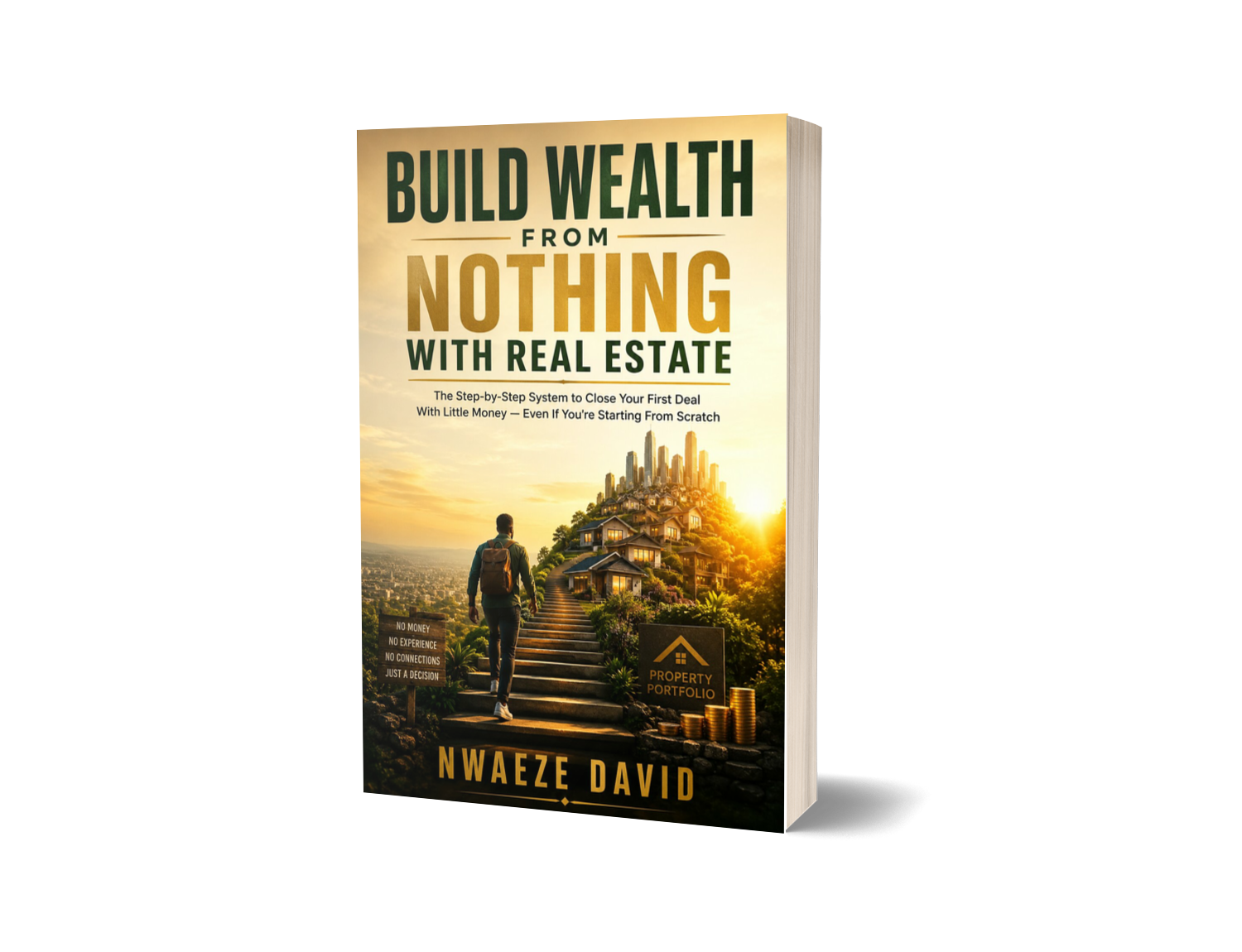
"You don't need a big deposit, perfect credit, or family money to build wealth in real estate. You need a system, the resourcefulness to work it, and the courage to start."
Get Your Copy →
"The AI Real Estate Investor gives you that system. It shows you exactly how to point AI at the parts of your business that actually make money."
Get Your Copy →
"The Diaspora Property Blueprint is the complete, step-by-step system for buying land and building wealth back home safely, from anywhere in the world."
Get Your Copy →Get help planning your first eighteen months
Join the newsletter for practical, no-hype breakdowns of building a real estate career, then step inside the private community where we help new agents plan their financial runway and build a real prospecting system from day one.
Keep learning: how to get real estate leads · how to build a personal brand as a real estate agent · how to get your real estate license · how much do real estate agents make? · how to grow your real estate business.
Education only, general business guidance, not a guarantee of income or results. Income and attrition statistics cited come from NAR Member Profile survey data where noted and update annually; the widely repeated "87% failure" figure is specifically flagged as disputed rather than presented as verified fact. Speak to a broker or financial advisor for guidance specific to your situation.

Written by
Nwaeze David
Nigerian digital entrepreneur, educator and author of three real estate books. He writes practical, honest guides for new investors, working realtors and Africans building back home from abroad.