
How to invest in Nigerian real estate from abroad has gotten genuinely safer in the last year, not because the fraud has disappeared, but because the honest channels around it have finally caught up.
What's Inside

How to invest in Nigerian real estate from abroad safely comes down to using the tools that now exist specifically to close the gap fraud has always exploited: your foreign income and your physical distance. This builds on the broader scam and verification framework in diaspora real estate investment with the specific, practical mechanics of doing this from outside the country.
Quick honesty note
This is education, not legal or financial advice, and this is real money with real fraud risk. Regulatory details, exchange rates, and specific product terms below change; confirm everything directly with a licensed Nigerian lawyer and your bank before sending any money.
The Short Answer
The Regulatory Shift That Actually Matters: NRNIA and NRBVN
A genuinely new, traceable channel
The Non-Resident Nigerian Investment Account (NRNIA), operational since January 2025, lets Nigerians abroad invest in Nigerian assets in foreign currency or naira through a CBN-regulated channel, with funds freely repatriable. Alongside it, the Non-Resident Biometric Verification Number (NRBVN) enables complete remote account onboarding, no in-person visit required to set it up. Together, these formalize a process that was previously informal for most diaspora investors, capital sent for property can now flow through a regulated, traceable structure instead of cash transfers or unofficial channels, meaningfully reducing both fraud risk and foreign exchange exposure.
This matters specifically because fraudulent developers have historically targeted diaspora buyers for two straightforward reasons: you have foreign income, and you can't easily visit to check on things yourself. A regulated account channel doesn't eliminate fraud risk on its own, but it closes off one of the easiest ways money has historically disappeared, informal, untraceable transfers with no institutional record behind them.
Power of Attorney, Done Right
The most secure way to act on a transaction you can't be physically present for is granting Power of Attorney to a trusted local representative, and that representative should be a qualified lawyer registered with the Nigerian Bar Association, not a family member.
Do not use relatives as project managers
Treat your investment capital like a business decision, not a family matter. Love your family, support them separately, but don't hand them oversight of a six or seven-figure naira investment. They are not trained engineers, they are not property lawyers, and the temptation to divert funds when money is tight is a real, human risk, not a judgment on anyone's character.
When you work through a verified, registered legal professional instead, you have signed contracts and genuine legal recourse if something goes wrong. That structure protects the relationship as much as the money.
The Five-Step Remote Purchase Process

- Live video site verification, not just photos. A real-time walkthrough, ideally with someone you trust or an independent inspector, not solely the seller's own representative.
- An independent Nigerian lawyer for title search, someone you hired directly and who has no financial relationship with the seller or developer.
- A signed Sale Agreement before any payment moves, not a verbal understanding or a deposit paid on trust.
- Transfers through traceable bank routes, ideally via an NRNIA or comparable regulated account, never cash or informal transfer services.
- Completion of Governor's Consent or the equivalent registration step for your specific title type, the final formal step that actually secures your legal interest in the property.
You generally don't need to visit Nigeria until handover, though an in-person visit at some point before completion is genuinely worth the trip if you can manage it.
Three Checks You Can Complete Remotely in Under an Hour

- Search the developer or agent's RC number at the Corporate Affairs Commission's public search portal to confirm the company is genuinely registered.
- Verify REDAN membership, the Real Estate Developers Association of Nigeria, through its official membership lookup.
- Call a reference buyer who has already received their title document from the same developer or agent, and ask them directly how the process actually went.
All three of these can be done remotely, without leaving your home, in under an hour. Developers who openly explain how to verify them are a meaningfully different signal than developers who simply ask you to trust them.
If You're Not Ready for Direct Property Yet
Direct property purchase isn't the only way to get exposure to the Nigerian real estate market from abroad. Nigerian REITs trade on the Nigerian Exchange, start with amounts as low as a few thousand naira, and require no property management on your part at all, dividend yields in the high single digits to low double digits have been cited in recent data. If you want to start building exposure while you're still learning the direct-purchase process, this is a genuinely lower-friction, lower-risk entry point worth considering first.
For moving money itself, a service like Wise can provide a traceable, transparent transfer record alongside your regulated account, worth having as a paper trail regardless of which channel you ultimately use for the property transaction itself.
Common Mistakes (and How to Dodge Them)
- Using a relative as your on-the-ground project manager. This exposes both your money and the relationship to unnecessary risk; hire a verified, independent lawyer instead.
- Sending money through informal or untraceable channels. A regulated account like an NRNIA leaves a real institutional record if something goes wrong.
- Paying before a signed Sale Agreement exists. Verbal assurances and deposits paid on trust alone offer no legal recourse.
- Skipping the three remote verification checks because they feel unnecessary. They take under an hour and can be the difference between catching a fraud early and losing everything.
- Trusting a developer simply because they say nothing about fraud. Developers who proactively explain how to verify them are a stronger signal than ones who ask for blind trust.
Frequently Asked Questions
Can I really buy Nigerian property without visiting in person?
Yes, many diaspora buyers complete the full purchase remotely using live video site verification, an independent lawyer for title search, a signed Sale Agreement before payment, and traceable bank transfers. A visit before completion is recommended but generally not required until handover.
What is an NRNIA account and why does it matter for diaspora investors?
The Non-Resident Nigerian Investment Account is a CBN-regulated account that lets Nigerians abroad invest in Nigerian assets in foreign currency or naira through a traceable channel, with funds freely repatriable, reducing reliance on informal transfers that have historically enabled fraud.
Why shouldn't I use a family member to manage my property investment in Nigeria?
Relatives are generally not trained property professionals, and mixing a significant investment with a family relationship creates real temptation and risk, even with good intentions on all sides. A verified, independent lawyer offers signed contracts and genuine legal recourse instead.
What checks can I do remotely before buying property in Nigeria?
Search the developer's RC number for CAC registration, verify their REDAN membership, and call a reference buyer who has already received their title document. All three can typically be completed in under an hour.
What is Power of Attorney and how is it used in remote Nigerian property purchases?
It's a legal instrument allowing a trusted representative, ideally a lawyer registered with the Nigerian Bar Association, to act on your behalf throughout a transaction you can't be physically present for.
Is there a lower-risk way to invest in Nigerian real estate without buying property directly?
Nigerian REITs trade on the Nigerian Exchange, require no property management, and can be started with relatively small amounts, offering exposure to the real estate market without the complexity of a direct remote purchase.
Distance Is No Longer the Whole Risk
How to invest in Nigerian real estate from abroad is genuinely more secure than it used to be, not because fraud has gone away, but because regulated channels like the NRNIA now exist specifically to close the gaps it relied on. Use an independent lawyer, not a relative, insist on the five verification steps before you pay, and run the three remote checks that take less than an hour. None of this eliminates risk entirely, but all of it meaningfully reduces it.
Take This Further
Books by Nwaeze David to help you build real wealth through property.

"You don't need a big deposit, perfect credit, or family money to build wealth in real estate. You need a system, the resourcefulness to work it, and the courage to start."
Get Your Copy →
"The AI Real Estate Investor gives you that system. It shows you exactly how to point AI at the parts of your business that actually make money."
Get Your Copy →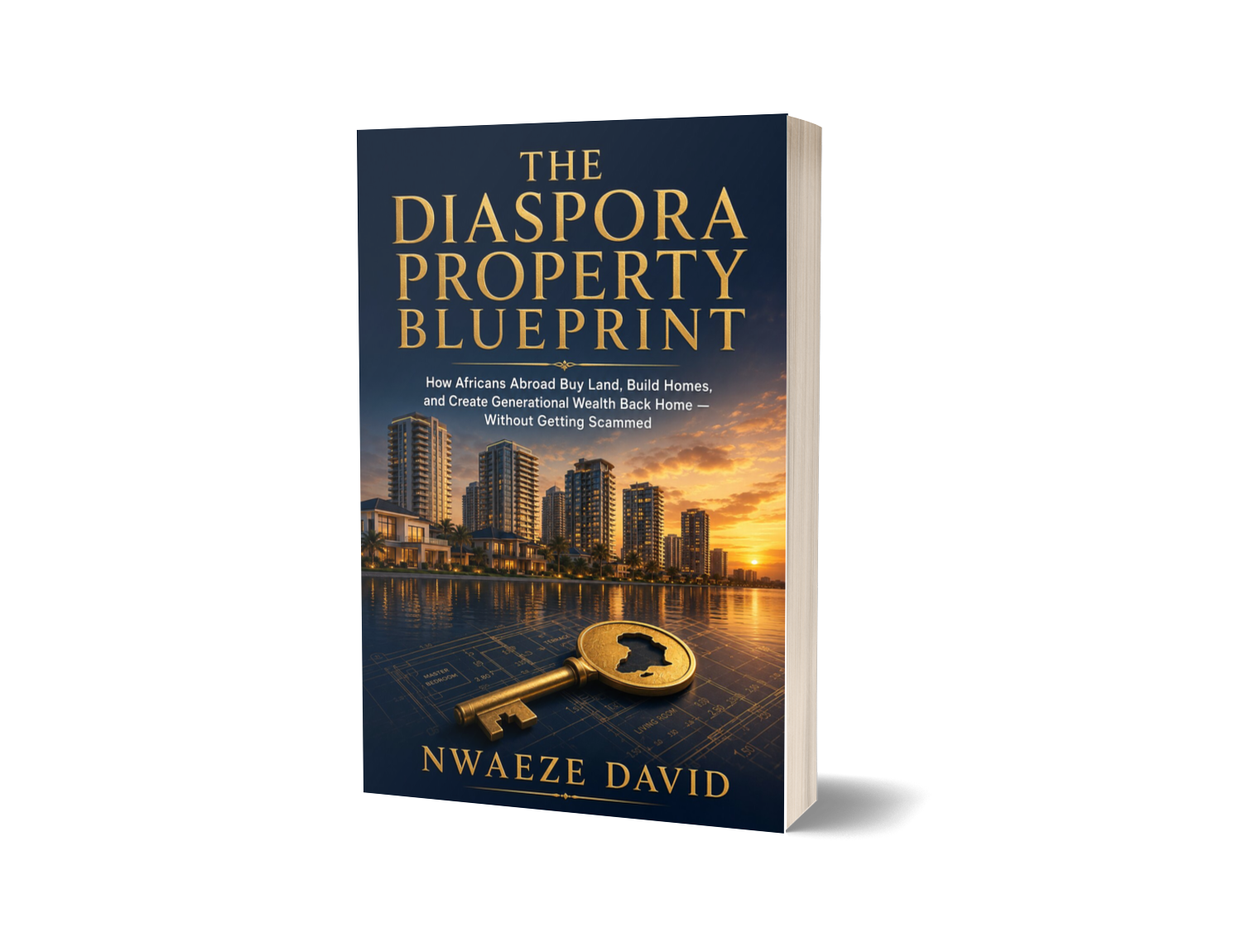
"The Diaspora Property Blueprint is the complete, step-by-step system for buying land and building wealth back home safely, from anywhere in the world."
Get Your Copy →Get help verifying your next property back home
Join the newsletter for practical, no-hype breakdowns of investing back home, then step inside the private community where diaspora investors help each other vet developers and verify documents before money moves.
Keep learning: diaspora real estate investment · buying land in Nigeria · how to verify property documents in Nigeria · diaspora mortgage.
Education only, not legal or financial advice. Regulatory details, exchange rates, and product terms referenced here change and are marked for verification where noted. This is real money and real fraud risk; consult a licensed Nigerian lawyer and your bank directly before sending funds for any property transaction.

Written by
Nwaeze David
Nigerian digital entrepreneur, educator and author of three real estate books. He writes practical, honest guides for new investors, working realtors and Africans building back home from abroad.


