
How to protect your real estate assets from lawsuits comes down to one honest fact most people learn too late: the protection only works if you build it before you need it.
What's Inside

How to protect your real estate assets from lawsuits is best understood as building layers, not choosing a single tool. No individual strategy, insurance, an LLC, a trust, blocks every possible threat on its own, which is exactly why the strongest approach combines several, each covering a gap the others miss.
Quick honesty note
This is education, not legal advice. Homestead exemption amounts and other state-specific figures below vary substantially by state. Consult a licensed asset protection attorney for your specific situation.
The Short Answer
In short: Asset protection only works if it's built before any legal threat exists, transfers made after a lawsuit is filed or a claim is known can be reversed by a court as a fraudulent conveyance.
From there, layer comprehensive insurance as your first line of defense, entity structure to separate personal and investment assets, homestead exemptions where applicable, and titling strategies like land trusts for added privacy, since each layer covers a gap the others don't.
The Single Most Important Rule: Timing

Protection built too late can be reversed by a court
Transfers made after a lawsuit has been filed, or after a claim is already known, can be challenged as fraudulent conveyances and unwound entirely, regardless of how well-structured the transfer itself was.
The time to protect your real estate is now, while you're solvent and before any dispute has emerged, not after an incident occurs.
This is a genuinely common misconception worth correcting directly: asset protection isn't something to defer until you have a large portfolio or years of experience, since by definition it has to be in place before you need it to matter.
Insurance, the Foundational Layer With Real Limits
Comprehensive insurance is widely described as the cheapest and most effective layer of protection available, and also the one many owners under-build relative to their actual exposure.
Landlord insurance covers property damage, loss of rent, and liability claims arising from leasing activity specifically, while an umbrella policy adds a substantial additional layer of liability coverage on top of your existing homeowners and auto policies.
Insurance has a ceiling. Know where it is.
Umbrella insurance covers liability only up to its stated policy limit, it does not protect your assets from judgment enforcement once that limit is exhausted.
In a catastrophic case, a $10 million judgment against a $2 million umbrella policy leaves the first $2 million covered by insurance, with the remaining $8 million enforceable against your personal assets, including home equity.
Umbrella policies also commonly exclude business-related claims, professional liability, and intentional acts, worth confirming directly with your carrier for how your specific rental activity is classified.
Where Entity Structure Fits In
Holding property in an LLC separates that asset from your personal name and, when using separate LLCs per property, limits how far a single lawsuit can spread across your broader portfolio.
This is a genuinely important layer, but it's one layer among several, not a complete solution on its own, and it requires ongoing discipline: maintaining strict separation between personal and entity finances, since commingling funds is a primary way courts pierce that protection entirely.
For the full formation process, see how to form an LLC for real estate investing, and for the fuller debate over whether an LLC is the right call for your specific situation, should you hold rental property in an LLC? covers that question directly.
Homestead Exemptions, and Why They Vary So Much

A homestead exemption protects a certain amount of equity in your primary residence from general creditor claims, but the actual amount protected varies enormously by state, from a relatively modest fixed dollar amount in some states to Florida's constitutionally unlimited homestead protection.
These exemptions offer real, meaningful protection, but only partially and only against certain types of creditors, they're not an absolute shield, and they typically apply only to a primary residence rather than investment property.
Land Trusts and Titling for Privacy
A land trust offers a different kind of protection: privacy rather than direct liability shielding. Instead of a property being deeded directly to you or even to a named LLC, the trust itself, rather than the individual investor, appears as titleholder on the public deed, which can remove your name from what a potential plaintiff's attorney finds when researching your assets before deciding whether to file suit.
Married couples in states that recognize tenancy by the entirety have an additional option worth understanding: this structure can protect real estate from creditors of either spouse individually, since a creditor generally can't reach property held this way based on one spouse's debt alone.
Common Mistakes (and How to Dodge Them)
- Waiting until a lawsuit seems likely to start structuring protection. By then, transfers can be reversed as fraudulent conveyances; the architecture has to exist before any threat does.
- Assuming an umbrella policy covers everything. It caps out at its stated limit and commonly excludes business-related and intentional-act claims.
- Believing an LLC alone is sufficient protection. It's one layer among several, and commingling personal and entity finances can undo it entirely.
- Overestimating homestead exemption protection based on another state's rules. The actual amount protected varies enormously, and assuming your state matches a more generous one can leave you exposed.
- Treating asset protection as something only large, established portfolios need. The strategy has to be in place before an incident occurs, regardless of portfolio size.
FAQs on How to Protect Your Real Estate Assets
Can I set up asset protection after I've already been sued?
Generally no. Transfers made after a lawsuit has been filed or a claim is known can be challenged as fraudulent conveyances and reversed by a court. Protection has to be built before any legal threat exists.
Is umbrella insurance enough to protect my real estate assets?
It's an important foundational layer, but it only covers liability up to its policy limit, and commonly excludes business-related claims and intentional acts. It works best combined with other layers, not as a standalone solution.
Does an LLC fully protect my personal assets from a lawsuit related to my rental property?
It provides meaningful separation, but it's one layer among several and requires strict separation of personal and entity finances to hold up; commingling funds is a common way this protection gets undone.
How much does a homestead exemption actually protect?
It varies enormously by state, from a modest fixed amount in some states to unlimited protection in others like Florida, and it applies only partially and only against certain creditors even where generous.
What is a land trust and how does it help with asset protection?
A land trust holds title to a property so the trust, rather than the individual investor, appears on the public deed, offering privacy that can make it harder for a potential plaintiff's attorney to identify your assets before filing suit.
Do I need asset protection if I only own one or two rental properties?
Yes, it's a common misconception that this is only necessary for large portfolios. Since protection must be built before any legal threat arises, waiting until your portfolio grows means the window to act may have already closed.
Build the Layers Before You Need Them
How to protect your real estate assets from lawsuits ultimately comes down to timing and layering, not any single tool.
Comprehensive insurance, sound entity structure, applicable homestead exemptions, and thoughtful titling each cover a different gap, and all of it only works if it's in place before a claim ever exists. Waiting until you think you need it is, by definition, waiting too long.
Take This Further
Books by Nwaeze David to help you build real wealth through property.
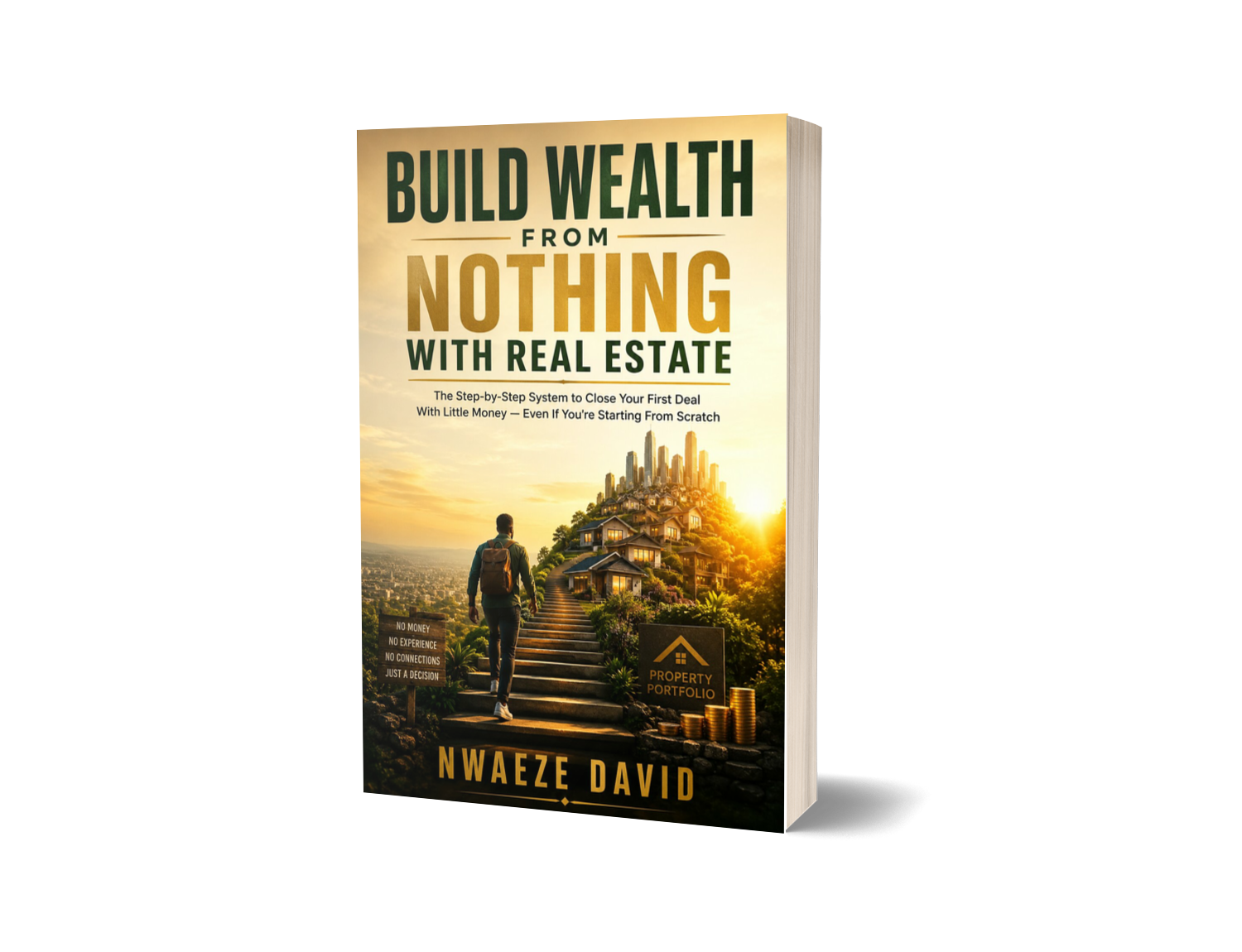
"You don't need a big deposit, perfect credit, or family money to build wealth in real estate. You need a system, the resourcefulness to work it, and the courage to start."
Get Your Copy →
"The AI Real Estate Investor gives you that system. It shows you exactly how to point AI at the parts of your business that actually make money."
Get Your Copy →
"The Diaspora Property Blueprint is the complete, step-by-step system for buying land and building wealth back home safely, from anywhere in the world."
Get Your Copy →Get help building your own layered defense
Join the newsletter for practical, no-hype breakdowns of protecting your real estate wealth, then step inside the private community where investors compare notes on structuring protection before they need it.
Keep learning: real estate taxes and legal protection · how to form an LLC for real estate investing · should you hold rental property in an LLC?.
Education only, not legal advice. Homestead exemption amounts and other state-specific figures vary substantially and change; figures here are illustrative and marked for verification where noted. Consult a licensed asset protection attorney for your specific situation.

Written by
Nwaeze David
Nigerian digital entrepreneur, educator and author of three real estate books. He writes practical, honest guides for new investors, working realtors and Africans building back home from abroad.


