
Real estate investing in a recession comes down to a genuinely asymmetric outcome between two kinds of investors: the ones with reserves, and the ones who are forced to sell.
What's Inside

Real estate investing in a recession isn't primarily about predicting whether one is coming, that question is covered fully in will the housing market crash? what the data says.
This is about what to actually do if one does, and the honest answer starts with a genuinely asymmetric outcome: the investors who prepared ahead of time get to buy, and the ones who didn't get forced to sell.
Quick honesty note
This is education, not financial advice. Every recession is different, and specific strategies here should be weighed against your own risk tolerance and current portfolio, ideally with a financial professional's input.
The Short Answer
In short: Cash reserves determine outcomes in a recession more than almost any other factor, investors with reserves can acquire distressed assets at real discounts, while those without are forced to sell into weakness.
Favor multifamily and affordable housing over luxury, keep 6-12 months of property expenses in reserve, stress-test your existing portfolio before a downturn arrives, and buy based on fundamentals rather than the emotional pull of falling headlines.
Cash Becomes Power
The asymmetry that defines every downturn
Investors who lack reserves are forced to sell into weakness. Investors who have reserves can acquire at the resulting discounts.
This is the single most important dynamic in recession-era real estate: the exact same downturn produces opposite outcomes depending entirely on whether you prepared for it in advance.
Liquidity in this context isn't idle money sitting on the sidelines, it's strategic positioning, the ability to act when fear-driven pricing creates a genuine opportunity that a cash-strapped competitor simply can't take.
A commonly cited benchmark is keeping an emergency reserve equal to 6-12 months of property expenses, mortgage payments, insurance, and maintenance combined, meaningfully higher than the reserve levels typically recommended for a first home purchase, reflecting the added risk of holding investment property specifically through a downturn.
Which Property Types Actually Hold Up

- Multifamily housing is the most consistently cited recession-resistant property type, since housing demand persists even when the broader economy weakens.
- Affordable and workforce housing specifically outperforms luxury housing in a downturn. Affordable rentals often see steady or even increased demand, while luxury properties face real pressure as tenants become unwilling to pay premium rents during uncertain times.
- Self-storage holds up well, tied to essential, non-discretionary demand regardless of broader conditions.
- Healthcare-related commercial real estate, medical office space in particular, tends to be more resilient than more cyclical commercial sectors.
- Tenant employment stability matters as much as property type. Properties serving tenants employed in recession-resistant industries generally perform better regardless of the specific asset class.
The Stress Test Worth Running Now

Before a downturn arrives, model what happens to your existing holdings if rents decline 10-15%, vacancy doubles, or property values drop 20%.
Review every financing term for rate adjustments, balloon payments, or loan covenant issues that could create pressure under stress.
Identify which specific properties are most vulnerable, then take proactive steps, building additional reserves, refinancing to fixed rates, or reducing leverage on the holdings most exposed, well before you're forced into those decisions under pressure.
Financing That Still Works in a Downturn
DSCR loans, which qualify based on a property's own income rather than the borrower's personal income, can remain more accessible during a downturn than conventional financing, particularly for experienced investors with already-stabilized assets.
That said, pricing and reserve requirements on these loans may shift with market volatility, so this isn't a guarantee of unchanged terms, simply a reason this financing structure tends to hold up better than personal-income-based lending when conditions tighten.
Fear Creates Opportunity. Emotion Still Ruins It.
This connects directly to a pattern covered in real estate investing mistakes to avoid, letting emotion substitute for analysis. A recession genuinely does create pricing inefficiencies worth pursuing, but "prices are falling so I should buy something" is an emotional response, not a fundamentals-driven one.
Disciplined investors run the same structured analysis, cash flow, tenant quality, financing terms, in a downturn that they would in any other market, rather than buying simply because everything feels cheap relative to recent memory.
Not Every Downturn Is the Same Downturn
The 2008 downturn stemmed primarily from excessive leverage and a housing-market collapse specifically; multifamily occupancy weakened temporarily but recovered considerably faster than many other sectors.
A more recent cycle looked meaningfully different: rather than collapsing occupancy, the central issue was financing conditions and capital markets pricing, not falling rents.
Not every real estate downturn shares the same root cause, sometimes it's genuine tenant demand collapsing, other times it's capital markets tightening while actual occupancy holds up fine. Understanding which kind of downturn you're actually in should shape your response more than a generic playbook would.
Common Mistakes (and How to Dodge Them)
- Entering a downturn without adequate reserves. This is the single factor most likely to force a sale into weakness rather than allowing a purchase into strength.
- Assuming all property types perform the same in a recession. Affordable housing, multifamily, and recession-resistant tenant industries meaningfully outperform luxury and more cyclical sectors.
- Waiting until a downturn hits to stress-test your portfolio. Running the numbers in advance allows time to refinance or deleverage before pressure forces the decision.
- Buying purely because prices feel cheap. That's an emotional response; disciplined investors still run the same fundamentals-based analysis they always would.
- Applying the same playbook to every downturn. Occupancy-driven and financing-driven recessions call for different defensive priorities.
Frequently Asked Questions
Is it a good idea to buy real estate during a recession?
It can be, for investors who entered the downturn with adequate cash reserves and can acquire distressed or discounted properties on fundamentals. Investors without reserves are more often forced to sell rather than buy.
Which property types hold up best during a recession?
Multifamily housing, affordable and workforce rentals specifically, self-storage, and healthcare-related commercial space are among the most consistently cited recession-resistant property types.
How much cash should I keep in reserve as a real estate investor?
A commonly cited benchmark is 6 to 12 months of property expenses, including mortgage payments, insurance, and maintenance, a higher bar than typically recommended for a primary home purchase.
Can I still get financing for real estate during a recession?
DSCR loans, which qualify based on property income rather than personal income, can remain more accessible than conventional financing during a downturn, though pricing and reserve requirements may shift with market conditions.
How do I know if a property is at risk in a recession?
Model what happens if rents fall 10-15%, vacancy doubles, or values drop 20%, and review financing terms for rate adjustments or covenant issues that could create pressure under those conditions.
Are all real estate recessions caused by the same thing?
No. Some downturns are driven by falling tenant demand and occupancy, while others are driven primarily by financing conditions and capital markets tightening even as occupancy holds up. The right defensive response depends on which is occurring.
Prepare Before the Headlines Do
Real estate investing in a recession rewards preparation far more than prediction.
Build cash reserves before you need them, favor property types and tenant profiles that hold up under stress, stress-test your existing portfolio while conditions are still calm, and buy based on fundamentals rather than the emotional pull of a falling headline.
The investors who come out ahead in a downturn are rarely the ones who called it correctly, they're the ones who were ready either way.
Take This Further
Books by Nwaeze David to help you build real wealth through property.
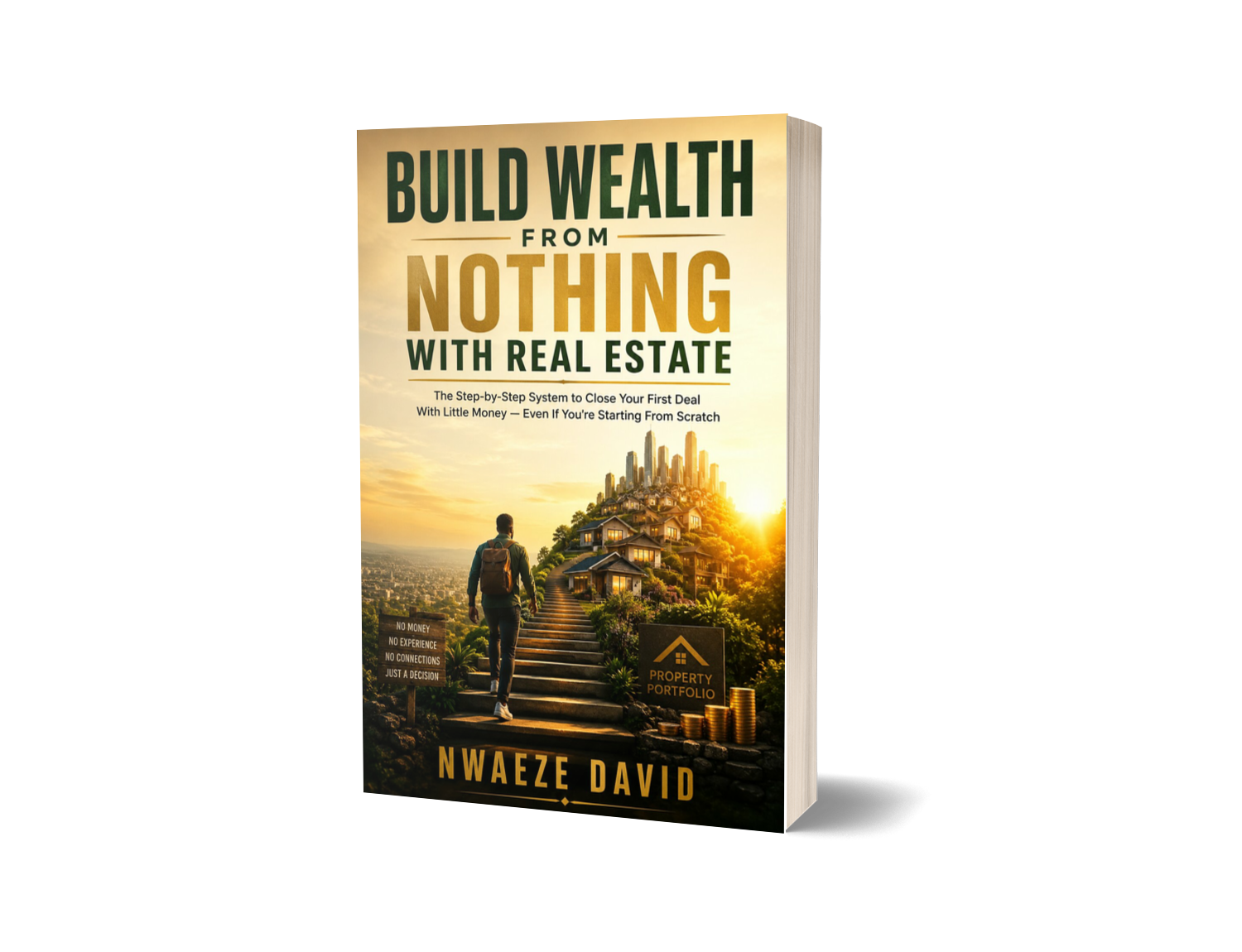
"You don't need a big deposit, perfect credit, or family money to build wealth in real estate. You need a system, the resourcefulness to work it, and the courage to start."
Get Your Copy →
"The AI Real Estate Investor gives you that system. It shows you exactly how to point AI at the parts of your business that actually make money."
Get Your Copy →
"The Diaspora Property Blueprint is the complete, step-by-step system for buying land and building wealth back home safely, from anywhere in the world."
Get Your Copy →Get help building a defensive real estate strategy
Join the newsletter for practical, no-hype breakdowns of real estate investing, then step inside the private community where we help investors stress-test their own portfolios before conditions force the question.
Keep learning: will the housing market crash? what the data says · real estate investing mistakes to avoid · how to calculate rental property ROI.
Education only, not financial advice. Recession dynamics vary by cause and severity; strategies here are general guidance, not a guarantee of outcomes. Consult a financial professional before making decisions based on anticipated economic conditions.

Written by
Nwaeze David
Nigerian digital entrepreneur, educator and author of three real estate books. He writes practical, honest guides for new investors, working realtors and Africans building back home from abroad.


