
How interest rates affect real estate prices comes down to a simple mechanism with a genuinely counterintuitive consequence: rates rising doesn't crash prices the way most buyers expect, it mostly just slows things down and locks sellers in place.
What's Inside

How interest rates affect real estate prices starts with a mechanism most people already sense but rarely see quantified: the same monthly payment buys a meaningfully different amount of house depending on the rate attached to it.
What's less obvious is why rates rising doesn't simply push home prices down the way that logic might suggest.
Quick honesty note
This is education, not financial advice. Specific rate and market figures below reflect data available as of research, recheck current numbers before making a decision.
The Short Answer
In short: A 1% change in mortgage rates shifts a buyer's purchasing power by roughly 10-11% on the loan amount, which is why rates affect what buyers can afford long before they affect the sticker price on a listing.
When rates rise, sales volume slows first, within weeks, while median prices lag by months since they reflect deals negotiated earlier.
Rates rising rarely crashes prices outright because it also discourages current owners with low locked-in rates from selling, tightening supply at the same time demand softens.
The Buying-Power Math
Swipe to see more →
| Rate | What a $2,530/month payment buys |
|---|---|
| 6.5% | Approximately a $400,000 home |
| 5.5% | Approximately a $446,000 home |
A single percentage point of rate improvement added roughly $46,000 of purchasing power in that example, without the buyer's monthly budget changing at all.
On a $400,000 mortgage specifically, a 1% rate change moves the monthly payment by roughly $235, which compounds to over $84,000 across a 30-year term.
This is the core mechanism: rates change what a given monthly budget can buy long before they change what's printed on any listing.
Why Rate Hikes Rarely Crash Prices Outright

Rising mortgage rates rarely crash home prices the way many buyers expect. Instead, higher borrowing costs typically slow the pace of price appreciation, extend how long homes sit on the market, and shift negotiating leverage toward buyers, while national median prices often keep climbing, just more slowly.
The relationship is asymmetric and sequenced: sales volume reacts first, marginal buyers who are most sensitive to affordability tend to step back within weeks of a rate increase, while median sale prices lag because they reflect deals negotiated earlier, sometimes months before.
In one recent stretch, existing-home sales fell for six consecutive months before price growth showed any meaningful slowdown, a real, concrete illustration of that lag.
The Lock-In Effect, and What It Actually Explains

A real, measurable effect
Millions of homeowners locked in mortgage rates below 3-4% during 2020 and 2021. Selling now would mean giving up that rate and financing a new home at a meaningfully higher cost, so many simply choose to stay put, an effect commonly called the lock-in effect.
This isn't just a narrative: Harvard's Joint Center for Housing Studies found that a 1 percentage-point decrease in the average outstanding mortgage rate in 2021; increased nominal house price growth by 8 percentage points between 2021 and 2023.
That rate lock explains roughly 40% of the gap between the price decline that basic supply-and-demand logic would have predicted and the price growth actually observed. Some estimates suggest this effect has kept 1.3 to 1.5 million homes off the market annually.
It's worth being honest that low rates aren't the only reason owners stay in place.
One survey found that only about 21% of borrowers cited their low mortgage rate specifically as the reason they're staying longer, while nearly as many, around 19%, simply said they like their current home, and 13% cited high home prices generally rather than their own rate specifically.
The lock-in effect is real and measurable, but it's one factor among several, not the sole explanation for tight inventory.
There's also a genuine silver lining for owners who are also buyers: many are sitting on substantial home equity from price appreciation since 2020, which can offset some of the rate increase's impact on their next purchase.
Why a Fed Rate Cut Doesn't Always Lower Mortgage Rates
The Federal Reserve directly controls the federal funds rate, the overnight rate banks charge each other, but mortgage rates actually track the 10-year Treasury yield, which responds more to inflation expectations and global bond demand than to the Fed's rate alone.
This is why a Fed rate cut doesn't always translate into lower mortgage rates: if bond investors interpret a cut as a sign inflation will persist, they may sell Treasuries, pushing the 10-year yield, and mortgage rates along with it, higher rather than lower.
Understanding this distinction helps explain why mortgage rate movements sometimes seem to defy Fed policy announcements.
Common Mistakes (and How to Dodge Them)
- Expecting home prices to fall immediately when rates rise. Sales volume typically reacts first, with prices lagging by months.
- Assuming a Fed rate cut automatically lowers mortgage rates. Mortgage rates track the 10-year Treasury yield, which can move independently of Fed policy.
- Attributing all tight inventory to the lock-in effect alone. Survey data shows it's a real but partial explanation; liking one's home and general price levels also matter.
- Underestimating how much a small rate change affects purchasing power. A single percentage point can shift buying power by roughly 10-11% on the loan amount.
- Ignoring the equity offset available to sellers who are also buyers. Substantial home equity gained since 2020 can partially offset a higher rate on the next purchase.
Frequently Asked Questions
How much does a 1% change in mortgage rates affect what I can afford?
Roughly 10-11% in purchasing power on the loan amount. For example, a payment that buys a $400,000 home at 6.5% could buy roughly $446,000 at 5.5%.
Do home prices fall when mortgage rates rise?
Not typically in a dramatic way. Rising rates usually slow the pace of price growth and extend time on market rather than causing an outright decline, partly because tighter supply from the lock-in effect offsets softening demand.
What is the mortgage rate lock-in effect?
It describes homeowners who locked in low rates in 2020-2021 choosing not to sell, since doing so would mean financing a new home at a meaningfully higher rate. Research suggests this has kept a significant number of homes off the market and supported prices.
Is the lock-in effect the only reason homeowners aren't selling?
No. Survey data shows it's one factor among several; many owners also simply like their current home or are deterred by high home prices generally, not their own mortgage rate specifically.
Does the Federal Reserve directly control mortgage rates?
Not directly. The Fed sets the federal funds rate, an overnight bank lending rate, while mortgage rates track the 10-year Treasury yield, which responds more to inflation expectations and bond market demand.
Why does sales volume change before home prices do?
Marginal buyers most sensitive to affordability tend to withdraw from the market within weeks of a rate change, while median sale prices reflect deals that were negotiated earlier, causing prices to lag behind shifts in sales activity.
Watch Purchasing Power, Not Just the Headline Rate
How interest rates affect real estate prices is really a story about purchasing power first and prices second, with sales volume moving before prices catch up.
The lock-in effect adds a real, measurable wrinkle that keeps prices more resilient to rising rates than simple supply-and-demand logic alone would predict, but it's one piece of a larger picture, not the whole explanation.
Take This Further
Books by Nwaeze David to help you build real wealth through property.
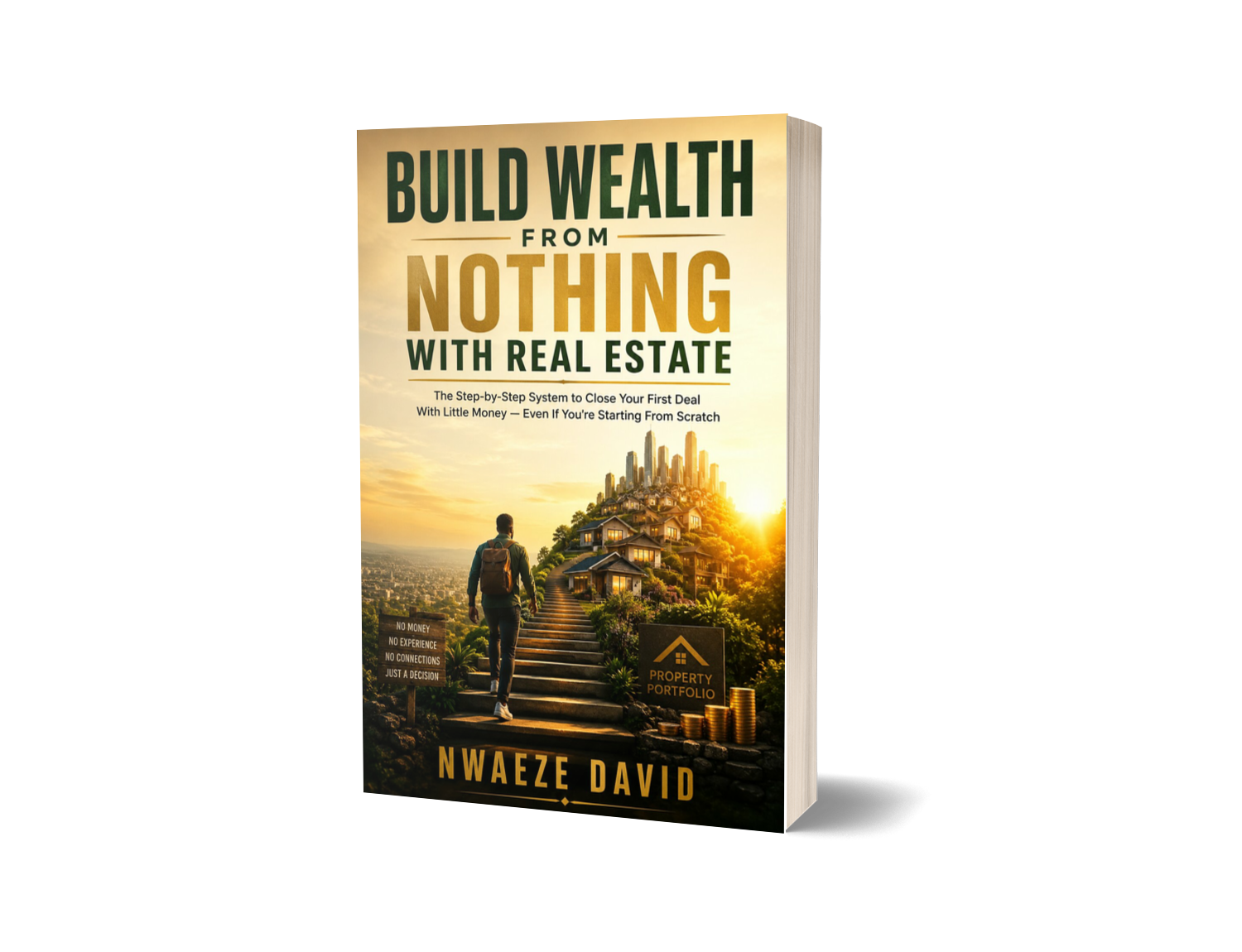
"You don't need a big deposit, perfect credit, or family money to build wealth in real estate. You need a system, the resourcefulness to work it, and the courage to start."
Get Your Copy →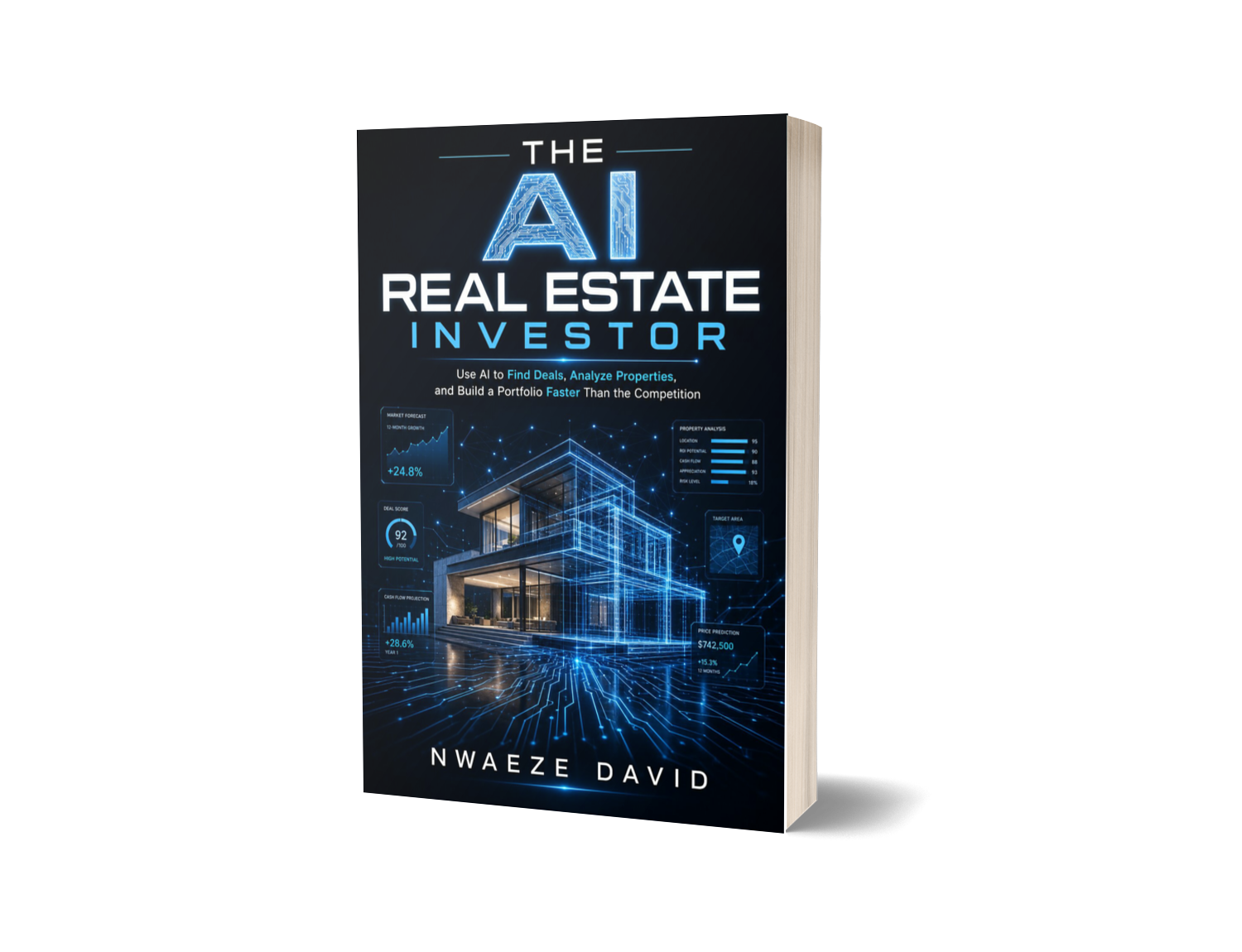
"The AI Real Estate Investor gives you that system. It shows you exactly how to point AI at the parts of your business that actually make money."
Get Your Copy →
"The Diaspora Property Blueprint is the complete, step-by-step system for buying land and building wealth back home safely, from anywhere in the world."
Get Your Copy →Get help timing your own move
Join the newsletter for practical, no-hype breakdowns of what's actually happening in real estate, then step inside the private community where we talk through what current rates mean for your specific buying or selling decision.
Keep learning: real estate market trends & predictions for 2026 · will the housing market crash? what the data says · is now a good time to buy a house?.
Education only, not financial advice. Mortgage rates, purchasing power figures, and lock-in effect estimates shift with market conditions; figures here reflect data available as of research and are marked for verification where noted. Consult a mortgage professional before making a decision based on rate movements.

Written by
Nwaeze David
Nigerian digital entrepreneur, educator and author of three real estate books. He writes practical, honest guides for new investors, working realtors and Africans building back home from abroad.


