
Closing costs explained honestly: they are not one fee, they are a stack of a dozen smaller ones, and where you buy changes the total more than most people realize. Here is every line item, what sellers pay separately, and how to actually pay less.
What's Inside

Closing costs are the collection of fees, beyond your down payment, required to actually finalize a home purchase or sale: lender charges, title work, government recording fees, prepaid taxes and insurance, and more.
Buyers typically pay 2% to 6% of the purchase price, sellers typically pay 6% to 10% once agent commission is included, and the exact total depends heavily on where you live, not just what you are buying.
This guide breaks down every line item for both sides, explains why your state can change the total by thousands of dollars, and covers real ways to bring the number down.
Quick honesty note
This is education, not financial or legal advice. Every fee below is a typical range, not a fixed price. Your actual costs depend on your lender, title company, state, and specific transaction. Your Loan Estimate and Closing Disclosure are the only numbers that matter for your specific deal.
The Short Answer
In short: Closing costs are the fees required to finalize a real estate transaction, separate from the down payment. Buyers typically pay 2% to 6% of the purchase price, covering lender fees, title work, and prepaid taxes and insurance.
Sellers typically pay 6% to 10% once agent commission is included. The total varies significantly by state, driven mainly by transfer taxes and whether an attorney is required at closing.
The Full Itemized Buyer Breakdown
Swipe to see more →
| Fee | Typical range |
|---|---|
| Loan origination fee | 0.5%-1.5% of loan amount |
| Underwriting / processing fee | $500-$1,000 |
| Appraisal | $400-$800 |
| Credit report | $30-$100 |
| Title insurance (lender's + owner's) | $500-$3,500 |
| Title search | $150-$400 |
| Attorney fees (where required) | $500-$1,500 |
| Recording fees | $50-$250 |
| Survey | $300-$500 |
| Prepaid taxes, insurance, and interest + escrow deposit | $2,000-$6,000+ |
Notice which line is usually the biggest: prepaid items and escrow, not the origination fee most buyers fixate on. These are not really "fees," they are advance payments toward taxes and insurance you would owe anyway, but they still show up as real cash due at closing.
What Sellers Pay
- Agent commission. Typically the largest single cost, commonly totaling around 5%-6% combined, though this is fully negotiable and structured differently since 2024. See buying and selling a home for the current commission rules.
- Transfer taxes. Paid by the seller in many, but not all, states and localities.
- Owner's title insurance. Often customary for the seller to cover in many markets.
- Prorated property taxes and any outstanding liens. Settled at closing from sale proceeds.
- Attorney fees, where required or customary.
Excluding commission, seller costs commonly run 2%-4% of the sale price; including commission, the total typically reaches 6%-10%. These come out of your proceeds at closing, so you generally do not need extra cash on hand to cover them.
Why Your State Changes Everything

A concrete example
A buyer purchasing a $462,000 home in New York pays an estimated $13,640 in closing costs. The same buyer purchasing the same $462,000 home in Indiana pays approximately $4,620.
That roughly $9,000 gap comes entirely from state-specific transfer taxes, attorney requirements, and title insurance pricing, not from anything about the property itself.
- States with little or no transfer tax (commonly cited: Texas, Florida, Arizona, Nevada, Wyoming, Mississippi, Alaska) tend to run lower overall, with more of the cost falling to the buyer rather than being split by transfer tax custom.
- States requiring attorney representation at closing (commonly cited: several Northeastern states) add a real, mandatory cost most buyers in other states never encounter.
- City and county-level transfer taxes stack on top of state rates in some areas, adding further local variation even within the same state.
National averages are a starting point, not your number. Ask your agent or lender directly what is customary in your specific market before you budget.
The Loan Estimate vs the Closing Disclosure

Two federally required documents govern this process. The Loan Estimate arrives within three business days of applying for your mortgage, giving you an early, standardized snapshot of expected costs so you can compare lenders on equal footing.
The Closing Disclosure arrives at least three business days before your actual closing, by law, and reflects your final, confirmed numbers. Compare these two documents line by line, since a significant unexplained jump between them is worth questioning before you sign.
How to Reduce Your Closing Costs
- Shop multiple lenders. Origination fees alone can range from $0 to several thousand dollars between lenders for the same loan. A marketplace like LendingTree speeds up this comparison.
- Negotiate seller concessions. Asking the seller to cover part of your closing costs is common, especially with any negotiating leverage.
- Close near the end of the month. This reduces the prepaid interest due at closing, sometimes by hundreds of dollars.
- Skip discount points if minimizing upfront cost matters more than rate. You can refinance later if rates improve.
- Shop title insurance and other services separately where your state allows choosing your own provider.
- Ask about a no-closing-cost loan option. Fees get rolled into a slightly higher rate instead of paid upfront, useful if cash is tight now.
- Check down payment assistance programs. Some cover closing costs as well as the down payment for qualifying buyers. See best mortgage lenders for first-time buyers.
Common Mistakes (and How to Dodge Them)
- Budgeting only the down payment. Closing costs are a separate, real cash requirement on top of it.
- Assuming closing costs are fixed. Many line items, especially lender fees and third-party service providers, are genuinely negotiable or shoppable.
- Ignoring state-specific costs. A national average tells you almost nothing about your actual local number.
- Not comparing the Loan Estimate to the Closing Disclosure. A meaningful, unexplained jump between the two is worth questioning before you sign.
- Forgetting sellers pay costs too. If you are selling, budget for your side separately, it comes out of your proceeds, not your pocket upfront, but it still reduces what you walk away with.
Frequently Asked Questions on Closing Costs
How much are closing costs typically?
Buyers typically pay 2% to 6% of the purchase price in closing costs, commonly $6,000 to $18,000 on a median-priced home, though this varies significantly by location.
Sellers typically pay 6% to 10% of the sale price once agent commission is included, generally deducted from their proceeds rather than paid upfront in cash.
What is included in closing costs?
Closing costs include lender fees like origination and underwriting, third-party fees like appraisal, credit report, and title insurance, government fees like recording and transfer taxes, and prepaid items like homeowner's insurance, property taxes, and interest, often the single largest category. Attorney fees apply in states that require legal representation at closing.
Why do closing costs vary so much by state?
Primarily due to transfer taxes and attorney requirements, both set at the state and sometimes city or county level.
States with little or no transfer tax and no attorney requirement tend to have meaningfully lower closing costs than states with both, even on an identically priced home. The difference can run into the thousands of dollars for the same purchase price.
What is the difference between a Loan Estimate and a Closing Disclosure?
The Loan Estimate arrives within three business days of applying for a mortgage and gives an early, standardized snapshot of expected costs to compare lenders.
The Closing Disclosure arrives at least three business days before your actual closing, by law, and reflects your final, confirmed costs. Comparing the two catches unexplained cost increases before you sign.
Can I negotiate closing costs?
Many components are negotiable, even though the total feels fixed. You can shop lenders for origination and underwriting fees, ask the seller for a closing cost concession, shop separately for title insurance where your state allows it, and time your closing near month-end to reduce prepaid interest.
Do sellers pay closing costs too?
Yes. Sellers typically pay 2% to 4% of the sale price in closing costs excluding agent commission, or 6% to 10% including it.
These costs are generally deducted directly from the seller's proceeds at closing rather than requiring separate cash upfront.
Know the Number Before You Get to the Table
Closing costs stop being scary once you see them as a list of specific, largely predictable line items rather than one mysterious lump sum.
Get your Loan Estimate early, compare it carefully to your final Closing Disclosure, and use the real negotiating and shopping strategies above rather than treating the total as fixed. A little preparation here regularly saves buyers and sellers thousands of dollars.
Take This Further
Books by Nwaeze David to help you build real wealth through property.
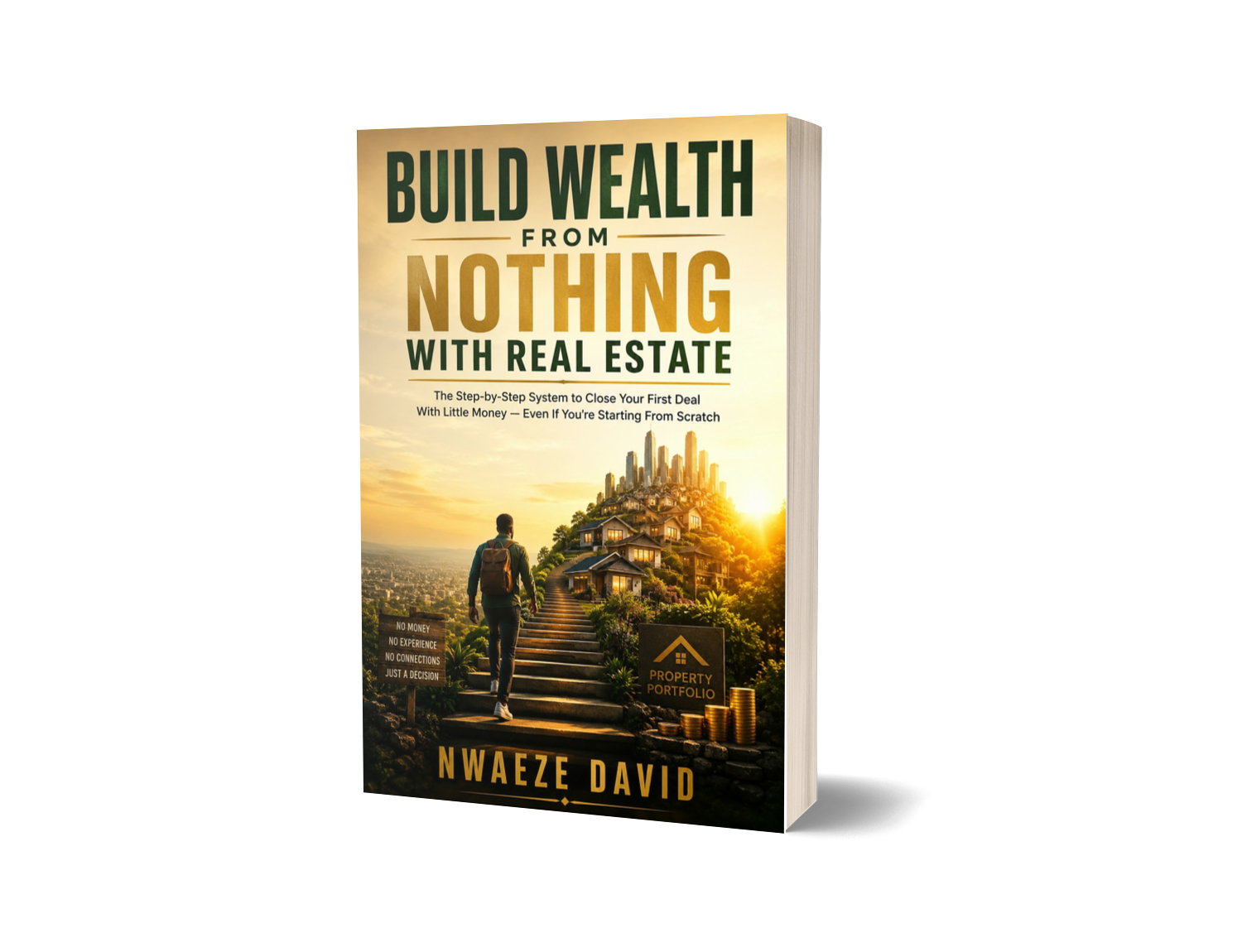
"You don't need a big deposit, perfect credit, or family money to build wealth in real estate. You need a system, the resourcefulness to work it, and the courage to start."
Get Your Copy →
"The AI Real Estate Investor gives you that system. It shows you exactly how to point AI at the parts of your business that actually make money."
Get Your Copy →
"The Diaspora Property Blueprint is the complete, step-by-step system for buying land and building wealth back home safely, from anywhere in the world."
Get Your Copy →Get help budgeting for your actual number
Join the newsletter for practical, no-hype breakdowns of what buying and selling really cost, then step inside the private community where we help you shop and negotiate the fees that are actually negotiable.
Keep learning: first-time home buyer guide · buying and selling a home · how to get pre-approved for a home loan · what is earnest money and how does it work? · how to negotiate when buying a house.
Education only, not financial or legal advice. Closing cost figures, fee ranges, and state-specific customs are illustrative and vary by lender, title company, and location, and change over time; figures here are marked for verification where noted. Speak to a licensed lender, agent, and where required an attorney, and rely on your own Loan Estimate and Closing Disclosure for your specific transaction.

Written by
Nwaeze David
Nigerian digital entrepreneur, educator and author of three real estate books. He writes practical, honest guides for new investors, working realtors and Africans building back home from abroad.


