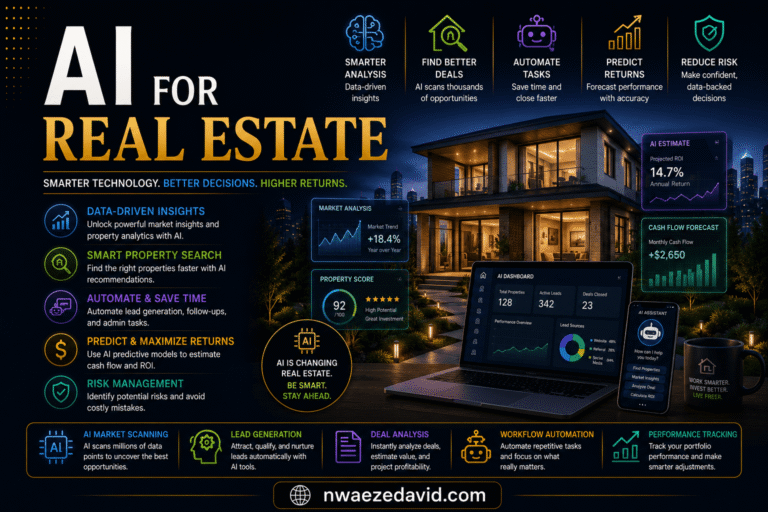
AI chatbots for real estate can qualify a lead at 2 a.m. without you lifting a finger, but the rules governing how you're allowed to reach out to that lead carry real financial exposure if you get them wrong.
What's Inside

AI chatbots for real estate handle the intake conversation a static contact form never could, capturing budget, timeline, and motivation in a prospect's own words at any hour.
This complements the broader lead-generation and automation coverage in AI for real estate with a closer look at how these tools work and the compliance area that carries genuinely real financial stakes.
Quick honesty note
This is education, not legal advice. The TCPA compliance section below covers a genuinely complex, rapidly-evolving regulatory area with real financial exposure.
Consult a telecom attorney directly before launching any automated calling or texting program; the specifics here should be reconfirmed against current guidance.
The Short Answer
In short: AI chatbots range from simple scripted flows to LLM-powered conversational agents and increasingly voice AI, all capturing and qualifying leads without an agent present.
The genuinely important part isn't the technology, it's compliance: the Telephone Consumer Protection Act applies to AI-generated texts and calls just as it does to traditional ones, with violations running $500 to $1,500 per message with no cap.
Implied consent from an inbound inquiry isn't sufficient for automated outreach, and a lead purchased through a third-party portal doesn't automatically transfer valid consent to you.
How These Tools Actually Work

Simple scripted chatbots follow a fixed decision tree, useful for basic FAQ handling and initial routing but limited when a prospect's question falls outside the script.
LLM-powered conversational tools handle open-ended questions and capture nuanced context, budget, timeline, motivation, in the prospect's own natural language rather than forcing them through rigid menu choices.
Voice AI represents the newest, fastest-growing category, extending the same qualification logic to phone calls rather than website or text chat, though it introduces its own, stricter layer of the compliance considerations below.
The Compliance Area That Carries Real Financial Risk
This is not the same as fair housing compliance
The fair-housing considerations covered elsewhere on this site, avoiding language that implies preferences for certain buyers, are a separate legal area from what governs automated outreach itself.
The Telephone Consumer Protection Act, or TCPA, governs how you're allowed to contact consumers by call and text using automated systems, and it applies fully to AI-generated content.
Following an FCC ruling, AI-generated and cloned voices are treated as "artificial voice" under the statute, meaning AI voice calls to cell phones require prior consent, and AI telemarketing calls require a stricter written form of it.
Marketing texts are treated the same way as calls under this framework.
The financial exposure here is genuinely significant: TCPA violations can run from $500 to $1,500 per violation, with no cap, and the law includes a private right of action that fuels real class action litigation.
This isn't a theoretical risk specific to large call centers, it applies just as directly to a solo agent's automated text follow-up system.
What Valid Consent Actually Requires
- Clear, visible disclosure. The consumer must be clearly told they're agreeing to receive automated messages, not buried in fine print or terms of service.
- An affirmative action. The consumer must actively check a box or submit a form with a clear consent disclosure attached; pre-checked boxes don't satisfy this requirement.
- Specificity about who's contacting them. Disclosure naming your specific company, not generic "partners and affiliates" language, is what courts have generally required.
- Time and format limits. Contact is generally restricted to between roughly 8 a.m. and 9 p.m. in the recipient's time zone, with an easy, immediately-honored opt-out on every communication.
Two Mistakes That Get Agents Sued
Two assumptions worth correcting directly
First: implied consent from a consumer simply contacting you about a listing is not sufficient for automated follow-up.
Someone emailing you about a property has not thereby agreed to receive automated texts or calls, that requires its own separate, affirmative consent.
Second: if your AI system is texting or calling leads who came through a third-party portal, you, not just the portal, need to independently confirm proper, documented consent to contact them via automated means.
Consent doesn't automatically transfer with a purchased lead, and the operator generally remains responsible for verifying it's valid and specific enough to cover their own outreach.
Why This Area Keeps Changing
TCPA rules around AI specifically have shifted direction more than once recently: a rule limiting consent to a single seller per form was vacated by a federal appeals court in early 2025 and formally removed by the FCC later that year, meaning multi-seller lead forms remain valid under federal law even though consent itself is still required.
Separately, proposed disclosure requirements specific to AI-generated calls and texts, requiring callers to disclose AI involvement both at consent and again during the interaction, were still working through the federal rulemaking process as of recent reporting, with the timeline for a final rule genuinely uncertain.
Some states layer their own additional rules on top of federal requirements, adding another dimension worth checking for your specific market.
Given how much this has moved in a short period, treat any summary, including this one, as a starting point for a conversation with a telecom attorney, not a final answer.
Common Mistakes (and How to Dodge Them)
- Assuming a website form submission covers automated text or call follow-up. It generally doesn't; automated outreach requires its own specific, affirmative consent.
- Trusting that a purchased lead's consent automatically covers your outreach. You're generally responsible for independently verifying the consent is valid and specific to your business.
- Treating fair housing and TCPA compliance as the same issue. They're separate legal areas governing different things: what you say versus how you're allowed to contact someone.
- Ignoring state-level rules layered on top of federal TCPA requirements. Roughly half of states have their own additional rules worth checking.
- Treating this as a settled, low-risk area because "everyone does it." The financial exposure and litigation risk are real and apply to solo agents, not just large operations.
FAQs about AI Chatbots for Real Estate
Does the TCPA apply to AI chatbots and voice agents?
Yes. Following an FCC ruling, AI-generated and cloned voices are treated as "artificial voice" under the TCPA, and AI-generated marketing texts are treated the same way as calls under the same framework.
How much can a TCPA violation actually cost?
Violations can run $500 to $1,500 per violation with no cap, and the law includes a private right of action that fuels class action litigation.
If someone emails me about a listing, can my AI system automatically text them?
Not for automated outreach specifically. Implied consent from an inbound inquiry is not sufficient; automated texting or calling generally requires its own separate, affirmative consent.
If I buy leads from a third-party portal, do I need my own consent verification?
Generally yes. Consent doesn't automatically transfer with a purchased lead, and the operator remains responsible for verifying it's valid and specific enough to cover their own outreach.
Is TCPA compliance the same as fair housing compliance for AI-generated content?
No, they're separate legal areas. Fair housing governs what language you use in listings and marketing; TCPA governs how and when you're allowed to contact someone via automated calls and texts.
Are the rules around AI voice and text disclosure settled yet?
Not entirely. Some proposed AI-specific disclosure requirements were still working through federal rulemaking as of recent reporting, and TCPA rules around AI have already shifted direction more than once, so this area warrants direct legal counsel rather than relying on a single summary.
The Technology Is the Easy Part
AI chatbots for real estate are genuinely useful, capturing and qualifying leads around the clock in a way a static form never could. The technology itself is the easy part.
The compliance obligations around automated contact, distinct from and just as important as fair housing considerations, carry real financial exposure and are actively still evolving. Get consent right before you get the chatbot running, not after.
With this, Cluster 11 on AI and automation is complete, covering lead generation, prompt technique, business automation, description generators, and now chatbots and compliance. Together they cover both what AI can genuinely do for a real estate business and where the real guardrails sit.
Take This Further
Books by Nwaeze David to help you build real wealth through property.

"You don't need a big deposit, perfect credit, or family money to build wealth in real estate. You need a system, the resourcefulness to work it, and the courage to start."
Get Your Copy →
"The AI Real Estate Investor gives you that system. It shows you exactly how to point AI at the parts of your business that actually make money."
Get Your Copy →
"The Diaspora Property Blueprint is the complete, step-by-step system for buying land and building wealth back home safely, from anywhere in the world."
Get Your Copy →Get help building a compliant automation system
Join the newsletter for practical AI and automation lessons for property professionals, then step inside AIpreneur Academy, where we build the systems the right way from the start.
Keep learning: AI for real estate · how to use AI to generate real estate leads · how to automate your real estate business with AI.
Education only, not legal advice. TCPA and related regulatory details change and are marked for verification where noted; this area has shifted direction multiple times recently. Consult a licensed telecom attorney before launching any automated calling or texting program.

Written by
Nwaeze David
Nigerian digital entrepreneur, educator and author of three real estate books. He writes practical, honest guides for new investors, working realtors and Africans building back home from abroad.