
Real estate market trends for 2026 have already shown one honest lesson this year: even the professional forecasts moved partway through it, which is worth knowing before trusting any single prediction too much.
What's Inside

Real estate market trends for 2026 are best understood through the four durable signals covered in real estate market trends, inventory, rates, demand, and price trends.
This piece is the current snapshot that plugs into that framework, and it will age faster than almost anything else on this site.
Quick honesty note
This is education, not financial advice. Every figure below reflects data available as of research, recheck current numbers before making any decision based on this content, this category of content changes within weeks, not months.
The Short Answer
In short: 2026 has been described by multiple economists as a rebalancing year, not a crash and not a boom.
Mortgage rates fell from 2025's levels but have recently ticked back up, inventory is rising gradually while remaining below pre-pandemic norms, national price growth is modest and regionally uneven, and sales volume is edging up year-over-year.
Most forecasters see a widely-feared crash as unlikely given current homeowner equity positions.
Mortgage Rates, and Why the Forecast Already Shifted Once
The 30-year fixed mortgage rate fell meaningfully from the roughly 7% level that defined much of 2025 toward the 6% range in early 2026. Earlier-year forecasts, including one from Fannie Mae in March, projected rates continuing to fall below 6% by year-end.
The most recent available data tells a slightly different story: Freddie Mac's survey put the 30-year rate at 6.58% for the week ending July 23, 2026, up slightly from the prior week, and most major forecasters have since revised their year-end expectation to the 6.4-6.5% range rather than the sub-6% figure many buyers had been hoping for.
A further drop below 6% would likely require either clearer Federal Reserve rate cuts or a sharper cooling in inflation data than has materialized so far.
Inventory, and the Relisting Story Most Trackers Miss

Active housing inventory has been rising through 2026, with year-over-year increases reported in the high single digits in several trackers, though supply remains below pre-2020 norms nationally.
A genuinely interesting piece of this story: nearly 45,000 homes that were delisted in 2025 were relisted in January 2026 alone, the highest January total in a decade, accounting for roughly 3.6% of all homes on the market nationally.
Many of these sellers pulled their homes rather than accept lower offers last year and are now testing the market again as rates have eased somewhat, and notably, more than a third of these relisted homes are coming back at lower prices than before, a real, specific sign of sellers adjusting expectations.
Higher-priced coastal metros, San Jose, San Francisco, Oakland, and Seattle among them, show disproportionately high relisting rates, likely reflecting sellers in those markets having more flexibility to wait for better conditions.
Prices: National Softening, Regional Divergence

Nationally, the price picture is mixed depending on which measure you look at, listing prices in some trackers have shown modest year-over-year declines as sellers adjust asking prices to rising inventory, while broader economist forecasts still point to modest overall price growth for the year, generally in the 1.5-2% range.
The more useful story is regional: the Northeast and Midwest, which have seen less new construction and tighter existing supply, are forecast to see prices rise faster than the national average, roughly 3-4% in some projections, while Sun Belt markets with more new construction are giving buyers meaningfully more negotiating room.
Sales Volume and Who's Actually Buying
Existing-home sales have shown modest year-over-year improvement through much of 2026, with one mid-year forecast projecting a full-year total near 4.9-5.0 million units, modestly ahead of 2025's pace.
First-time buyers have represented a growing share of transactions, commonly cited around 33-35%, up from roughly 30% a year earlier, helped by more starter-home inventory and builder incentives in some markets.
Is a Crash Coming?
Roughly 40% of buyers and sellers report being concerned about a potential housing market crash, a real gap between public anxiety and what current data actually shows.
Most economists describe 2026 as a rebalancing year rather than a crash cycle, citing homeowners' generally strong equity positions, a meaningfully different setup than the over-leveraged conditions that preceded 2008.
This question deserves its own full treatment rather than a summary here, see will the housing market crash? what the data says for the complete picture.
Common Mistakes (and How to Dodge Them)
- Treating any single forecast as fixed. Rate projections for 2026 itself already shifted mid-year; recheck current data rather than relying on an earlier-year prediction.
- Confusing listing price trends with actual sale price trends. These can diverge, and headlines often blur the two.
- Applying national trends to a specific local market. Regional divergence has been significant in 2026; your specific metro may look nothing like the national average.
- Reading rising inventory as purely new supply. A meaningful share reflects sellers relisting homes they pulled the year before, not entirely fresh listings.
- Letting crash anxiety override what current data shows. Public concern and actual market conditions have diverged meaningfully in 2026 per most economist assessments.
Frequently Asked Questions
Are mortgage rates going to drop below 6% in 2026?
Earlier-year forecasts suggested this was possible, but the most recent survey data and updated forecaster expectations point to rates more likely finishing 2026 in the 6.4-6.5% range rather than below 6%, absent clearer Fed rate cuts or a sharper drop in inflation.
Is housing inventory actually increasing in 2026?
Yes, gradually, though it remains below pre-2020 levels nationally. Part of the increase reflects sellers relisting homes they had pulled off the market in 2025 rather than entirely new supply.
Are home prices rising or falling in 2026?
It depends on the measure and the region. Some listing-price trackers show modest year-over-year declines, while broader forecasts point to modest overall growth. Regionally, the Northeast and Midwest are seeing faster price growth than Sun Belt markets with more new construction.
Who is buying homes in 2026?
First-time buyers have made up a growing share of transactions, commonly cited around 33-35%, helped by more starter-home inventory and builder incentives in some markets.
Is a housing market crash likely in 2026?
Most economists consider it unlikely, citing homeowners' generally strong equity positions, a different setup than 2008. Public concern about a crash has been higher than what current data supports, according to most assessments.
How often should I check housing market data before making a decision?
Given how quickly conditions have shifted in 2026, checking current data shortly before acting, rather than relying on figures from months earlier, is a reasonable practice.
Treat Every Number Here as a Snapshot
Real estate market trends for 2026 have shown real movement within the year itself, rate forecasts revised, sellers relisting at lower prices, regional divergence widening.
Use the four-signal framework to interpret whatever the current data says, and recheck the specifics here before making a decision based on them, since this is among the fastest-changing content on the site.
Take This Further
Books by Nwaeze David to help you build real wealth through property.
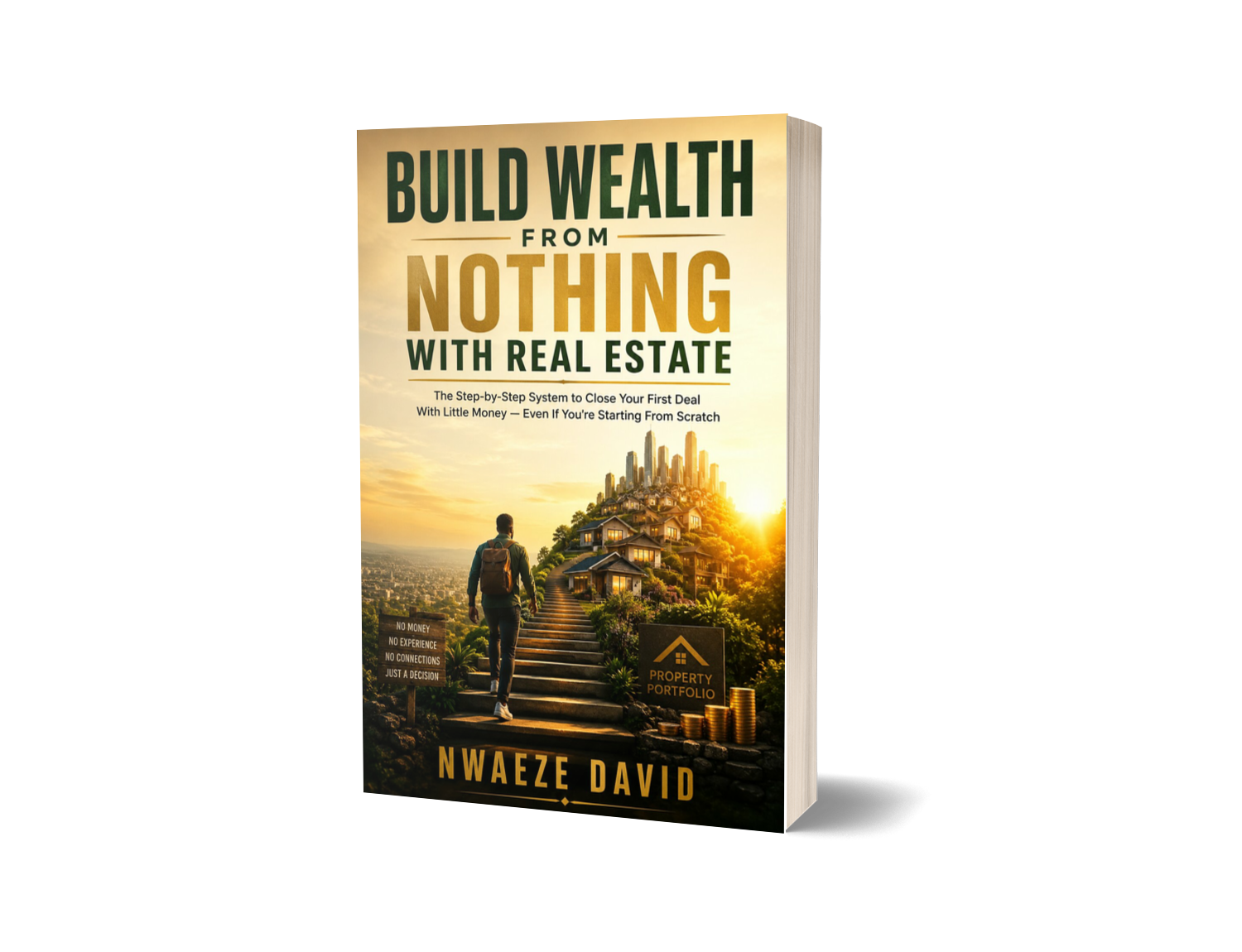
"You don't need a big deposit, perfect credit, or family money to build wealth in real estate. You need a system, the resourcefulness to work it, and the courage to start."
Get Your Copy →
"The AI Real Estate Investor gives you that system. It shows you exactly how to point AI at the parts of your business that actually make money."
Get Your Copy →
"The Diaspora Property Blueprint is the complete, step-by-step system for buying land and building wealth back home safely, from anywhere in the world."
Get Your Copy →Get help reading what the market means for your move
Join the newsletter for practical, no-hype breakdowns of what's actually happening in real estate, then step inside the private community where we talk through what current conditions mean for your specific decision.
Keep learning: real estate market trends · will the housing market crash? what the data says · how interest rates affect real estate prices.
Education only, not financial advice. Mortgage rates, inventory, prices, and sales volume shift frequently; every figure here reflects data available as of research and is marked for verification. Recheck current data before making any decision based on this content.

Written by
Nwaeze David
Nigerian digital entrepreneur, educator and author of three real estate books. He writes practical, honest guides for new investors, working realtors and Africans building back home from abroad.


