
How to calculate rental property ROI matters because two people can buy the exact same building in the exact same week and walk away with completely different numbers, purely based on how they financed it.
What's Inside

How to calculate rental property ROI isn't really one calculation, it's several different ones that answer different questions, and confusing them is one of the more common ways investors misjudge a deal.
Once you know which formula answers which question, the math itself is genuinely simple.
Quick honesty note
This is education, not financial advice. Benchmark ranges for cap rate and cash-on-cash return shift with interest rates and local market conditions. The worked example uses clean, illustrative numbers, not a specific real property.
The Short Answer
In short: Start with net operating income, gross rent minus operating expenses, but not the mortgage. Divide NOI by the property's value for cap rate, which ignores financing and is best for comparing properties.
Divide annual cash flow by the actual cash you invested for cash-on-cash return, which reflects your specific financing and is best for judging your personal deal.
The same building can produce one clean cap rate and a dozen different cash-on-cash returns depending on how it's financed.
Start With NOI, Everything Else Builds on It
Net operating income is the foundation every other rental property metric is built from.
NOI equals your gross rental income minus operating expenses, property tax, insurance, maintenance, and property management, but deliberately excluding the mortgage payment entirely.
Getting this number right matters more than any formula that follows, since an inflated or understated NOI throws off every calculation downstream of it.
Cap Rate Versus Cash-on-Cash: Two Buyers, Two Very Different Answers

The distinction that trips up most first-time investors
Cap rate divides NOI by the property's total value and excludes your financing entirely, what your return would be if you paid cash with no mortgage.
It's the metric for comparing buildings against each other regardless of how any specific buyer plans to finance them.
Cash-on-cash return divides your annual pre-tax cash flow by the actual cash you invested, down payment, closing costs, and any rehab, and it moves the moment your financing changes.
With two buyers closing on the same building at the same price in the same week, arriving at an identical cap rate and completely different cash-on-cash returns is entirely normal, not a sign either one made a mistake.
A commonly cited sweet spot for cap rate on residential rentals runs roughly 4-8%, with anything meaningfully below 4% suggesting you're betting largely on appreciation rather than current income.
Cash-on-cash return targets commonly cited run roughly 8-12%, though this figure is far more sensitive to your specific loan terms and down payment than cap rate is.
A Simple Worked Example
Swipe to see more →
| Line item | Illustrative figure |
|---|---|
| Purchase price | $300,000 |
| Annual gross rent | $26,400 |
| Operating expenses (tax, insurance, maintenance, vacancy, management) | $10,600 |
| Net operating income (NOI) | $15,800 |
| Cap rate (NOI ÷ purchase price) | 5.3% |
| Annual mortgage payment (principal + interest) | $13,600 |
| Annual cash flow (NOI − mortgage) | $2,200 |
| Total cash invested (down payment + closing costs) | $66,000 |
| Cash-on-cash return (cash flow ÷ cash invested) | 3.3% |
Notice the cap rate, 5.3%, and the cash-on-cash return, 3.3%, describe the same property but answer different questions.
Change the down payment or interest rate, and the cash-on-cash figure moves; the cap rate does not, since it never accounted for financing in the first place. These figures are illustrative only, built for teaching the calculation, not drawn from a specific real property.
Don't Fool Yourself: What Belongs in the Expense Line
- Include a property management fee even if you self-manage. Your time has real market value, leaving this out overstates the return on a property you might later hand off to a manager. Full-service management commonly runs 8-10% of collected rent.
- Budget vacancy at 5-10%, even on a property you expect to keep consistently rented.
- Never zero out maintenance and capital expenditure reserves to make a deal's numbers work. A roof that lasts 25 years still eventually costs a real, large number, deferring that reality doesn't make it free.
See how to handle maintenance & repairs as a landlord for the fuller maintenance reserve discussion this connects to.
The Bigger Picture: Four Sources of Return

A cash-on-cash return that looks modest on its own, 3-4% in a higher-cost market is common, doesn't tell the whole story.
Total return on a rental property comes from four sources working together: cash flow, appreciation, equity paydown as your tenant's rent gradually pays down your mortgage principal, and tax benefits from depreciation, generally over a 27.5-year schedule for residential property as covered in rental property bookkeeping & taxes.
Combined, a total annualized return in the 12-20% range over a 5-10 year hold is commonly cited as achievable for a well-managed, appropriately leveraged property, considerably more encouraging than the cash-on-cash figure alone would suggest.
Common Mistakes (and How to Dodge Them)
- Confusing cap rate and cash-on-cash return. They answer different questions and are not directly comparable to each other.
- Leaving out a property management fee because you self-manage. Your time has real value; excluding it overstates your true return.
- Zeroing out maintenance and CapEx reserves to make a deal pencil out. Deferred maintenance is still a real, eventual cost.
- Judging a deal on cash-on-cash return alone. Appreciation, equity paydown, and tax benefits are real components of total return, not bonuses.
- Chasing the "best" deal instead of tracking actual performance. Consistent measurement and expense discipline compound more reliably than any single great purchase.
Frequently Asked Questions
What is the difference between cap rate and cash-on-cash return?
Cap rate divides net operating income by the property's value and excludes financing entirely, best for comparing properties.
Cash-on-cash return divides annual cash flow by the actual cash invested, and moves whenever your financing terms change, best for judging your own specific deal.
What is a good cap rate for a rental property?
A commonly cited range is roughly 4-8%, with figures meaningfully below 4% suggesting the investment relies mostly on future appreciation rather than current income.
What is a good cash-on-cash return for a rental property?
A commonly cited target range is roughly 8-12%, though this figure is highly sensitive to your specific down payment and financing terms.
Should I include a property management fee in my ROI calculation even if I manage the property myself?
Yes. Self-managing still has real opportunity cost since your time has market value, and leaving this expense out overstates the actual return, especially if you might hand the property off to a manager later.
Why does a rental property's cash-on-cash return sometimes look low even when it's a good investment?
Cash-on-cash return only measures cash flow relative to cash invested. It doesn't capture appreciation, equity paydown from your tenant's rent, or tax benefits from depreciation, all of which contribute to a property's total return.
What is NOI and why does it matter?
Net operating income is gross rental income minus operating expenses like property tax, insurance, maintenance, and management, deliberately excluding the mortgage.
It's the foundation every other rental property return metric, including cap rate, is calculated from.
Track the Numbers, Not Just the Deal
How to calculate rental property ROI comes down to knowing which formula answers which question: NOI as the foundation, cap rate for comparing properties, cash-on-cash for judging your specific financed deal, and the fuller four-source picture for understanding total return over time.
The investors who build lasting wealth in this business are the ones who keep measuring their real numbers long after closing, not just the ones who found the best deal on paper.
Take This Further
Books by Nwaeze David to help you build real wealth through property.
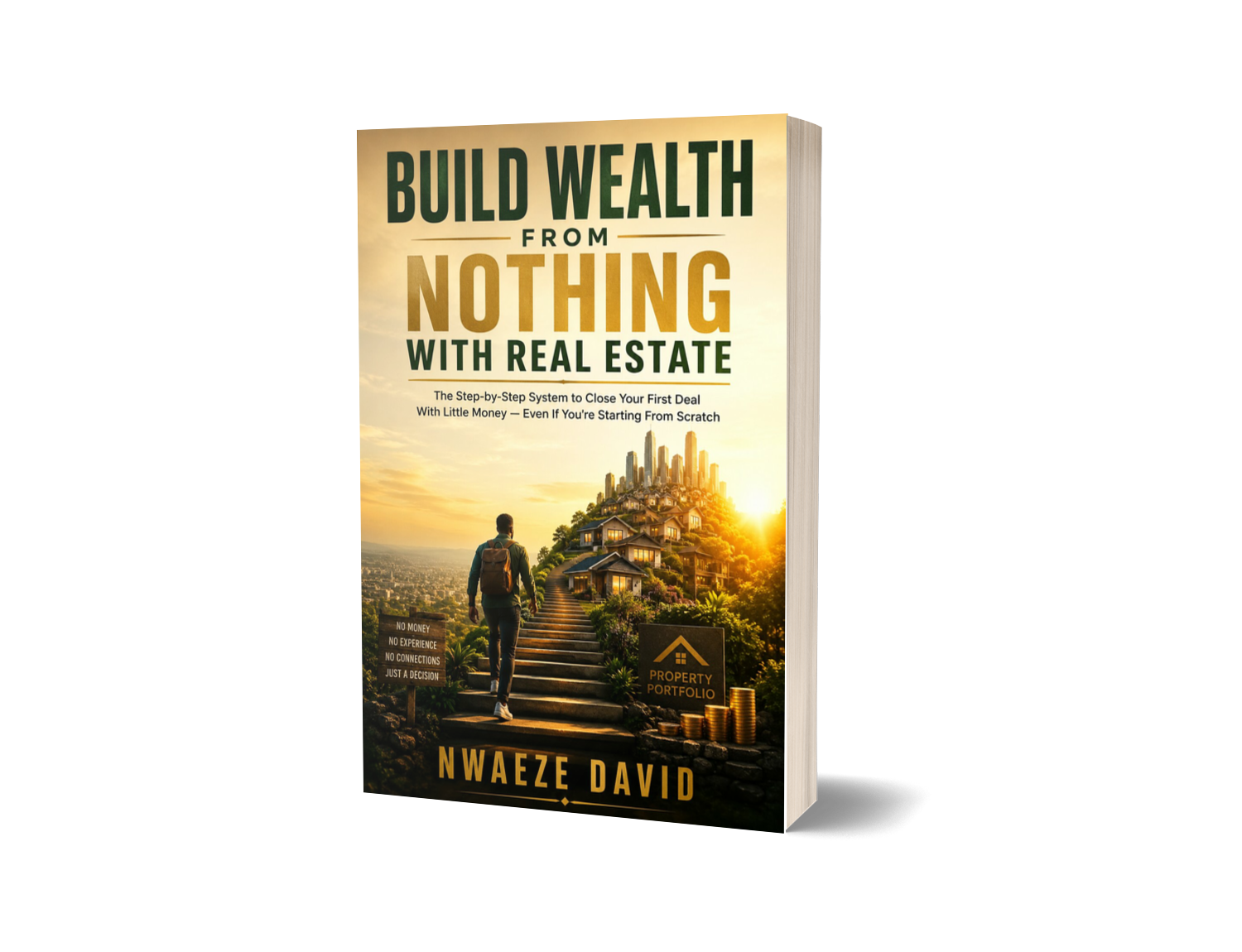
"You don't need a big deposit, perfect credit, or family money to build wealth in real estate. You need a system, the resourcefulness to work it, and the courage to start."
Get Your Copy →
"The AI Real Estate Investor gives you that system. It shows you exactly how to point AI at the parts of your business that actually make money."
Get Your Copy →
"The Diaspora Property Blueprint is the complete, step-by-step system for buying land and building wealth back home safely, from anywhere in the world."
Get Your Copy →Get help underwriting your next deal correctly
Join the newsletter for practical, no-hype breakdowns of real estate investing, then step inside the private community where we help investors run these numbers honestly before they ever make an offer.
Keep learning: rental property bookkeeping & taxes · how to handle maintenance & repairs as a landlord · best cities for rental property investment in 2026 · rental property investing.
Education only, not financial advice. Benchmark ranges for cap rate, cash-on-cash return, and total return shift with interest rates and market conditions; figures here are illustrative and marked for verification where noted. The worked example uses round numbers for teaching purposes, not a specific real property.

Written by
Nwaeze David
Nigerian digital entrepreneur, educator and author of three real estate books. He writes practical, honest guides for new investors, working realtors and Africans building back home from abroad.


