
How to pass the real estate exam on your first try starts with fixing a misallocation almost every candidate makes without realizing it: over-preparing for math and under-preparing for the topics that actually carry more weight.
What's Inside

How to pass the real estate exam on your first try matters given the national first-attempt pass rate covered in how to get your real estate license, commonly cited around 50 to 60 percent. Most failed attempts trace back to a specific, fixable pattern in how candidates spend their study time, not a lack of effort.
Quick honesty note
This is education, not a guarantee of exam results. Exam fees, topic weighting, and question counts vary by state. Confirm current details directly with your state's exam vendor.
The Short Answer
Why Math Fear Is Misdirected

Math usually accounts for only 10-15% of questions
Real estate math is present on the exam, but it typically accounts for only 10 to 15% of questions, far less than most candidates fear going in. Meanwhile, some states weigh categories like disclosures and agency relationships far more heavily, in some cases accounting for nearly a third of the entire score between just those two categories. If you're spending most of your study time memorizing commission-split formulas while treating fiduciary duty and disclosure nuances as an afterthought, you're preparing for the exam candidates fear, not the one that actually determines most scores.
Check your state's official exam content outline directly and let the actual point distribution, not your gut sense of what feels hardest, determine where your study hours go.
Math Is Learnable, Not Limitless
The reassuring counterpart to that correction: real estate math is formula-based and genuinely learnable, not an open-ended challenge. Most exam math questions draw on fewer than ten core formulas, commission splits, prorations, area calculations, gross rent multiplier, and cap rate among them. This isn't a category requiring endless practice to feel confident in, it's a finite, memorizable skill set worth mastering efficiently and then moving on from, rather than the place to spend the bulk of your available study time.
The Study Method That Actually Works
Taking practice tests under genuinely timed conditions is consistently cited as the single most effective preparation method, more valuable than passive review of notes or slides. A useful sequence: take a diagnostic practice test before you begin focused studying to identify your actual weak areas, study according to your state's real topic weighting, then retake a full practice exam after completing that study plan to confirm the gaps have actually closed. The review step matters as much as the test itself, understanding why a wrong answer was wrong teaches the underlying principle, which is what the real exam is actually testing, not just memorization of that specific question.
Test-Day Logistics and Mistakes

- Bring proper identification. Most testing centers require two forms of ID; arriving without the correct documents is an entirely avoidable way to lose your appointment.
- Read every question fully before answering. Rushing and assuming you understand a question's intent based on a quick skim is one of the most commonly cited causes of avoidable wrong answers.
- Manage your time deliberately. Spending too long on math questions specifically is a commonly cited pacing mistake; if a formula question is taking too long, flag it and move on, then return if time allows.
- Resist second-guessing during review. Changing an initial answer without a genuinely good reason to do so is a frequently cited way candidates talk themselves out of correct answers.
- Watch for "best answer" questions. Multiple choices may technically be correct; the exam often wants the most complete or ideal answer, not simply any true statement.
What a Failed Attempt Actually Costs
Exam fees themselves vary by state, commonly ranging from around $15 to $100, but the real cost of a failed attempt is the retake fee on top of lost time and momentum. This is exactly why targeted preparation, focused on your state's actual topic weighting rather than a generic study approach, pays for itself: a single avoided retake often costs less than the additional exam fee alone, before counting the delay to actually starting your career.
Common Mistakes (and How to Dodge Them)
- Over-studying math out of fear while under-studying higher-weighted topics. Check your state's actual exam content outline and let real point distribution guide your study time.
- Treating math as an unpredictable, limitless challenge. It's built on fewer than ten core, learnable formulas; master them efficiently and move on.
- Studying passively instead of taking timed practice exams. Practice tests under real time pressure are consistently the most effective preparation method available.
- Skipping the review of wrong answers. Understanding why an answer was wrong teaches the underlying principle the real exam is testing.
- Rushing through questions or second-guessing answers during review. Both are commonly cited, avoidable causes of otherwise-preventable mistakes on test day.
Frequently Asked Questions
How much of the real estate exam is math?
Typically only 10 to 15% of questions, less than most candidates fear, while other categories like agency and disclosures often carry more weight.
What's the best way to study for the real estate license exam?
Taking full, timed practice exams and carefully reviewing every wrong answer for the underlying principle it tested is consistently cited as the most effective method.
Do I need to memorize a lot of real estate math formulas?
No. Most exam math questions draw on fewer than ten core formulas, including commission splits, prorations, and cap rate, a learnable, finite skill set.
What are the most common mistakes people make on real estate exam day?
Arriving without proper identification, rushing through questions without fully reading them, poor time management on math questions, and second-guessing answers during review.
How much does it cost if I fail the real estate exam and need to retake it?
Exam fees vary by state, commonly $15 to $100, and a failed attempt means paying that fee again on top of the delay to starting your career.
Should I start studying for the exam right after finishing my pre-licensing course?
Taking a diagnostic practice test to identify weak areas before your focused study begins, then a full retake after completing your study plan, is a commonly recommended approach.
Study the Real Exam, Not the One You're Afraid Of
How to pass the real estate exam on your first try comes down to directing your preparation toward what the exam actually weighs heavily, not what feels intimidating. Math is learnable and smaller than you'd expect; agency, disclosures, and the conceptual categories deserve more of your attention than fear-driven study habits usually give them. Timed practice tests with genuine review of every wrong answer, paired with basic test-day discipline, are what actually move the odds in your favor.
With this, Cluster 12 on the agent career path is complete, covering licensing, income reality, the agent-broker distinction, choosing a school, commission structure, and now exam strategy. Together they cover the honest, practical path from deciding to pursue this career through actually earning the license.
Take This Further
Books by Nwaeze David to help you build real wealth through property.
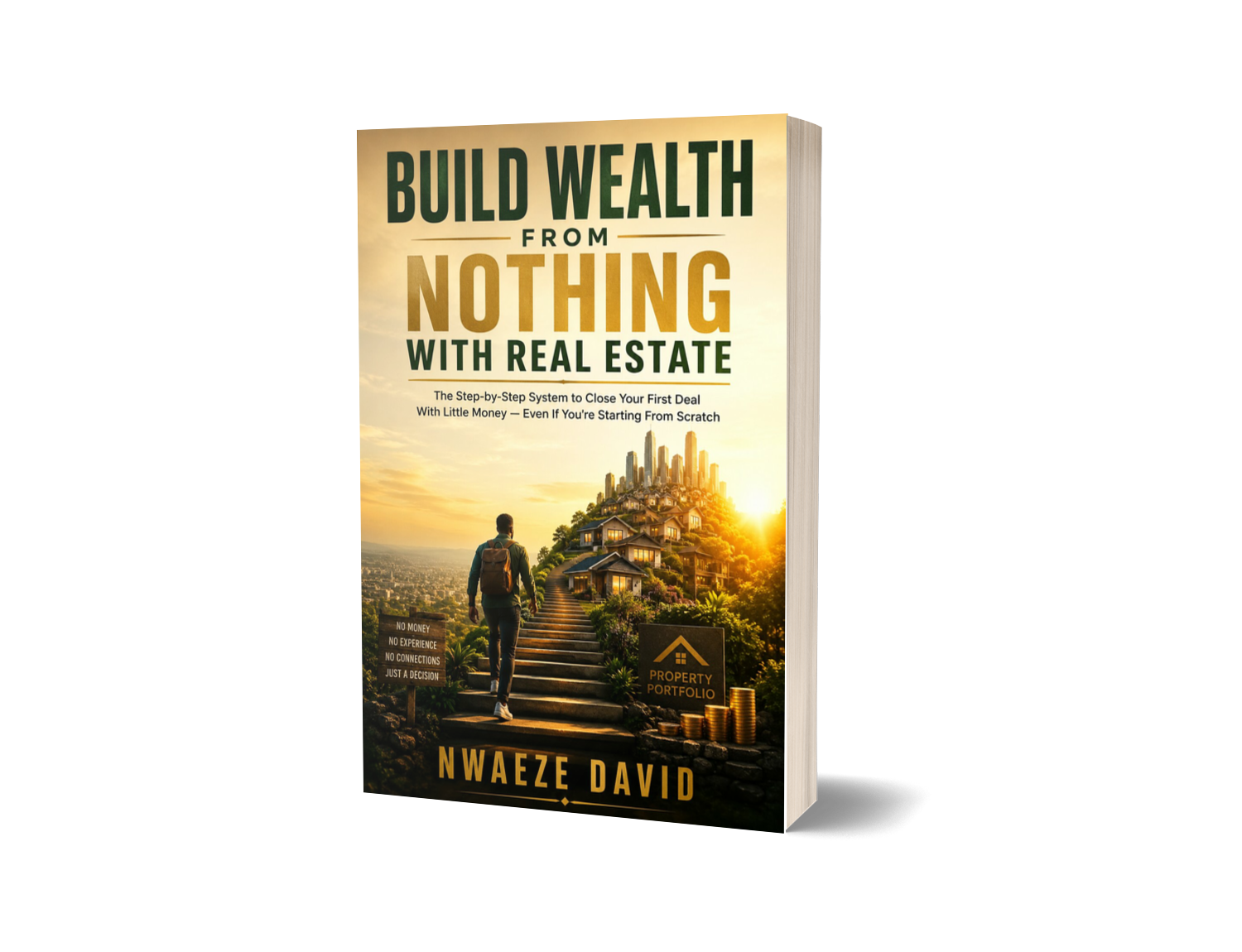
"You don't need a big deposit, perfect credit, or family money to build wealth in real estate. You need a system, the resourcefulness to work it, and the courage to start."
Get Your Copy →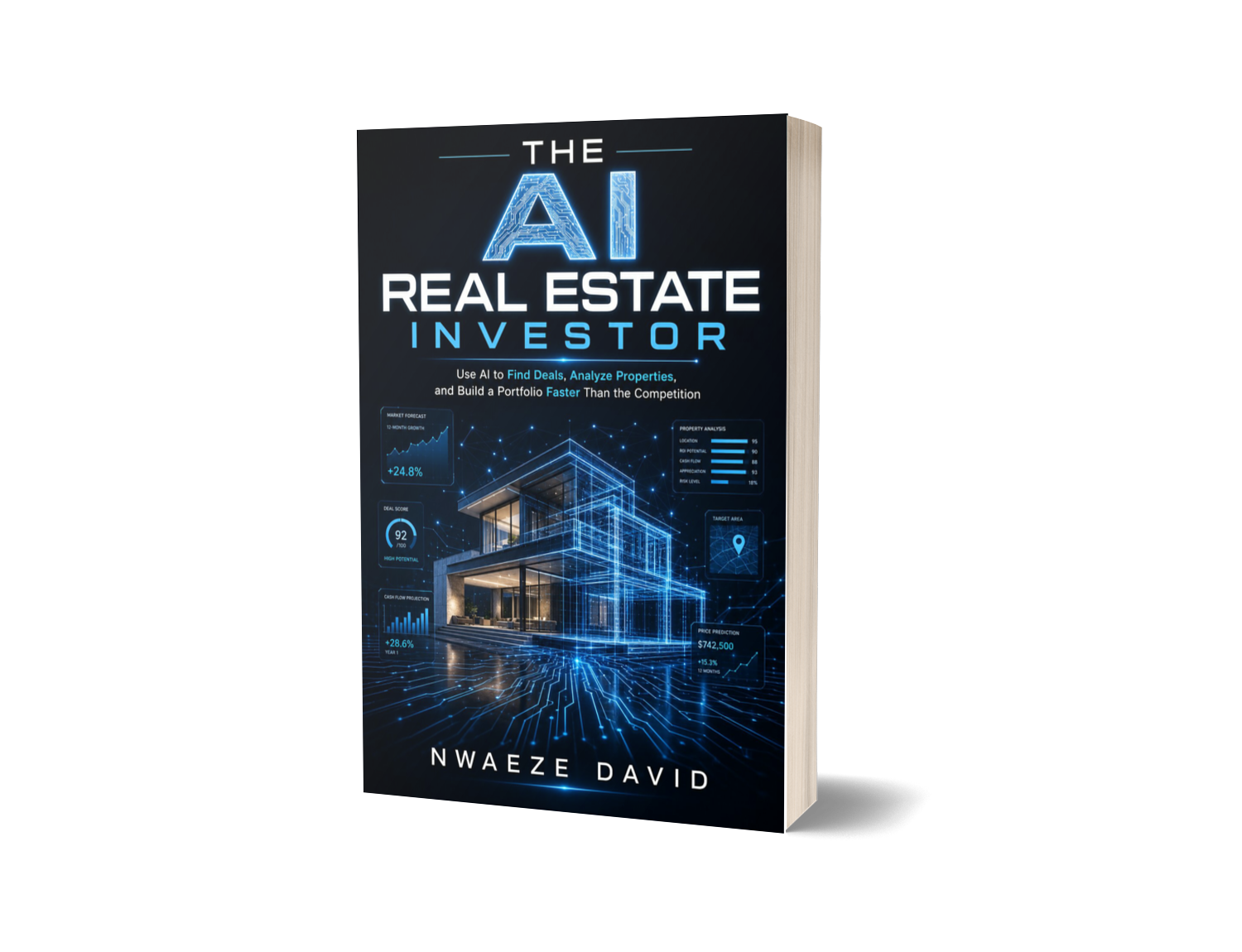
"The AI Real Estate Investor gives you that system. It shows you exactly how to point AI at the parts of your business that actually make money."
Get Your Copy →
"The Diaspora Property Blueprint is the complete, step-by-step system for buying land and building wealth back home safely, from anywhere in the world."
Get Your Copy →Get help building a study plan that targets the real exam
Join the newsletter for practical, no-hype breakdowns of building a real estate career, then step inside the private community where new agents share how they actually structured their exam prep.
Keep learning: how to get your real estate license · best real estate schools & online license courses · how to become a real estate agent.
Education only, not a guarantee of exam results. Exam fees, topic weighting, and question formats are state-specific and change periodically; figures here are illustrative and marked for verification where noted. Confirm current requirements directly with your state's exam vendor.

Written by
Nwaeze David
Nigerian digital entrepreneur, educator and author of three real estate books. He writes practical, honest guides for new investors, working realtors and Africans building back home from abroad.


