
Best cities to invest in real estate in Nigeria doesn't have one answer, Lagos, Abuja, and Port Harcourt are effectively three different markets wearing the same country's name.
What's Inside

Best cities to invest in real estate in Nigeria is a question that resists a single answer, and treating Lagos, Abuja, and Port Harcourt as interchangeable "big Nigerian cities" misses what actually makes each one attractive to a different kind of investor. Lagos growth corridors, Abuja's institutional core, and emerging cities like Ibadan each offer a genuinely different risk-reward profile.
Quick honesty note
This is education, not financial or legal advice. Growth percentages, yields, and prices below reflect data available as of research; some cited figures come from less rigorously sourced content and should be treated as directional, not precise. Recheck current data before making any decision.
The Short Answer
Three Cities, Three Distinct Market Personalities

Swipe to see more →
| City | Market personality | Best for |
|---|---|---|
| Lagos | High-speed entrepreneurial engine, tech-forward, young population | Short-let, high-end residential, commercial |
| Abuja | Institutional haven, embassies and major employers on long leases | Steady, secure rental income |
| Port Harcourt | Oil-and-gas driven, employer-funded corporate housing | Serviced apartments, high rental income |
Lagos is driven by a young, entrepreneurial, tech-forward population, and areas like Lekki, Ikoyi, and Victoria Island continue to attract premium buyers and international tenants, with infrastructure projects like the Lagos-Epe Expressway and the Lekki Free Trade Zone opening new residential corridors. Abuja is considered more institutional than Lagos, relying on major employers, embassies, and international organizations that typically sign long-term leases, a structure that provides more secure, predictable rental income than Lagos's faster-moving, more entrepreneurial demand base. Port Harcourt operates on economics few other Nigerian cities can replicate: the oil and gas sector generates demand for corporate housing, expatriates, senior contractors, and industry professionals whose accommodation is often employer-funded and therefore less sensitive to price than the average tenant paying out of pocket. Serviced apartments and duplexes in GRA-type areas can command strong, stable rents as a result.
Ibadan, the Standout Emerging Story

Ibadan sits roughly 90 minutes from Lagos via expressway and modern rail, making it an increasingly common relocation choice for people priced out of Lagos itself, a genuine commuter-spillover dynamic. Public investment has followed: a roughly 110-kilometer ring road, airport modernization, and an inland dry port in development all support the case for continued growth.
A practical advantage tied directly to registration speed
Oyo State has reportedly simplified land procedures, with some reports citing Certificate of Occupancy issuance in as little as three months, meaningfully faster administrative processing than buyers commonly encounter in Lagos. Given how much registration speed matters in a multiple-sale dispute, covered in buying land in Nigeria, faster, more reliable title processing is a genuine practical advantage, not just a talking point.
Other Secondary Cities Worth Knowing
- Uyo, the capital of Akwa Ibom State, is frequently cited as one of Nigeria's best-planned cities, known for cleanliness and fast-improving infrastructure, increasingly positioning itself as a tourism and residential hotspot.
- Enugu is reclaiming a role as a business and tech hub in southeastern Nigeria, supported by strong universities and a growing, youthful middle class.
- Asaba is mentioned alongside Ibadan as another emerging option for investors looking beyond the traditional big-three cities.
The Macro Context Driving All of This
Nigeria's overall real estate market has been estimated at over $2.6 trillion, with expected annual growth in the mid-single digits continuing through the decade, and real estate's contribution to GDP has reportedly surpassed oil's contribution, climbing toward double digits when construction activity is included. A population exceeding 220 million continues to drive housing demand nationally, a scale factor that underlies growth expectations across every city discussed here, not just the largest ones.
Common Mistakes (and How to Dodge Them)
- Treating Lagos, Abuja, and Port Harcourt as interchangeable "big Nigerian cities." Each has a genuinely distinct demand structure and risk profile worth matching to your actual investment goal.
- Assuming Port Harcourt's higher rental income comes without specialized market knowledge. Its corporate, employer-funded tenant base is a specific niche, not a generic residential market.
- Overlooking Ibadan and other secondary cities entirely. More affordable entry points and, in some cases, faster administrative processing make these genuinely worth evaluating.
- Relying on cited growth percentages without checking their source. Some figures circulating in this space come from less rigorously documented content and deserve real scrutiny.
- Assuming faster title processing in one state means you can skip verification. Administrative speed is a convenience, not a substitute for independent due diligence.
Frequently Asked Questions
Which is the best city to invest in real estate in Nigeria?
There's no single best answer. Lagos, Abuja, and Port Harcourt each offer a distinct risk-reward profile suited to different investment goals, and emerging cities like Ibadan offer a different value proposition entirely.
What makes Abuja's real estate market different from Lagos?
Abuja is considered more institutional, relying on major employers, embassies, and international organizations that typically sign long-term leases, offering more secure and predictable rental income than Lagos's faster-moving, more entrepreneurial demand base.
Why is Port Harcourt considered a strong rental market despite being smaller than Lagos?
Its oil and gas sector generates demand for corporate housing among expatriates and contractors whose accommodation is often employer-funded, making that tenant base less price-sensitive than the average renter.
Why is Ibadan gaining attention from real estate investors?
Its proximity to Lagos via expressway and rail, more affordable entry prices, and reportedly faster land title processing in Oyo State all contribute to its growing appeal as an alternative to the more expensive, established markets.
Are there other Nigerian cities worth considering beyond Lagos, Abuja, Port Harcourt, and Ibadan?
Uyo, Enugu, and Asaba are commonly cited as additional secondary cities offering more affordable entry points and specific growth drivers of their own.
Does faster land title processing in a city mean I can skip verification?
No. Faster administrative processing is a genuine convenience, but independent verification of any specific title remains essential regardless of how streamlined a jurisdiction's general reputation is.
Match the City to Your Actual Goal
Best cities to invest in real estate in Nigeria comes down to matching a city's actual market personality to what you're trying to achieve, not chasing whichever city sounds biggest. Lagos rewards fast-moving, entrepreneurial demand. Abuja offers institutional stability. Port Harcourt offers specialized, employer-funded rental income. Ibadan and other secondary cities offer a genuinely different entry point worth evaluating on its own terms, not just as a cheaper version of the big three.
Take This Further
Books by Nwaeze David to help you build real wealth through property.
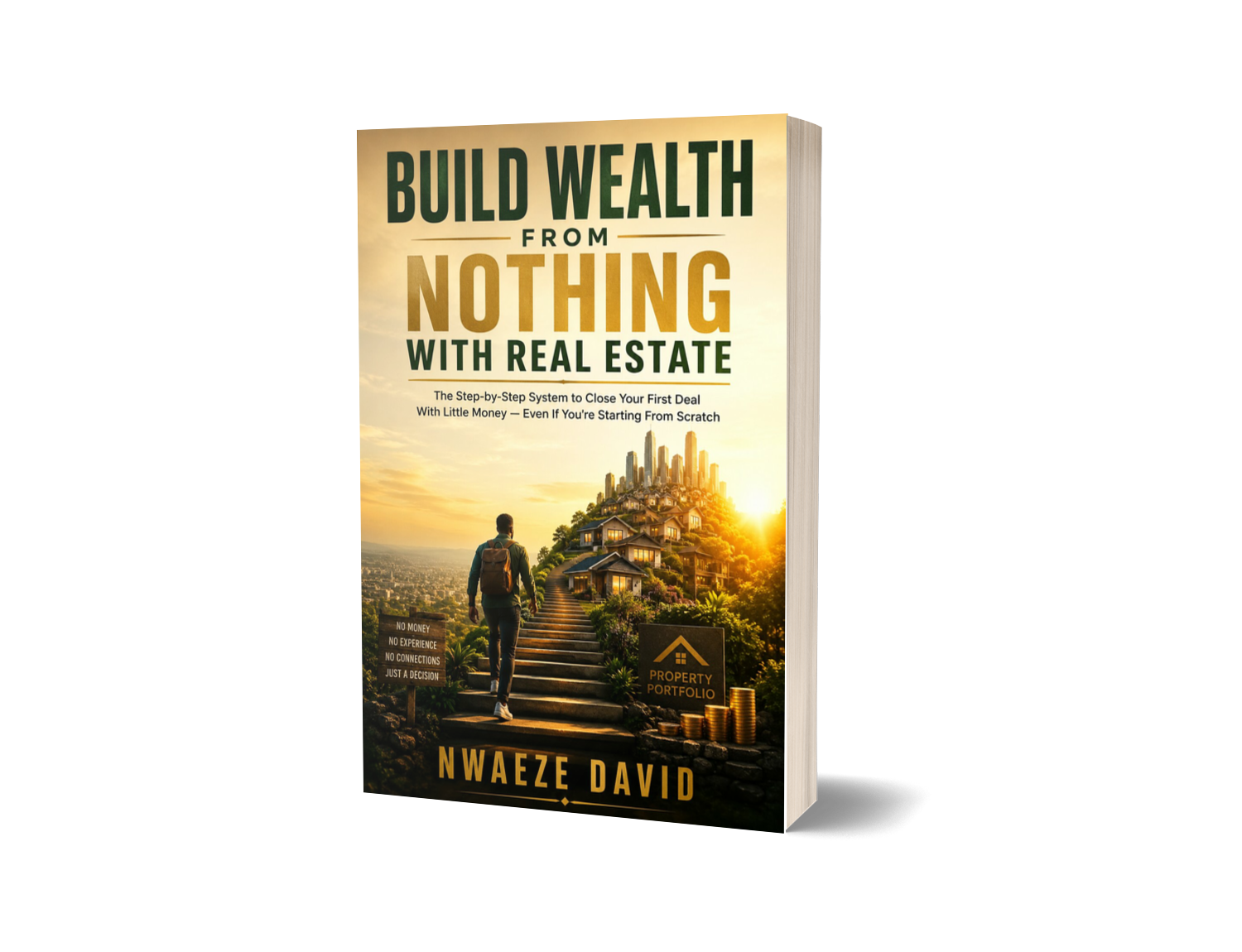
"You don't need a big deposit, perfect credit, or family money to build wealth in real estate. You need a system, the resourcefulness to work it, and the courage to start."
Get Your Copy →
"The AI Real Estate Investor gives you that system. It shows you exactly how to point AI at the parts of your business that actually make money."
Get Your Copy →
"The Diaspora Property Blueprint is the complete, step-by-step system for buying land and building wealth back home safely, from anywhere in the world."
Get Your Copy →Get help matching a city to your actual goal
Join the newsletter for practical, no-hype breakdowns of investing back home, then step inside the private community where diaspora investors compare notes on which Nigerian city actually fits their strategy.
Keep learning: buying land in Nigeria · how to invest in nigerian real estate from abroad · diaspora real estate investment.
Education only, not financial or legal advice. City-level growth percentages, yields, and prices change within months and vary by source rigor; figures here are illustrative and marked for verification where noted. Consult a licensed local professional before making any specific investment decision.

Written by
Nwaeze David
Nigerian digital entrepreneur, educator and author of three real estate books. He writes practical, honest guides for new investors, working realtors and Africans building back home from abroad.


