
Refinancing to lower payments sounds like a simple win, until you realize a lower payment and a lower total cost are not always the same thing. Here is the actual math to run before you refinance, not just the sales pitch.
What's Inside

Learning how to refinance a mortgage starts with one number almost every homeowner skips: the break-even point, how long it takes your monthly savings to repay what the refinance itself costs you.
Skip that calculation and a "lower payment" can quietly cost you more over time, especially if you reset the clock on a loan you have already been paying down for years.
This guide covers the real math, the rate-drop rule most lenders use as a benchmark, and the trap hiding inside almost every "refinance to lower your payment" pitch.
Quick honesty note
This is education, not financial advice. Mortgage rates have been genuinely volatile through 2026, moving across a meaningful range at different points in the year, so treat every rate example below as illustrative, not current. Confirm today's actual rates and run your own numbers with a lender before refinancing.
The Short Answer
In short: Refinancing replaces your existing mortgage with a new loan, usually to secure a lower interest rate, lower your monthly payment, or access equity as cash.
It makes clear financial sense when the interest rate drop is large enough, commonly 0.75% to 1%, that your monthly savings repay the closing costs (typically 2% to 6% of the loan amount) within a reasonable window, usually two to three years, and you plan to stay in the home at least that long.
The Break-Even Formula

The formula
Break-even point (in months) = Total closing costs ÷ Monthly savings.
Example: your refinance costs $8,000 in closing costs and saves you $200 a month on your payment. $8,000 ÷ $200 = 40 months, just over three years, before the refinance has truly paid for itself.
If you plan to stay in the home longer than that, the refinance is likely worth it. If you might sell or move sooner, you could lose money on the deal even with a lower rate.
The Rate-Drop Rule of Thumb
Lenders and financial advisors commonly cite a simple benchmark: a rate drop of 0.75% to 1% is the "sweet spot" that reliably brings the break-even point under three years on a standard 30-year mortgage.
A 0.5% drop is more borderline, often still worthwhile if you plan a long stay, especially on a 15-year loan where smaller drops matter more.
A 0.25% drop rarely covers the closing costs quickly enough to justify the move on its own, though it can still make sense combined with another benefit, like eliminating PMI.
Swipe to see more →
| Rate drop | Typical verdict |
|---|---|
| 1%+ | Usually a clear yes, breaks even in under 2 years on many loans |
| 0.75%-1% | Generally worthwhile if staying 2-3+ years |
| 0.5% | Borderline, evaluate your specific numbers and timeline |
| 0.25% | Rarely enough alone, unless paired with another benefit |
If you locked in a rate above 7% during 2022-2024's higher-rate window, this is worth checking now, since rates have eased somewhat from those peaks at various points through 2026, though they remain well above the near-zero rates of 2020-2021.
Types of Refinance
- Rate-and-term refinance. The standard move: replace your existing loan with a new one at a different rate, term, or both, without pulling out cash.
- Cash-out refinance. Replace your mortgage with a larger loan and keep the difference in cash, typically for renovations, debt consolidation, or reinvesting. Usually carries different pricing and equity requirements than a rate-and-term refi.
- Streamline refinance. A simplified process available on certain existing FHA, VA, or USDA loans, often with reduced documentation and lower costs.
What Refinancing Actually Costs
Refinance closing costs commonly run 2% to 6% of the new loan amount, covering the appraisal, title work, lender fees, recording fees, and prepaid interest or escrow.
On a $300,000 loan, that is roughly $6,000 to $18,000, though the exact figure depends heavily on your lender, location, and loan type.
These costs are why the break-even calculation matters more than the rate alone.
The No-Closing-Cost Option
Nothing is actually free here
A "no-closing-cost refinance" does not eliminate the costs, it just moves them.
Either the fees get rolled into your new loan balance, meaning you pay interest on them for the life of the loan, or the lender covers them in exchange for a higher interest rate, typically 0.125% to 0.5% higher.
This can be a smart move if you are not sure how long you will stay in the home, since you have less to lose by avoiding the upfront cash. For a long-term hold, paying the closing costs out of pocket for the lower rate usually wins over time.
The Trap of Resetting Your Loan Term

This is the part most "refinance to lower your payment" content glosses over. Refinancing resets your loan term, and many borrowers default to a fresh 30-year term, even after already paying down several years of their original loan.
That fresh 30-year clock does lower your monthly payment, but it also means paying interest for years longer than your original schedule, which can increase the total interest paid over the life of the loan even when your rate went down.
The flip side works too: refinancing into a shorter term, such as 15 years, raises your monthly payment but can save a substantial amount in total interest and get you debt-free years sooner. If your actual goal is a lower monthly bill, a fresh 30-year term delivers that.
If your goal is minimizing total cost, run the total-interest comparison, not just the payment comparison, before deciding.
Other Reasons to Refinance Beyond Rate
- Dropping mortgage insurance. If your home has appreciated or you have paid down enough principal, refinancing into a conventional loan can eliminate PMI or FHA's MIP, adding real monthly savings beyond the rate itself. See conventional vs FHA loan.
- Switching from adjustable to fixed. Trading rate uncertainty for a stable, predictable payment.
- Cash-out for a specific purpose. Funding a renovation, consolidating higher-interest debt, or reinvesting, provided the new payment still fits your budget and the math makes sense.
How to Actually Refinance
- Pull your current numbers. Your current rate, remaining balance, and monthly principal and interest payment.
- Check your credit and payment history. Most lenders want a clean record with no late payments in the past 12 months.
- Get quotes from at least three lenders. Your current servicer, a bank or credit union, and an online lender or broker. A marketplace like LendingTree speeds up this comparison.
- Calculate your break-even point for each offer. Closing costs divided by monthly savings, compared honestly against how long you plan to stay.
- Decide on your term. A fresh 30 years for the lowest payment, or a shorter term if minimizing total interest matters more to you.
- Lock your rate and close. Expect a similar documentation process to your original mortgage application.
Common Mistakes (and How to Dodge Them)
- Chasing a lower payment without checking the break-even point. A small rate drop with high closing costs can leave you worse off if you move within a few years.
- Defaulting to a fresh 30-year term without comparing total interest. A lower payment today can mean tens of thousands more in interest over the life of the loan.
- Refinancing too frequently for marginal improvements. Each refinance resets your amortization schedule, meaning more of your early payments go toward interest again.
- Not shopping multiple lenders. Rates and fees vary meaningfully. A single quote rarely reflects your best available deal.
- Ignoring a no-closing-cost option's true cost. The fees do not disappear, they show up as a higher rate or a larger balance.
FAQs on how to Refinance a Mortgage
How much does it cost to refinance a mortgage?
Refinance closing costs typically run 2% to 6% of the new loan amount, covering appraisal, title, lender fees, and prepaid escrow items. On a $300,000 loan, that is commonly $6,000 to $18,000, though the exact figure varies by lender, location, and loan type.
How much does my rate need to drop to make refinancing worth it?
A common rule of thumb is a 0.75% to 1% rate drop, which typically brings the break-even point under three years on a standard 30-year mortgage.
A 0.5% drop is more borderline and depends on how long you plan to stay, while a 0.25% drop rarely justifies the closing costs on its own.
What is the break-even point when refinancing?
The break-even point is how many months it takes your monthly savings to repay the closing costs of the refinance, calculated by dividing total closing costs by your monthly savings.
If you plan to stay in the home longer than the break-even period, the refinance is generally worth it. If you might sell or move sooner, you could lose money despite the lower rate.
Does refinancing always lower my total interest cost?
No, and this is a common misunderstanding. Refinancing into a fresh 30-year term lowers your monthly payment but restarts your amortization schedule, which can increase the total interest paid over the life of the loan even at a lower rate.
Refinancing into a shorter term raises the monthly payment but typically reduces total interest paid.
Is a no-closing-cost refinance really free?
No. A no-closing-cost refinance either rolls the fees into your new loan balance, so you pay interest on them for the life of the loan, or the lender covers them in exchange for a higher interest rate.
You are still paying the costs, just in a different form, so compare the true long-term cost against a standard refinance where you pay closing costs upfront.
How soon can I refinance after buying a home?
There is generally no strict legal waiting period for a standard refinance, though some loan types and cash-out refinances have seasoning requirements, commonly a few months to a year, before you can refinance.
Refinancing very soon after purchase rarely makes financial sense unless rates have moved significantly or your credit has improved substantially.
Run the Math, Not Just the Pitch
Refinancing to lower your payment can be a genuinely smart move, but only when you run the actual break-even math and understand whether you are optimizing for a smaller monthly bill or a smaller total cost.
Compare multiple lenders, know your timeline, and decide on your loan term deliberately rather than defaulting to whatever lowers today's payment the most.
Take This Further
Books by Nwaeze David to help you build real wealth through property.
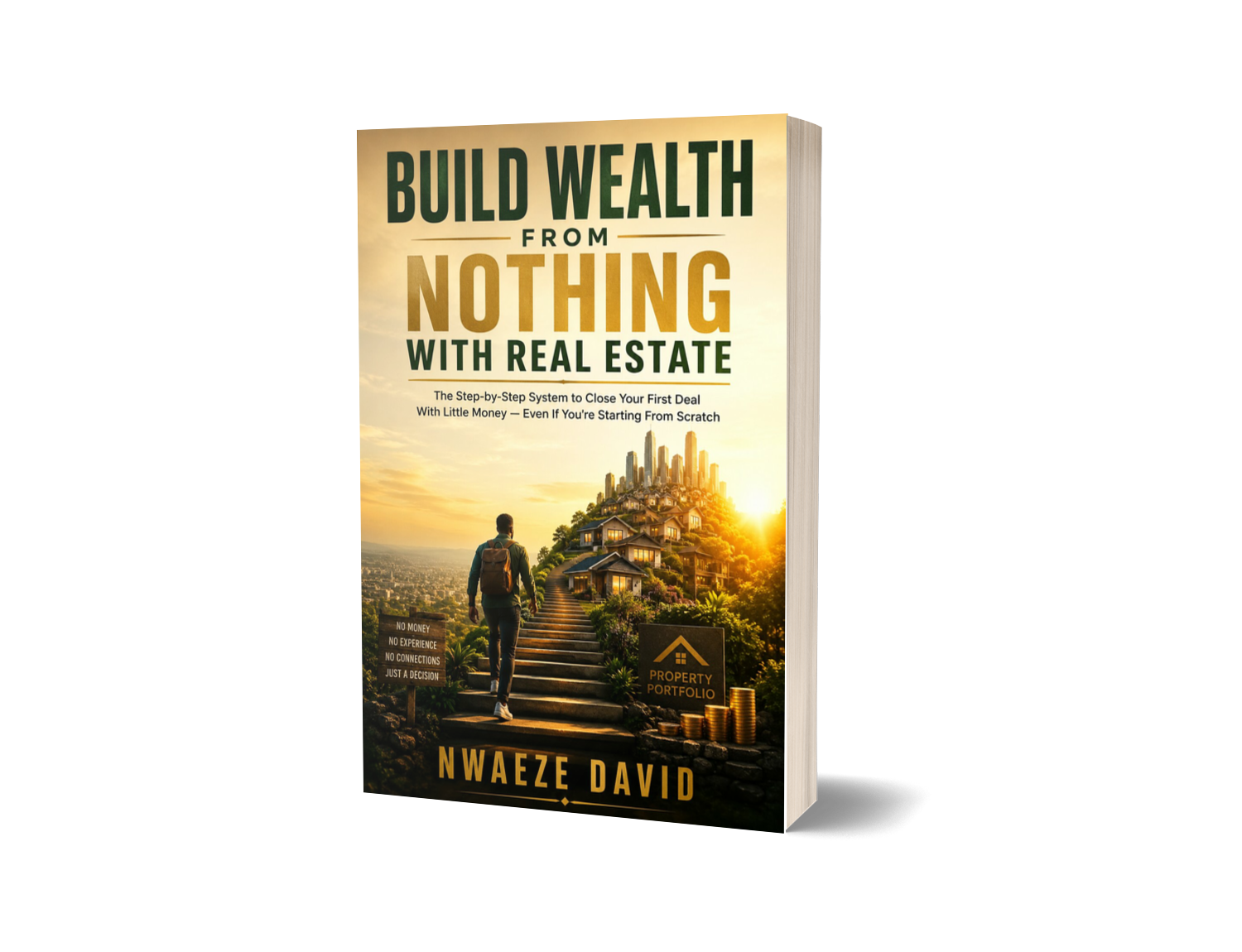
"You don't need a big deposit, perfect credit, or family money to build wealth in real estate. You need a system, the resourcefulness to work it, and the courage to start."
Get Your Copy →
"The AI Real Estate Investor gives you that system. It shows you exactly how to point AI at the parts of your business that actually make money."
Get Your Copy →
"The Diaspora Property Blueprint is the complete, step-by-step system for buying land and building wealth back home safely, from anywhere in the world."
Get Your Copy →Get help running your refinance numbers
Join the newsletter for practical, no-hype breakdowns of what refinancing actually costs and saves, then step inside the private community where we help you run the real math before you sign anything.
Keep learning: conventional vs FHA loan · how to finance real estate · what is a HELOC and how to use it to invest · how to get pre-approved for a home loan · real estate market trends.
Education only, not financial advice. Mortgage rates, closing costs, and refinance terms change frequently and vary by lender, loan type, and location; figures here are illustrative and marked for verification where noted. Speak to a licensed lender and run your specific numbers before refinancing.

Written by
Nwaeze David
Nigerian digital entrepreneur, educator and author of three real estate books. He writes practical, honest guides for new investors, working realtors and Africans building back home from abroad.


