
An investment property mortgage plays by a different rulebook than the loan you got for your own home: bigger down payment, higher rate, stricter reserves. Here is exactly what lenders require in 2026, and how to actually get approved.
What's Inside
- The short answer
- How it differs from a primary mortgage
- Down payment requirements by property type
- Credit score and DTI requirements
- Cash reserve requirements
- How lenders count rental income
- The loan types available
- How to actually get approved
- How to lower your down payment
- Common mistakes
- Frequently asked questions

An investment property mortgage is underwritten more strictly than the loan on your own home, because a lender is betting on a property you do not live in and a tenant you do not control. Bigger down payment, higher interest rate, more cash in reserve. None of it is arbitrary, and understanding the rules before you apply saves you from a declined loan or a rate surprise at closing.
This guide covers exactly what lenders require for an investment property loan, how it compares to a regular mortgage, and the practical steps that improve your odds of approval.
Quick honesty note
This is education, not financial advice. Down payment minimums, rates, and reserve requirements vary by lender and change with market conditions. Confirm current terms directly with lenders before budgeting around any number here.
The Short Answer
How It Differs From a Primary Mortgage
Lenders price investment loans higher because the risk is genuinely higher: if money gets tight, borrowers are statistically more likely to keep paying their own home's mortgage before a rental property's. That single fact drives every difference below.
A concrete rate example
As of July 7, 2026, the average 30-year fixed rate for a primary residence sat around 6.63%. An investment property loan on the same day would typically price around 7.1% to 7.6%, roughly 0.5 to 1 percentage point higher. On a $280,000 loan, that difference alone can mean well over $100 more per month.
Down Payment Requirements by Property Type

Swipe to see more →
| Property type | Typical down payment |
|---|---|
| Single-family, non-owner-occupied | 15% minimum, 20-25% for best rates and no PMI |
| 2-4 unit, non-owner-occupied | 25-30% |
| 2-4 unit, owner-occupied (house hack) | As low as 3.5% (FHA) or 5% (conventional) |
| DSCR loan | Typically 20-25% |
| Hard money loan | 25-35% (lender typically caps at 65-75% LTV) |
Notice how dramatically the number changes if you occupy one unit yourself. That gap is exactly why house hacking is often recommended as a first investment move. See house hacking.
Credit Score and DTI Requirements
Lenders want to see a credit score of at least 620-680 for the lowest down payment tiers, with the best rates typically reserved for scores of 740 and up. Your debt-to-income ratio (DTI), all monthly debts divided by gross monthly income, usually needs to stay under 43-45%, though some lenders allow higher with strong compensating factors like a large down payment or deep reserves.
Cash Reserve Requirements
This is the requirement that surprises the most first-time investors. Lenders typically want to see three to six months of the investment property's full mortgage payment (principal, interest, taxes, and insurance) sitting in reserve, separate from your down payment funds. If you already own other financed properties, many lenders require reserves for those as well, which can add up fast for anyone scaling a portfolio.
How Lenders Count Rental Income

For a conventional loan, lenders typically count only 75% of the property's expected or documented rental income when calculating your DTI, not the full rent. If a property should rent for $2,000 a month, only $1,500 is used to help you qualify, a built-in cushion for vacancy and expenses. DSCR loans work differently, qualifying almost entirely on whether the property's rent covers its own payment, largely ignoring your personal income. See DSCR loans explained.
The Loan Types Available
- Conventional loans. The standard route for most investors, following Fannie Mae or Freddie Mac guidelines, with the requirements detailed above.
- DSCR loans. Qualify based on the property's rental income rather than your personal income, useful for self-employed investors or those scaling past conventional limits.
- Portfolio loans. Held in-house by the lender rather than sold, offering more flexibility for investors with an established relationship or unique circumstances.
- Hard money loans. Short-term, higher-rate financing best suited to flips or properties needing renovation before they qualify for long-term financing. See hard money loans.
How to Actually Get Approved
- Check and strengthen your credit first. Pull your score, dispute errors, and pay down revolving balances before applying.
- Save the down payment plus reserves separately. Do not plan to use every dollar you have for the down payment alone.
- Get pre-approved before you shop. Know your real number and show sellers you are serious. See how to get pre-approved for a home loan.
- Gather documentation early. Tax returns, bank statements, and if the property is already tenanted, the lease and rent roll.
- Compare multiple lenders. Rate spreads on investment loans can be wide, comparing a few quotes can save thousands over the loan's life. A marketplace like LendingTree makes this comparison faster.
- Close with reserves intact. Never spend your reserve fund closing the deal. It exists for the months after closing, not the closing itself.
How to Lower Your Down Payment
Gift funds are usually off the table, here is what actually works
Unlike a primary home purchase, conventional investment property down payments generally cannot come from gifted funds, they must be your own money or borrowed equity. The most common legitimate workaround: a cash-out refinance or HELOC on a property you already own, which lenders treat as your own funds for down payment purposes, unlike a gift. This is one of the most common ways experienced investors fund their next purchase without depleting savings.
Beyond that, house hacking remains the single biggest lever for lowering your down payment, since owner-occupied financing on a 2-4 unit property can drop you from 25-30% down to as little as 3.5-5%.
Common Mistakes (and How to Dodge Them)
- Assuming primary-home rules apply. Down payment, rate, and reserve requirements are meaningfully stricter for investment properties.
- Spending down reserves to afford the down payment. Both need to exist separately, not compete for the same dollars.
- Not shopping multiple lenders. Rate spreads on investment loans vary more than on primary mortgages. A single quote rarely reflects your best available rate.
- Assuming full rent counts toward qualifying. Conventional lenders typically count only 75% of expected rental income, plan your numbers around that discount, not the full rent.
- Trying to use gift funds. Conventional investment property down payments almost always require your own funds or borrowed equity, not gifts.
Frequently Asked Questions
How much down payment do I need for an investment property?
Conventional loans typically require 15% down for a single-family investment property, though 20-25% gets better rates and avoids mortgage insurance. Two-to-four unit non-owner-occupied properties usually need 25-30% down. Owner-occupied multi-unit properties (house hacking) can qualify for as little as 3.5% down with an FHA loan.
Are investment property mortgage rates higher than regular mortgage rates?
Yes, typically 0.5 to 1 percentage point higher than a primary residence rate, because lenders view non-owner-occupied properties as higher risk. The exact premium depends on your credit score, down payment size, and the specific lender.
What credit score do I need for an investment property loan?
Most lenders want a minimum credit score of 620 to 680, depending on your down payment size, with the best rates typically reserved for scores of 740 and above. A higher score can also help you qualify for a lower down payment tier on some loan programs.
How much in cash reserves do I need for an investment property?
Most lenders require three to six months of the property's full mortgage payment held in reserve, separate from your down payment funds. If you already own other financed properties, some lenders require additional reserves for those as well, which can add up significantly for investors scaling a portfolio.
Can I use gift funds for an investment property down payment?
Generally no. Conventional investment property loans typically require the down payment to come from your own funds or from borrowed equity, such as a cash-out refinance or HELOC on a property you already own. Gift funds are usually only permitted for primary residence and second home purchases.
How does rental income affect my mortgage qualification?
For conventional loans, lenders typically count only 75% of the property's expected or documented rental income when calculating your debt-to-income ratio, building in a cushion for vacancy and expenses. DSCR loans work differently, qualifying primarily on whether the property's rental income covers its own payment, largely independent of your personal income.
Know the Rules Before You Apply
An investment property mortgage rewards preparation more than almost any other loan type. Save the down payment and your reserves as two separate pools, strengthen your credit before you apply, and shop multiple lenders since rate spreads run wider here than on a primary mortgage. Understand these rules going in, and the application process holds far fewer surprises.
Take This Further
Books by Nwaeze David to help you build real wealth through property.
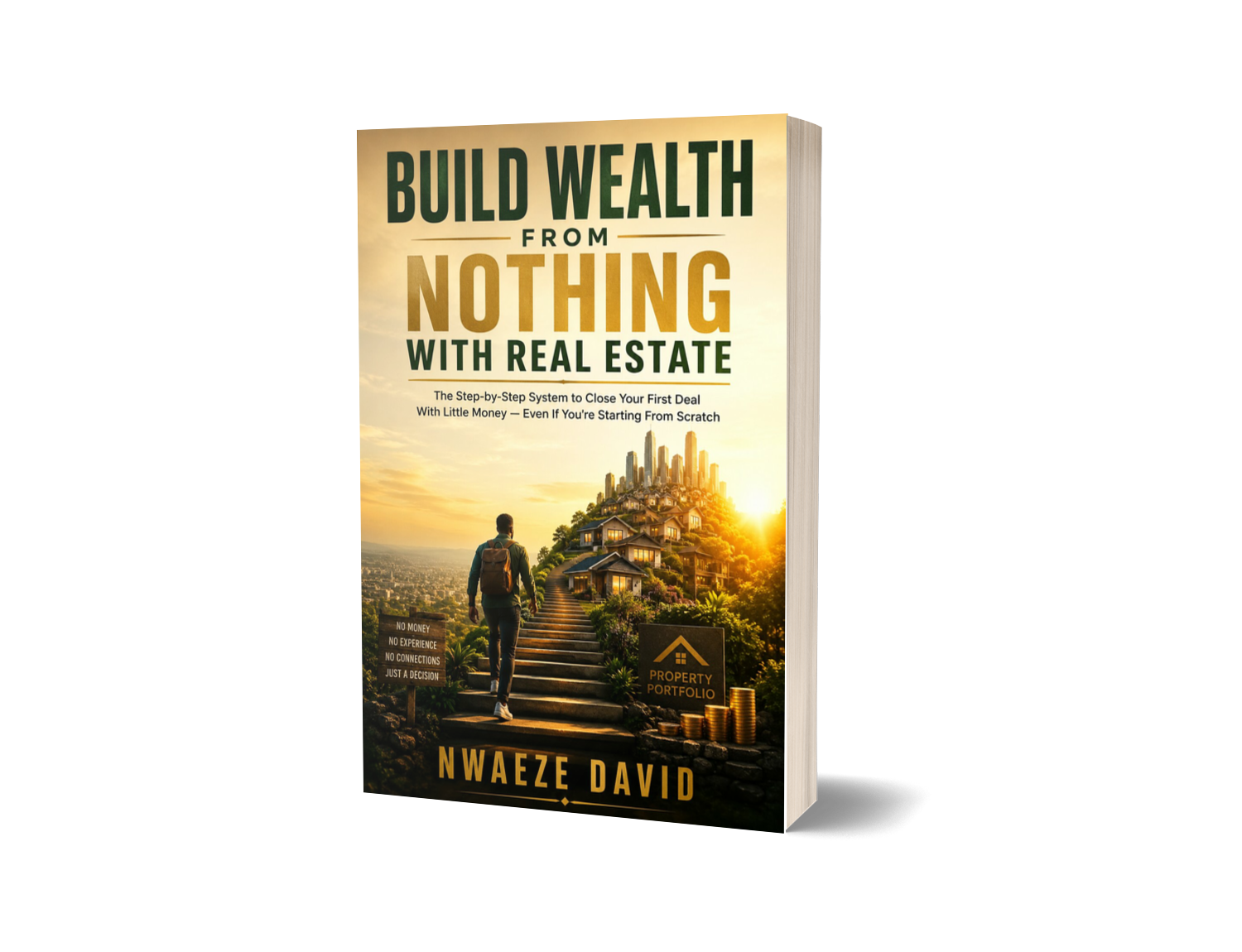
"You don't need a big deposit, perfect credit, or family money to build wealth in real estate. You need a system, the resourcefulness to work it, and the courage to start."
Get Your Copy →
"The AI Real Estate Investor gives you that system. It shows you exactly how to point AI at the parts of your business that actually make money."
Get Your Copy →
"The Diaspora Property Blueprint is the complete, step-by-step system for buying land and building wealth back home safely, from anywhere in the world."
Get Your Copy →Get help lining up your next investment loan
Join the newsletter for practical, no-hype lessons on financing real estate the smart way, then step inside the private community where we compare real lenders, real rates, and the strategy behind qualifying for your next property.
Keep learning: how to finance real estate · DSCR loans explained · how to get pre-approved for a home loan · house hacking · hard money loans.
Education only, not financial advice. Down payment minimums, rates, credit score requirements, and reserve rules vary by lender and loan program and change over time; figures here are illustrative and marked for verification where noted. Speak to a licensed lender before setting expectations around a specific loan.

Written by
Nwaeze David
Nigerian digital entrepreneur, educator and author of three real estate books. He writes practical, honest guides for new investors, working realtors and Africans building back home from abroad.


