
Passive real estate investing and active real estate investing are not two boxes, they are two ends of a spectrum with several genuinely different stops in between. Here is where each one sits, what it actually demands from you, and how to figure out which point on that spectrum fits your life right now.
What's Inside
- The difference, in one paragraph
- What active investing looks like
- What passive investing looks like
- The full spectrum, not just two boxes
- Comparing returns, risk, and control
- A closer look at syndication
- Which fits your life right now
- You can move along the spectrum over time
- Common mistakes
- Frequently asked questions

Passive real estate investing gets pitched as the ultimate goal, money working for you while you do nothing. Active investing gets pitched as the only "real" way to build serious wealth in property. Neither pitch is quite honest. The truth is that real estate investing spans a wide spectrum of effort and control, and most investors end up somewhere in the middle, not at either extreme.
This guide maps that entire spectrum, from REITs you can buy in seconds to flipping houses that demands weekly project management, so you can see exactly where each option sits and pick the one that actually fits your time, capital, and goals.
Quick honesty note
This is education, not financial advice. Return ranges, minimums, and accreditation rules cited below vary by platform, sponsor, and change over time. Passive does not mean risk-free, several high-profile syndication sponsors have defaulted on large deals in recent years. Do your own due diligence and speak to a licensed professional before investing.
The Difference, in One Paragraph
What Active Investing Looks Like
Active investing puts you in the driver's seat of sourcing, financing, and running the investment yourself.
- Buying and self-managing a rental. You find the property, secure financing, screen tenants, and handle (or directly hire and supervise) maintenance and leasing.
- Fix and flip. You source distressed properties, manage a renovation, and sell for a profit, requiring hands-on project management for months at a time.
- Wholesaling. You find and contract deals yourself, then assign them to buyers, which is capital-light but time- and hustle-intensive.
- House hacking. You live in and manage the property directly, even though the financing is friendlier than a pure investment loan.
The upside of active investing is control: you choose the property, the tenant, the renovation scope, and you keep 100% of the profit. The cost is your time, and the learning curve that comes with making your own decisions instead of relying on a professional operator's judgment.
What Passive Investing Looks Like
Passive investing hands the operational work to someone else in exchange for a share of your capital and, typically, a share of the returns.
- REITs. You buy shares in a company that owns income-producing property. No property management, full liquidity if publicly traded, and a share price you can buy for the cost of a coffee. See what are REITs and how to invest in them.
- Crowdfunding platforms. Similar to REITs but often deal-specific, with minimums as low as $10-$100 on some platforms. See real estate crowdfunding platforms compared.
- Syndications. You invest alongside other passive limited partners in a specific large property, managed entirely by a professional sponsor. More detail below.
- Turnkey rentals. You buy a fully renovated, already-tenanted property, often with property management bundled in, so ownership stays largely hands-off after closing.
- Delegated property management. You own a rental directly but hire a property manager to handle tenants and maintenance, moving an otherwise active investment toward the passive end of the spectrum.
The Full Spectrum, Not Just Two Boxes

Swipe to see more →
| Approach | Effort level | Typical minimum |
|---|---|---|
| REITs / crowdfunding | Fully passive | $10-$500 |
| Syndication (limited partner) | Fully passive | $25,000-$100,000+ |
| Turnkey rental | Mostly passive | Full purchase price or financing |
| Self-owned rental, managed by a PM | Semi-passive | Down payment + reserves |
| Self-managed rental | Active | Down payment + reserves + time |
| Fix and flip / wholesaling | Fully active | Varies; wholesaling can start very low |
Comparing Returns, Risk, and Control
Broadly, effort and control tend to move together: the more hands-on the approach, the more of the upside you keep, but also the more of the risk and workload lands directly on you. Passive vehicles trade some of that upside to a sponsor or manager in exchange for removing the operational burden from your plate entirely. Neither trade is automatically better, it depends what you are actually trying to optimize for: your time, your involvement, or your absolute return.
A Closer Look at Syndication

Syndication deserves its own section because it sits at an interesting point: fully passive for the investor, but with meaningfully higher minimums and different rules than a REIT or crowdfunding platform. A general partner (the sponsor) finds, finances, and manages a property, typically a larger multifamily or commercial asset, while limited partners contribute capital and take no active role.
- Minimums: commonly $25,000 to $100,000, sometimes higher for larger institutional-quality deals.
- Accreditation: most syndications require accredited investor status, generally $200,000 individual or $300,000 joint annual income for two years, or $1 million net worth excluding your primary residence. Some structures allow a limited number of non-accredited "sophisticated" investors.
- Returns: preferred returns of roughly 6-8% annually are common before the sponsor participates in profits, with total targeted returns (IRR) often in the 13-20%+ range over a typical 3-7 year hold.
- Liquidity: essentially none until a refinance or sale event. Treat this capital as locked up for the full hold period.
Passive does not mean risk-free
Several well-known syndication sponsors have defaulted on large deals in recent years, driven by floating-rate debt and aggressive underwriting assumptions that did not survive higher interest rates. Vet the sponsor's track record across a full market cycle, not just their pitch deck, before wiring any capital.
Which Fits Your Life Right Now
- Choose more passive if you have limited time, want to start with a small amount of capital, or are still learning the fundamentals and want exposure before committing to direct ownership.
- Choose more active if you have time to learn and manage, want to keep the full upside of your work, and can tolerate the learning curve of your own decisions.
- Choose a middle point (owning a rental with a property manager) if you want direct ownership and its tax benefits without personally handling tenants and maintenance.
If you are genuinely unsure where to start, review the full range of low-capital entry points in how to start investing in real estate with little money.
You Can Move Along the Spectrum Over Time
This is not a permanent choice. Many investors start fully passive with a REIT or crowdfunding position to learn how real estate income actually behaves, then move toward direct ownership once they have capital and confidence. Others start active, self-managing their first rental, then delegate to a property manager once their time becomes more valuable than the management fee. There is no wrong direction to move, only the direction that matches where your time and capital sit right now.
Common Mistakes (and How to Dodge Them)
- Choosing based on return alone. A higher potential return that demands ten hours a week you do not have is not actually the better choice for you.
- Treating passive as guaranteed. Syndications and REITs can still lose money. Underwrite the sponsor and the deal, not just the pitch.
- Locking up money you might need. Syndications are illiquid for years. Never invest funds you may need on short notice.
- Going fully active without reserves or systems. Active investing rewards preparation. Underestimating the time commitment is the most common regret among first-time landlords.
- Assuming the spectrum is fixed. Your ideal point on this spectrum will likely change as your capital, time, and experience change. Revisit the decision periodically.
Frequently Asked Questions
What is passive real estate investing?
Passive real estate investing means contributing capital to a real estate investment, a REIT, crowdfunding platform, syndication, or turnkey rental, without personally handling the sourcing, financing, or day-to-day management. A sponsor, manager, or company handles those responsibilities, and you receive a share of the income and returns with minimal ongoing involvement.
Is passive real estate investing actually profitable?
It can be, though returns and risk vary widely by vehicle. REITs and crowdfunding platforms have delivered mixed results depending on the fund and year. Syndications commonly target preferred returns of 6-8% annually plus a share of profits at sale, with total targeted IRRs often in the 13-20%+ range, though these are targets, not guarantees, and some deals have lost money entirely.
What is the minimum investment for a real estate syndication?
Most real estate syndications require a minimum investment of $25,000 to $100,000, sometimes higher for larger institutional-quality deals. A small number of crowdfunded or Regulation CF-structured offerings allow non-accredited investors to participate with minimums as low as a few hundred to a few thousand dollars.
Do I need to be an accredited investor for passive real estate investing?
Not always. REITs and most crowdfunding platforms are open to any investor. Most private syndications, however, require accredited investor status, generally $200,000 individual or $300,000 joint annual income for the past two years, or $1 million net worth excluding your primary residence, though some structures allow a limited number of non-accredited sophisticated investors.
Which is better, active or passive real estate investing?
Neither is universally better, they suit different situations. Active investing offers more control and keeps more of the upside but demands significant time and a real learning curve. Passive investing removes the operational burden in exchange for a smaller share of returns and less control over decisions. Many investors use both at different points in their financial life.
Can I start passive and switch to active investing later?
Yes, and many investors do exactly this. Starting with a REIT or crowdfunding platform is a common way to learn how real estate income behaves before committing to direct property ownership. Others move the opposite direction, from self-managing a rental toward hiring a property manager, as their time becomes more valuable than the management fee.
Pick the Point on the Spectrum, Not a Side
Active and passive real estate investing are not competing philosophies, they are different points on the same line, and the right one depends entirely on how much time, capital, and control you actually want right now. Start where your current life allows, and feel free to move along that spectrum as your circumstances change.
Take This Further
Books by Nwaeze David to help you build real wealth through property.
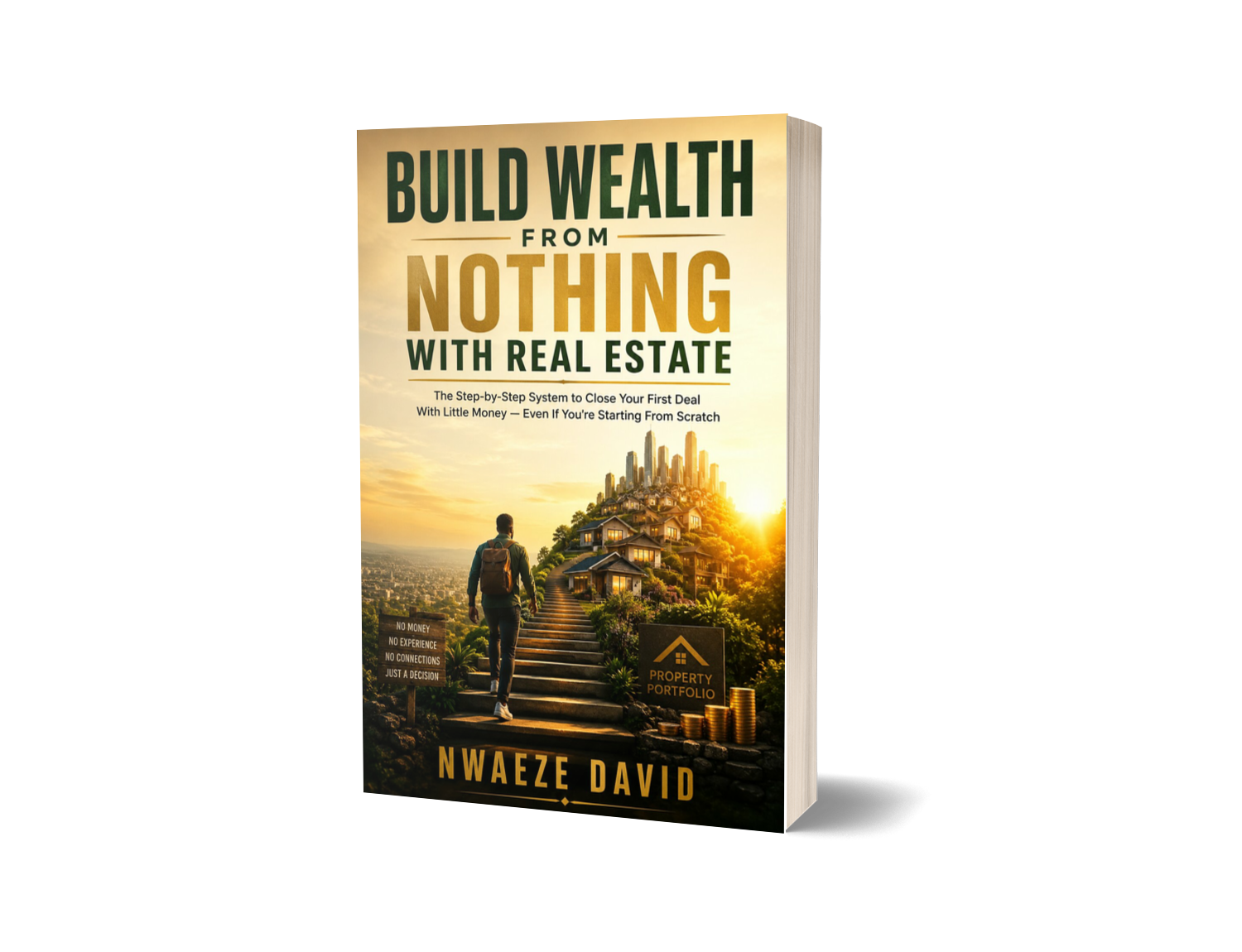
"You don't need a big deposit, perfect credit, or family money to build wealth in real estate. You need a system, the resourcefulness to work it, and the courage to start."
Get Your Copy →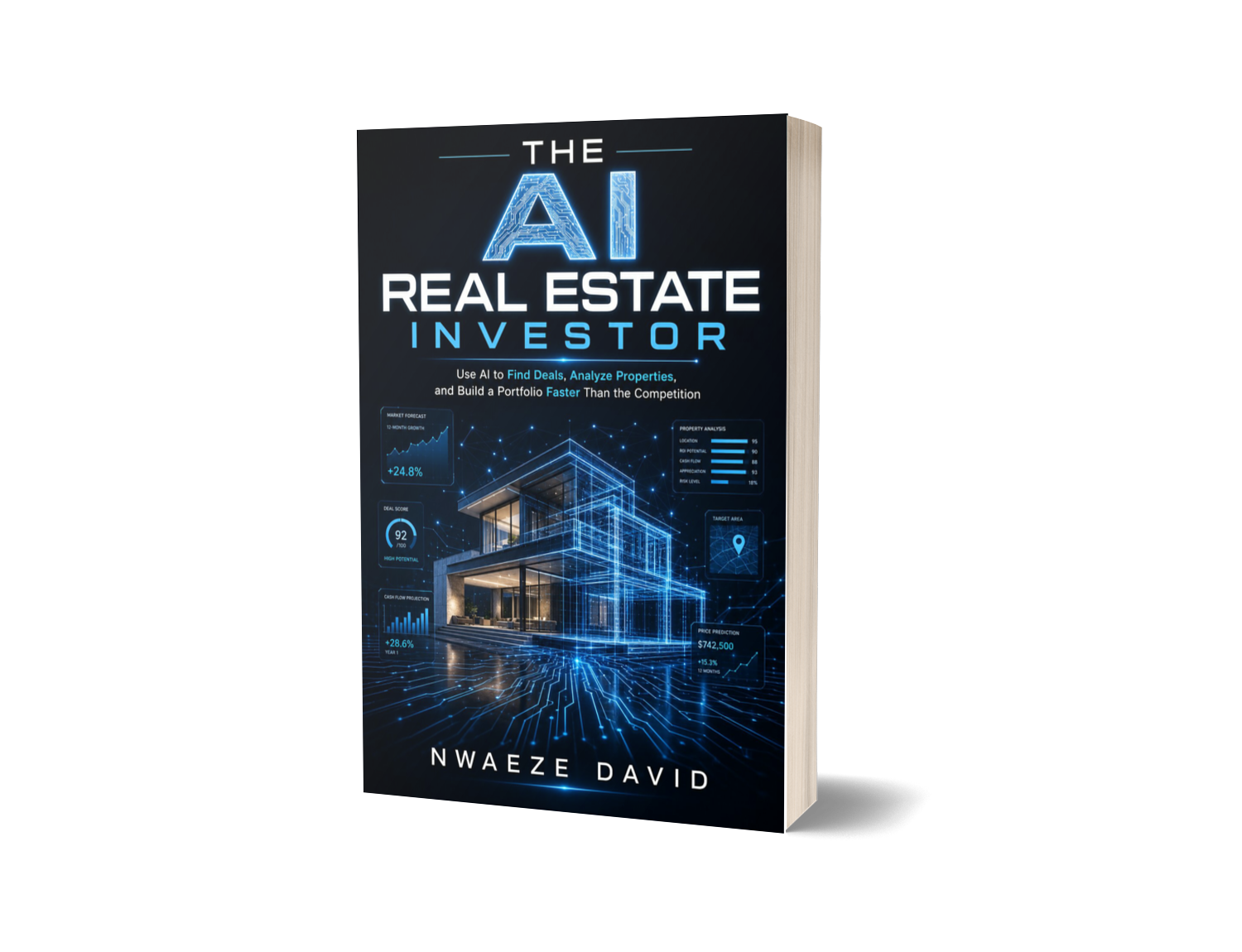
"The AI Real Estate Investor gives you that system. It shows you exactly how to point AI at the parts of your business that actually make money."
Get Your Copy →
"The Diaspora Property Blueprint is the complete, step-by-step system for buying land and building wealth back home safely, from anywhere in the world."
Get Your Copy →Get more honest breakdowns like this
Join the newsletter for clear, no-hype lessons on building wealth through property, then step inside the private community where we break down real passive and active deals and the strategy behind choosing the right one.
Keep learning: real estate investing for beginners · what are REITs and how to invest in them · real estate crowdfunding platforms compared · real estate syndication · how to start investing in real estate with little money.
Education only, not financial advice. Return figures, minimums, and accreditation thresholds vary by platform and sponsor and change over time; figures here are illustrative and marked for verification where noted. Passive investments, including REITs and syndications, carry real risk including loss of principal. Speak to a licensed financial advisor before investing.

Written by
Nwaeze David
Nigerian digital entrepreneur, educator and author of three real estate books. He writes practical, honest guides for new investors, working realtors and Africans building back home from abroad.


