Loading...

Real Estate Investing for Beginners
Some links here are affiliate links. If you use them to buy a tool, I may earn a small commission at no extra cost to you. I only point to tools I use or have researched properly.
Real estate investing for beginners sounds like a game for people with deep pockets and family money. It is not. This guide shows you how property actually builds wealth and how to start from where you are right now.
What's Inside
- What real estate investing actually is
- The four ways property builds wealth
- How much money you really need
- 8 beginner-friendly ways to invest
- The numbers every beginner must know
- How to start, step by step
- What the 2026 market means for you
- Tools to start with
- Common beginner mistakes
- Investing from the diaspora
- Frequently asked questions

Real estate investing for beginners gets wrapped in a lie: that you need to be rich first. The truth is simpler and more useful. Plenty of ordinary people built lasting wealth from property starting with a small down payment, one modest rental, or even a few hundred dollars parked in a REIT.
I'll show you exactly how it works. How property pays you in more than one way at the same time. The strategies that fit a beginner's budget. The numbers that separate a good deal from a money pit. And the step-by-step path to your first deal.
What Real Estate Investing Actually Is
In one paragraph: Real estate investing means putting money into property to earn a return. That return comes from rental income, from the property rising in value over time, or both. Beginners can start small, from buying shares in a REIT for the price of a coffee to buying a first rental with a modest down payment.
Strip away the jargon and there are only two ways property makes you money. It pays you while you hold it (rent), and it can be worth more when you sell it (appreciation). The best beginner strategies stack both.
What makes property different from most other investments is that you can buy it with a mortgage. You put down a fraction of the price and control the whole asset.
That single fact is why real estate has built more everyday millionaires than almost anything else. It is also why getting the numbers wrong hurts more here than in a savings account. Respect both sides of that.
The Four Ways Property Builds Wealth
This is the part most beginners never get taught properly. A good rental does not pay you once. It pays you four ways at the same time.
- Cash flow. The rent left over after every expense and the mortgage are paid. This is real money in your pocket each month. It is the part you can spend, save, or reinvest.
- Appreciation. Over long stretches, property values tend to rise, often roughly in step with inflation, though this swings a lot by location and timing. Because you bought with borrowed money, even a small rise can mean a large return on the cash you actually put in.
- Loan paydown. Every month, your tenant's rent chips away at your mortgage balance. Your wealth grows quietly while someone else makes the payment.
- Tax benefits. In many countries, property owners can write off mortgage interest, running costs, and depreciation, which can shelter a chunk of your rental income from tax. The rules vary widely, so check yours with a tax pro.

Here is why that combination is so strong. Say you buy a $200,000 property with $40,000 down (an illustrative example, not a promise). If it rises just 4% in a year, that is $8,000 of value gained on the $40,000 you put in. That alone is a 20% return on your cash, before you even count the rent and the loan paydown on top. That is the quiet power of property.
How Much Money You Really Need to Start
The honest answer: less than you think, but more than zero in most cases. Your starting number depends entirely on which path you pick.
If you want to own physical property, your main upfront cost is the down payment plus closing costs and a cash reserve. An owner-occupied loan can need as little as 3% to 3.5% down in some markets, while a pure investment property usually wants 20% to 25% down.
If you would rather stay hands-off, you can start with a REIT or a property crowdfunding platform for a tiny fraction of that.
The one cost beginners forget
Reserves. Before you buy anything physical, set aside at least 3 to 6 months of expenses for that property. Boilers break. Tenants leave. The investors who blow up are the ones who spent every last dollar on the down payment and had nothing left for the first surprise.
Want the full breakdown of starting budgets by strategy? See how much money do you need to invest in real estate? and how to start investing in real estate with little money.
8 Beginner-Friendly Ways to Invest in Real Estate
You do not have to pick the hardest path first. Here are eight ways in, sorted so you can match one to your budget and how hands-on you want to be.
1. House hacking
Buy a small multi-unit place (or a house with spare rooms), live in one part, and rent out the rest. Because you live there, you qualify for low-down-payment owner-occupied loans. Your tenants cover most or all of your mortgage.
For most beginners, this is the single best starting move. Full guide: House Hacking - How to live free and let your tenants cover most of your mortgage.

2. Buy-and-hold rentals
The classic. Buy a property, rent it to good tenants, hold it for years. You collect cash flow while appreciation and loan paydown build equity in the background. Simple, proven, and it scales.
3. REITs and real estate ETFs
A REIT is a company that owns income property; you buy shares like a stock. A real estate ETF holds a basket of them. This is the most hands-off entry point on the list, and you can start with the price of a single share. Good for total beginners who want exposure without tenants. More here: what are REITs and how to invest in them.
4. Real estate crowdfunding
Online platforms pool money from many small investors to buy larger deals. You put in a modest amount and earn a share of the income and gains, with none of the management. Platforms like Fundrise made this accessible to beginners. Read the fees and lock-up terms before you commit.
5. BRRRR (buy, rehab, rent, refinance, repeat)
Buy a run-down property, fix it, rent it, then refinance to pull most of your cash back out and do it again. Higher effort and higher skill, but it lets you recycle the same money into deal after deal. Walkthrough: BRRRR method explained.
6. Turnkey rentals
Buy a property that is already renovated and tenanted, often with management included. You pay a premium for the convenience, but it is one of the most passive ways to own a real rental, especially if you are busy or buying from another city.
7. Wholesaling
Find a great deal, lock it under contract, then assign that contract to another investor for a fee. It needs almost no money but plenty of hustle and people skills. It is a way to earn and learn the market before you own anything. See wholesaling real estate.
8. Live-in flip
Buy a fixer-upper, live in it while you improve it, then sell. In some countries this comes with generous tax treatment on the gain when it is your main home. Hands-on, but a low-cost way to build a chunk of capital for your next move.
| Strategy | Money to start | Effort | Best for |
|---|---|---|---|
| House hacking | Low | Medium | First-timers |
| Buy-and-hold rental | Medium | Medium | Steady long-term wealth |
| REITs / ETFs | Very low | Very low | Total beginners, passive |
| Crowdfunding | Low | Very low | Hands-off investors |
| BRRRR | Medium-high | High | Recycling capital |
| Turnkey | Medium-high | Low | Busy or remote investors |
| Wholesaling | Very low | High | Starting with no capital |
| Live-in flip | Low | High | Hands-on, tax perks |
Not sure whether you want a hands-on or hands-off path? That choice is big enough to deserve its own read: active vs passive real estate investing explained.
The Numbers Every Beginner Must Know
Property rewards people who run the math and punishes people who run on hope. You do not need to be an accountant. You need five simple numbers.
- Cash flow = rent minus all expenses minus mortgage. If it is negative, the deal feeds on your wallet every month.
- Cash-on-cash return = annual cash flow divided by total cash you put in. It tells you what your actual money is earning. Many investors look for 8% or more.
- Cap rate = net operating income divided by purchase price. A quick way to compare properties before financing is added.
- The 1% rule. A fast screen: monthly rent should be near 1% of the purchase price. A $200,000 place would rent for around $2,000. Harder to hit in pricey cities now, so treat it as a filter, not a law. Detail: the 1% rule in real estate investing explained.
- The 50% rule. Assume about half your rent gets eaten by expenses (taxes, insurance, repairs, vacancy, management) before the mortgage. It stops the number-one beginner mistake: underestimating costs.
A deal is not good because the house is pretty. It is good because the numbers work at today's interest rate. Hope is not a strategy.
How to Start Investing in Real Estate, Step by Step
- Set one clear goal. Monthly cash flow? Long-term appreciation? A faster path to quitting your job? Your goal decides your strategy, your market, and your property type. Vague goals produce vague results.
- Fix your financial base. Check your credit, clear high-interest debt where you can, and build your reserve. A stronger profile means better loan terms, which can matter more than the purchase price itself.
- Pick one strategy and go deep. Choose a single path from the list above and learn it properly. Beginners who chase five strategies at once master none.
- Get pre-approved and learn your financing. Know exactly what you can borrow before you shop. See how to get pre-approved for a home loan and the full money side in how to finance real estate.
- Build a small team. A solid agent, a lender, an inspector, and (later) a property manager. Good people stop expensive mistakes before they happen.
- Analyze deals until it is boring. Run the five numbers on dozens of properties. Most will fail the test. That is the point. You are training your eye to spot the few that pass.
- Make the offer and close. When a deal clears your numbers and your reserve is in place, act. Get the inspection, do your due diligence, and sign.
- Manage well, then scale. Keep good tenants, track every figure, and let the equity build. Then repeat the process toward a portfolio: how to build a real estate portfolio from scratch.

What the 2026 Market Means for You
You cannot pretend rates do not exist. Through 2026, the 30-year fixed mortgage has hovered in the mid-6% range, higher than the unusual lows of 2020 and 2021. Check today's figure before you budget, because it moves week to week.
What does that mean for a beginner? Two things. First, a deal has to cash flow at today's rate, not at some rate you are hoping for next year. Second, higher borrowing costs have pushed many over-stretched investors out, which quietly creates better openings for patient, cash-ready buyers.
Higher rates are not a reason to sit out. They are a reason to be picky.
Many beginners are finding the math works better in secondary and smaller markets than in the big-name cities, where prices ran too far ahead of rents. For the wider view, read is real estate a good investment right now? and is now a good time to buy a house?.
Tools to Start With
You do not need a stack of software to begin. You need a few good tools that pay for themselves.
Start passive in minutes
If you want exposure to real estate before you ever own a building, a crowdfunding platform like Fundrise lets you start small and stay completely hands-off. Treat it as your training wheels while you learn the deal side.
- Set up your business the right way. Once you own real property, many investors hold it inside an LLC to separate it from their personal assets. Doola handles the formation and the paperwork so you can do it properly from day one. More on whether you need one: should you hold rental property in an LLC?.
- Track your money from the first dollar. Rental income and expenses get messy fast, and clean books make tax time painless and your deductions safe. QuickBooks is the standard most landlords land on.
- Analyze deals fast. A deal-analysis app like DealCheck runs your cash flow, cap rate, and cash-on-cash in seconds so you can screen more properties in less time.
Common Beginner Mistakes (and How to Dodge Them)
I have watched these sink more first-timers than bad markets ever did. Learn them now, cheaply, instead of later, expensively.
- Waiting for the perfect time. There isn't one. Markets always give you a reason to be scared. Buy when the numbers work and your financing is stable.
- Spending the whole reserve on the down payment. The first repair or vacancy then becomes a crisis. Keep your cushion.
- Underestimating expenses. Beginners count rent and mortgage, then forget taxes, insurance, repairs, vacancy, and management. Use the 50% rule as your floor.
- Buying on emotion. You are not moving in. You do not care if you love the kitchen. You care whether it cash flows.
- Skipping due diligence. Never waive the inspection to win a bidding war. The thing you didn't check is the thing that costs you.
- Over-borrowing. Stretching to the maximum loan leaves no room for error. A smaller, safer deal you keep beats a bigger one you lose.
- Analysis paralysis. Reading forever and never offering is its own mistake. After you have honestly analyzed a stack of deals, act on the one that passes.
Want the deeper version of this list? See real estate investing mistakes to avoid.
Investing From the Diaspora
If you are African, at home or abroad, property is one of the clearest paths to building wealth across borders, and one of the easiest places to get burned. The opportunities are real. So are the land scams and the fake titles. The fix is knowledge, not fear.
If you are building from outside your home country, start with how to invest in nigerian real estate from abroad and how africans in the diaspora can build wealth through property. Verify every document and never wire money for land you or someone you trust has not confirmed in person.
Frequently Asked Questions
How much money do I need to start investing in real estate?
It depends on the path. To buy physical property, plan for a down payment (as little as 3% to 3.5% on an owner-occupied loan, or 20% to 25% on a pure investment property), plus closing costs and a 3 to 6 month reserve. To stay hands-off, you can start a REIT or crowdfunding position for a very small amount, sometimes the price of a single share. Match the entry point to your budget rather than waiting until you have a large sum.
What is the best real estate investment for beginners?
For most beginners who want to own property, house hacking is the strongest first move: you live in part of a small multi-unit place and rent out the rest, qualify for a low down payment, and let tenants cover much of your mortgage. If you want zero management, a REIT or a crowdfunding platform is the simplest start. The best choice is the one that fits your budget, your timeline, and how hands-on you want to be.
Can I invest in real estate with no money?
Almost no-money paths exist, but none are truly free of effort. Wholesaling lets you earn by finding deals and assigning contracts without buying anything. Partnering brings in someone else's capital while you bring the work or the deal. House hacking lowers the cash needed through low-down-payment loans. No money down is possible, but it usually means trading money for hustle, skill, or a strong network.
Is real estate investing worth it in 2026 with higher rates?
Yes, but the rules have tightened. With the 30-year fixed in the mid-6% range, a deal has to cash flow at today's rate, not a hoped-for future one. Higher rates pushed many over-stretched buyers out, which creates openings for patient, cash-ready investors, often in secondary markets where rents line up better with prices. Be picky, run the numbers, and keep reserves.
How do beginners actually make money in real estate?
Four ways at once: monthly cash flow (rent minus all costs), appreciation (the property gaining value), loan paydown (tenants reducing your mortgage), and tax benefits (deductions and depreciation, where the rules allow). A well-bought rental stacks all four, which is why property compounds wealth so well over 10 to 30 years.
Can I invest in real estate from outside the US or from Africa?
Yes. You can buy REITs and many crowdfunding positions from most countries through a brokerage. Buying physical property abroad is also possible, but verify ownership, titles, and local rules carefully, and never send money for land that has not been confirmed on the ground by you or someone you trust. Treat document verification as non-negotiable.
Start Small, Start Now
Real estate investing for beginners is not about having money. It is about understanding the four ways property pays you, running the numbers honestly, and taking one real step instead of waiting for perfect. Pick a strategy that fits your budget, learn it properly, and make your first move when the math works.
Take This Further
Books by Nwaeze David to help you build real wealth through property.
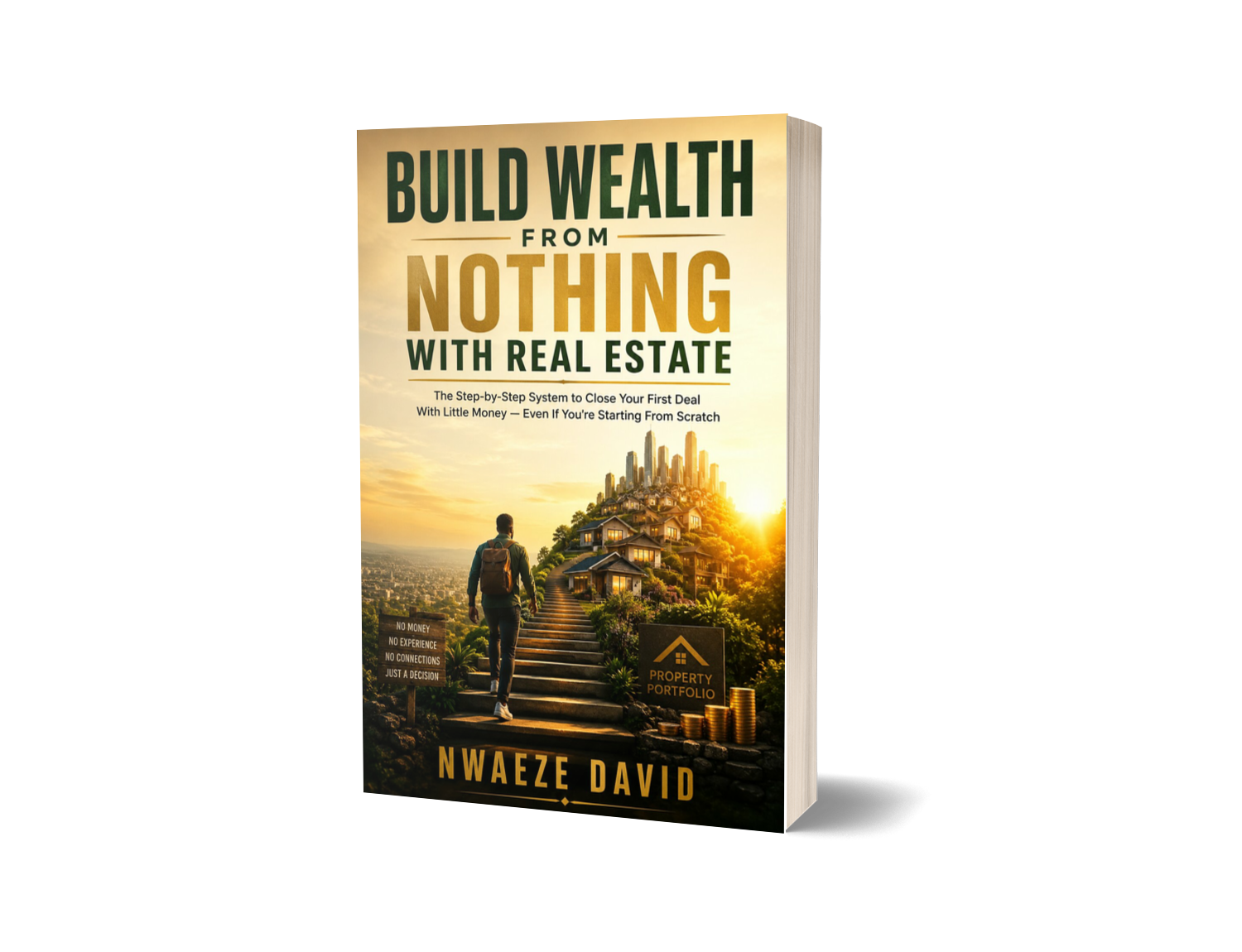
Beginner Wealth Building
Build Wealth From Nothing With Real Estate
"You don't need a big deposit, perfect credit, or family money to build wealth in real estate. You need a system, the resourcefulness to work it, and the courage to start."
Get Your Copy →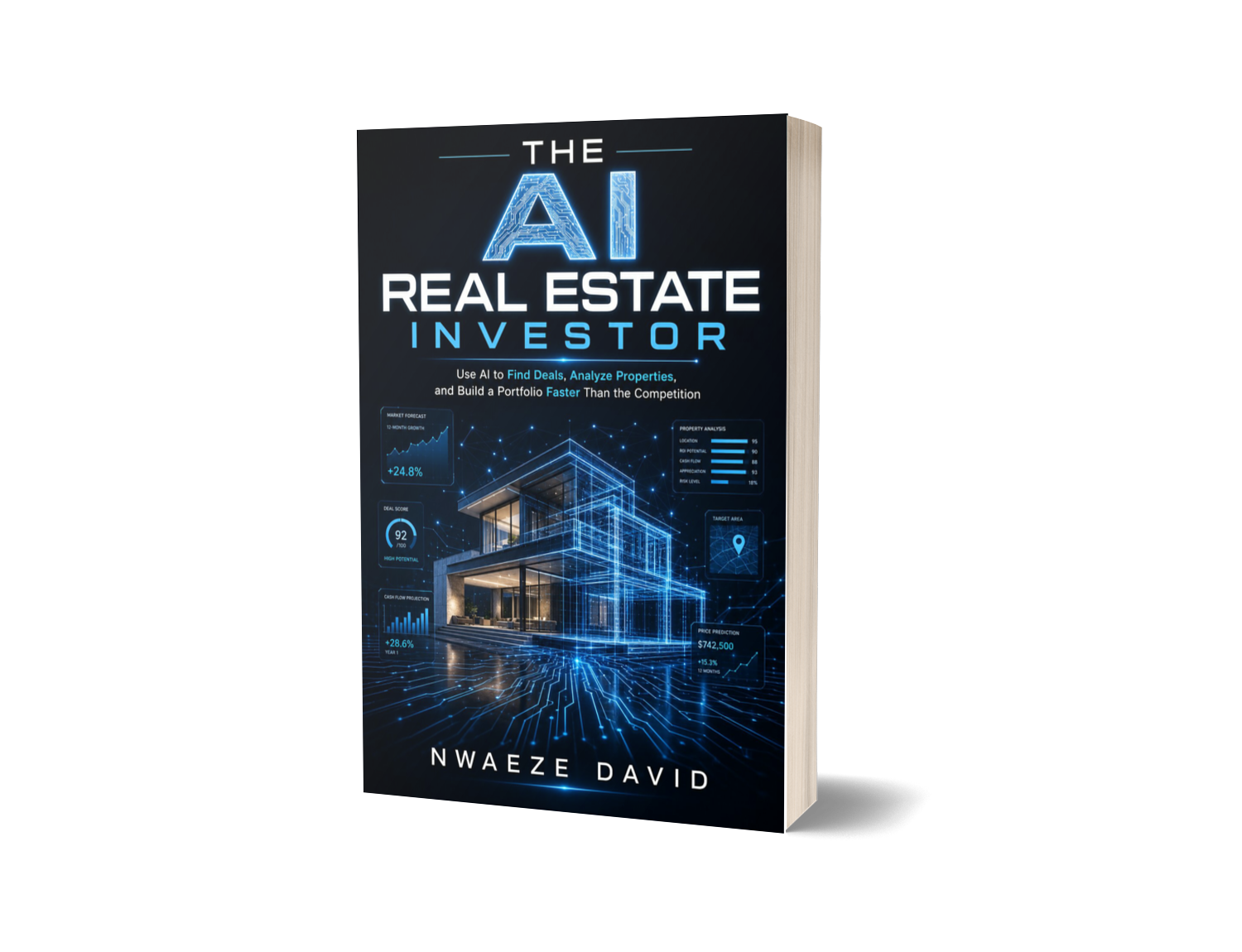
AI & Automation
The AI Real Estate Investor
"The AI Real Estate Investor gives you that system. It shows you exactly how to point AI at the parts of your business that actually make money."
Get Your Copy →
Diaspora & Africa
The Diaspora Property Blueprint
"The Diaspora Property Blueprint is the complete, step-by-step system for buying land and building wealth back home safely, from anywhere in the world."
Get Your Copy →Get the truths most realtors never tell you
Join thousands of readers getting practical, no-hype real estate and wealth-building lessons in your inbox, then go deeper inside the private community where we cover the real strategy behind marketing and wealth in property.
Keep learning: how to start investing in real estate with little money · BRRRR method explained · how to build a real estate portfolio from scratch · how to build generational wealth through real estate.
Education only, not financial or legal advice. Property markets carry risk, including loss of capital. Rates, taxes, and laws vary by country and change over time. Speak to a licensed professional before making any investment decision.