Loading...

BRRRR Method Real Estate Explained: A Beginner’s Guide
Some links here are affiliate links. If you use them, I may earn a small commission at no extra cost to you. I only point to services I trust or have researched properly. Nothing here is financial advice.
The BRRRR method lets you recycle the same pool of money into rental property after rental property, instead of saving a fresh down payment every time. Here is exactly how it works, the numbers that make or break it, and an honest look at whether it still holds up at today's rates.
What's Inside
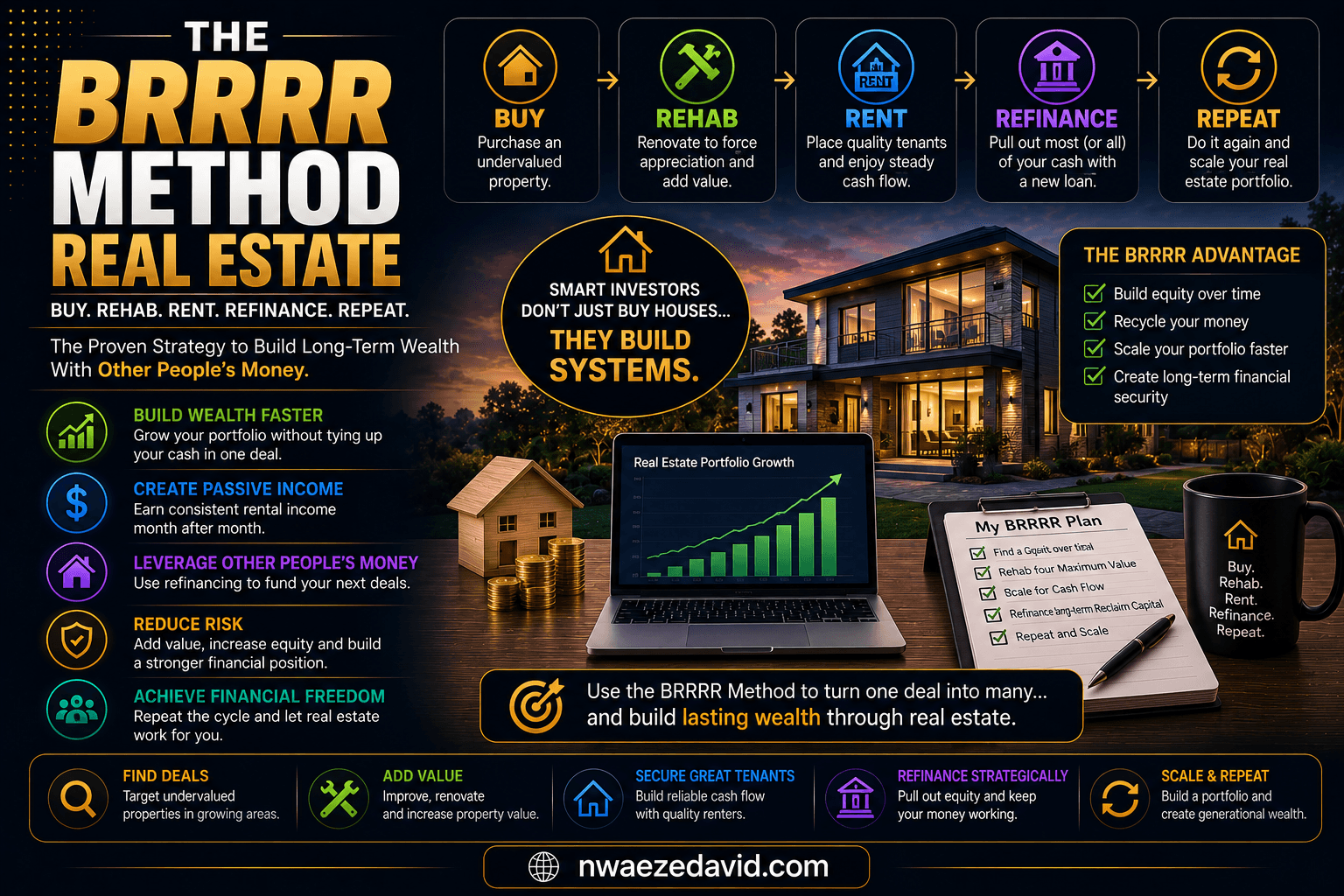
BRRRR method real estate stands for Buy, Rehab, Rent, Refinance, Repeat, a strategy popularized by the BiggerPockets investor community that lets you build a rental portfolio without saving a fresh down payment for every single property. Instead, you force appreciation through renovation, then pull your capital back out with a refinance and send it straight into the next deal.
It sounds almost too good to be true, and at today's interest rates it is genuinely harder to execute than it was a few years ago. This guide walks through exactly how it works, the specific numbers lenders check before they will refinance you, and an honest read on whether the math still holds up.
Quick honesty note
This is education, not financial advice. Loan terms, LTV caps, and seasoning requirements vary by lender and change over time, several figures below are marked. BRRRR carries real risk, including the possibility that your capital stays trapped in a deal longer than planned. Confirm current terms with a lender before you commit to a property.
What BRRRR Means, in One Paragraph
In short: BRRRR is a five-step real estate strategy: buy a distressed property below market value, rehab it to increase its value, rent it to a tenant, refinance based on the new higher appraised value to pull most or all of your original capital back out, then repeat the process with a new property. The goal is to recycle one pool of money into a growing rental portfolio instead of tying it up for good in every deal.
The Five Steps of BRRRR

- Buy. Find a distressed property well below its after-repair value (ARV), usually through off-market channels: wholesalers, auctions, probate, or MLS listings that have sat unsold. The discount you buy at is what makes the entire strategy work.
- Rehab. Renovate strategically to hit the target ARV at the lowest reasonable cost, kitchens, bathrooms, flooring, and curb appeal move an appraisal the most. Get at least three contractor bids and add a 15-20% contingency for surprises behind the walls.
- Rent. Place a qualified tenant and stabilize the property. Lenders want to see a signed lease and real rental income before they will approve your refinance.
- Refinance. Once the property has seasoned (more on this below), refinance based on the new appraised value rather than your discounted purchase price. This step pays off your short-term purchase loan and returns most or all of your original cash.
- Repeat. Take the capital you recovered and put it into the next property, growing your portfolio without needing a brand-new pile of savings each time.
The Numbers That Make or Break It
BRRRR is unforgiving of sloppy math, because every later step depends on the discipline of the first one.
The 70% rule sets your ceiling
Maximum purchase price = (ARV × 0.70) − repair costs. If comparable renovated homes sell for $300,000 and repairs will run $50,000, your maximum offer is $160,000. Pay more than that and the refinance will not return enough of your capital to make the recycle work. Full math in fix and flip, since BRRRR borrows this same discipline from house flipping.
Two more numbers govern the refinance specifically: loan-to-value (LTV), which caps how much a lender will loan against the appraised value, and debt-service coverage ratio (DSCR), which measures whether the rent actually covers the new mortgage payment.
The Refinance: LTV, DSCR, and Seasoning

| Factor | Typical 2026 requirement |
|---|---|
| Cash-out LTV cap | 70-75% of appraised value (up to 80% for the strongest profiles) |
| DSCR minimum | 1.20-1.25x for best pricing; some lenders accept as low as 1.0 |
| Seasoning period | 6-12 months for conventional/Fannie Mae-backed loans; 3-6 months (sometimes none) for DSCR loans |
| Credit score | 620-680+ conventional; DSCR lenders often more flexible |
Seasoning, the length of time you must own the property before a lender will refinance based on the new appraised value, is usually the single longest and least controllable phase of the whole cycle.
One notable exception: Fannie Mae's Delayed Financing Exception lets an all-cash buyer refinance almost immediately, skipping the standard wait, provided the refinance does not exceed the original purchase price plus documented closing costs. If you have the cash to buy outright, this is worth asking your lender about directly.
A Worked Example With Real Numbers
Say you find a property with a realistic ARV of $300,000 needing $50,000 in repairs.
- Buy: Applying the 70% rule, your maximum offer is $160,000. You negotiate to $155,000.
- Rehab: $50,000, funded alongside the purchase through a hard money or private loan.
- Total invested: $205,000 plus holding costs during the rehab and vacancy period.
- Rent: The renovated property leases for $2,100 a month.
- Refinance: The property appraises at the target $300,000. At 75% LTV, the new loan is $225,000.
- Cash recovered: $225,000 minus your roughly $205,000 all-in cost leaves you close to breakeven or a small amount back, depending on your exact holding costs, plus a property worth $300,000 with $75,000 in built-in equity.
Notice what actually happened: you may not have pulled every dollar back out in cash, but you converted roughly $205,000 into a $300,000 asset with a paying tenant. That equity and the cash flow going forward, not just the cash recovered at closing, is the real return.
Does BRRRR Still Work in 2026?
BRRRR was easier when rates sat near 3-4%. At today's 6.5-8% investment rates, the mechanics still work. The free money illusion does not.
Yes, but the math is tighter and the timeline is longer than the strategy's early reputation suggests. A full cycle now commonly runs 11-18 months rather than the 6-month sprints some investors managed during the low-rate years of 2019-2021.
Post-refinance cash flow is often thin or close to breakeven at current rates, and recovering 80-100% of your invested capital, not a clean 100%-plus, is a realistic, strong outcome.
The strategy still works for three durable reasons: you are buying below market value, forcing real appreciation through renovation, and recycling capital instead of parking it permanently. Fewer investors are running BRRRR at today's rates than during the boom years, which can mean less competition and better purchase prices for the ones who stay disciplined.
If the math on a specific deal does not work, a longer "slow BRRRR" hold, refinancing later once rates potentially ease, is a reasonable adjustment rather than abandoning the strategy entirely.
Financing Each Stage
BRRRR typically uses two different loans across its lifecycle, not one.
- Purchase and rehab. Most BRRRR properties are too distressed for conventional financing at acquisition, so investors use hard money or private money loans, short-term, higher-rate financing built for exactly this purpose. Full breakdown in hard money loans.
- The refinance. Once the property is renovated and rented, you replace that short-term loan with a long-term one. A DSCR loan qualifies you on the property's rental income rather than your personal income, and typically allows a shorter seasoning period than conventional financing, making it the more common choice for BRRRR investors who want to cycle faster. Full detail in DSCR loans explained.
Run the numbers before you fall for the property
A deal-analysis tool that models purchase, rehab, refinance, and post-refi cash flow together catches bad math before you are under contract. A tool like DealCheck handles this in a few minutes per property.
Common Mistakes (and How to Dodge Them)
- Overpaying at purchase. The single most common way BRRRR fails. The 70% rule exists precisely to prevent this.
- Underestimating rehab costs. Budget 15-20% above your contractor's bid. Surprises behind walls are the rule, not the exception.
- Using optimistic comps for ARV. Use recently sold comparables, never active listings or your own hopeful estimate.
- Being surprised by the seasoning period. Budget for 6-12 months of carrying costs on your purchase loan before assuming you can refinance.
- Ignoring post-refinance cash flow. A refinance that returns your capital but leaves you cash-flow negative every month is not automatically a win. Run both numbers.
- Skipping the reserve fund. Vacancy, a slow rehab, or a low appraisal can all extend your timeline. Have cash set aside for exactly that.
Frequently Asked Questions
What does BRRRR stand for?
BRRRR stands for Buy, Rehab, Rent, Refinance, Repeat. It is a real estate investing strategy where you buy a distressed property below market value, renovate it to increase its value, rent it to a tenant, then refinance based on the new appraised value to recover most or all of your original capital, which you then use to buy the next property.
How much money do you need to start BRRRR investing?
Many investors need roughly $50,000 to $100,000 in accessible capital for a first deal, covering the purchase (or down payment), rehab costs, and holding costs, though this varies significantly by market and property price. Using hard money or private financing can reduce the upfront cash needed, but you still need reserves for cost overruns and vacancy.
How long does a full BRRRR cycle take?
In the current rate environment, a full cycle commonly takes 11 to 18 months from purchase to completed refinance, longer than the 6-month cycles some investors achieved during the low-rate years of 2019-2021. The seasoning period before a lender will refinance based on the new appraised value is usually the longest and least controllable phase.
Does BRRRR still work with today's higher interest rates?
Yes, but the math is tighter than it used to be. Post-refinance cash flow is often thin or close to breakeven at current rates, and recovering 80-100% of your invested capital is a realistic strong outcome rather than the full 100%-plus recovery some investors achieved in the past. The underlying mechanics, buying below value and forcing appreciation, still work, but discipline on the numbers matters more than ever.
What is a seasoning period in BRRRR?
A seasoning period is the length of time a lender requires you to own a property before they will refinance it based on the new, higher appraised value rather than your original purchase price. Conventional and Fannie Mae-backed loans commonly require 6 to 12 months, while many DSCR lenders allow refinancing after just 3 to 6 months, sometimes with no seasoning requirement at all.
Is BRRRR better than just buying and holding a rental?
BRRRR lets you recycle the same capital into multiple properties, which can build a portfolio faster than saving a fresh down payment for every purchase, but it requires more skill, more risk tolerance, and more active management, sourcing distressed deals, overseeing renovations, and executing a precisely timed refinance. A simple buy-and-hold rental is a better starting point for beginners who want to learn property ownership before adding this complexity.
Recycle the Capital, Not Your Patience
BRRRR still works in 2026, but it rewards patience and discipline more than it did during the easy-money years. Buy below value, budget rehab conservatively, use realistic comps for your ARV, and go in expecting a longer timeline and thinner immediate cash flow than the strategy's reputation suggests. Do that, and each completed cycle still leaves you with equity, a paying tenant, and capital ready for the next deal.
Take This Further
Books by Nwaeze David to help you build real wealth through property.
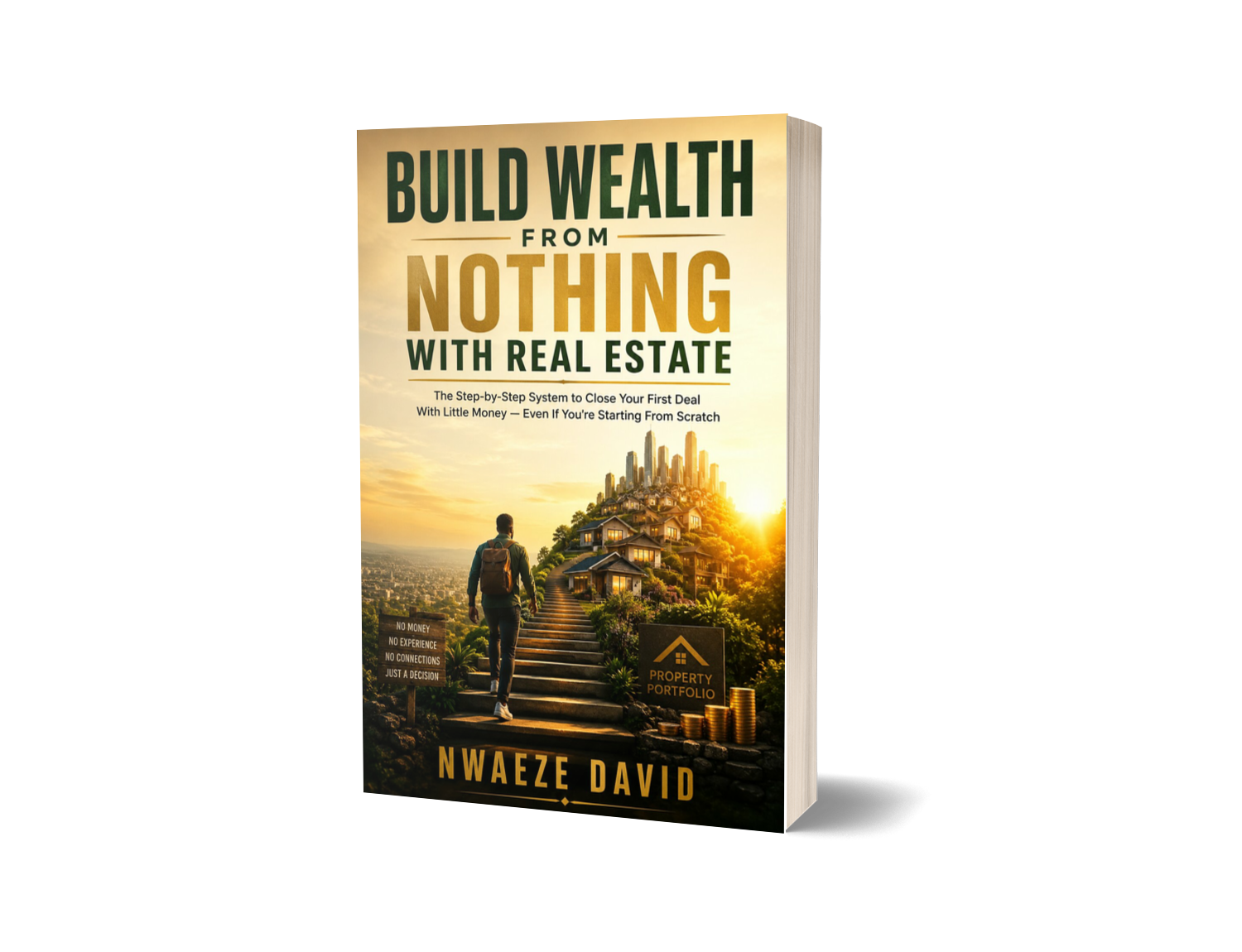
Beginner Wealth Building
Build Wealth From Nothing With Real Estate
"You don't need a big deposit, perfect credit, or family money to build wealth in real estate. You need a system, the resourcefulness to work it, and the courage to start."
Get Your Copy →
AI & Automation
The AI Real Estate Investor
"The AI Real Estate Investor gives you that system. It shows you exactly how to point AI at the parts of your business that actually make money."
Get Your Copy →
Diaspora & Africa
The Diaspora Property Blueprint
"The Diaspora Property Blueprint is the complete, step-by-step system for buying land and building wealth back home safely, from anywhere in the world."
Get Your Copy →Get more strategies like this in your inbox
Join the newsletter for practical, no-hype lessons on building wealth through property, then step inside the private community where we break down real BRRRR deals and the numbers behind them.
Keep learning: real estate investing for beginners · house hacking · DSCR loans explained · hard money loans · wholesaling real estate.
Education only, not financial or legal advice. BRRRR investing carries real risk, including the possibility of capital remaining trapped in a property, cost overruns, and a low appraisal. LTV caps, DSCR minimums, seasoning periods, and rates vary by lender and change over time; figures here are illustrative. Speak to a licensed lender and real estate professional before pursuing this strategy.