Is real estate a good investment right now? The honest answer depends on what you are actually trying to accomplish, and on one comparison most articles skip entirely: what your money could earn sitting safely in cash or treasury bills instead.
What's Inside

Is real estate a good investment right now is really three different questions wearing one headline: is it a good investment for cash flow, for long-term appreciation, or for diversification away from stocks? The honest answer changes depending on which one you are actually asking, and depends heavily on a comparison most "should I invest" articles conveniently skip: what your money would earn parked safely in cash instead.
This is not a market prediction. It is a framework for reasoning through the decision honestly, using the data available as this is published.
Quick honesty note
This is education, not financial advice or a forecast guarantee. Every figure below reflects data available as this is written and will be outdated by the time you read it. Real estate is intensely local, national figures hide huge variation by city and even by neighborhood. Confirm current numbers and speak to a licensed financial professional before making any decision.
The Short Answer
The Case for Investing Right Now
- Leverage still works in your favor. A property bought with a mortgage lets modest appreciation translate into a much larger return on your actual cash invested, a mechanic stocks bought without margin simply do not offer.
- Less competition than the boom years. Higher borrowing costs have pushed many over-leveraged and casual buyers out of the market, which can mean better negotiating leverage and pricing for patient, well-capitalized buyers.
- Total return still competes. Once you add rental income, loan paydown, and tax benefits to price appreciation, real estate's full return has historically run well above the price-appreciation figure alone, closer to stock-market territory than the headline numbers suggest.
- A genuine inflation hedge. Rents and property values have historically tracked inflation reasonably well over long periods, unlike cash sitting still.
- Low correlation with stocks. Private real estate has shown low, sometimes negative, correlation with the stock market over 10 and 20-year periods, which can smooth a portfolio that is otherwise heavily weighted toward equities.
The Case for Caution Right Now
- Borrowing costs compress cash flow. With investment mortgage rates elevated compared to the 2020-2021 era, the same property produces thinner monthly cash flow than it would have a few years ago.
- Entry costs are higher. Home prices rose substantially over the past several years, meaning your down payment and closing costs are larger in absolute dollars, even where price growth has since slowed.
- Rate-sensitive deals need real underwriting discipline. Strategies like BRRRR that depend on a favorable refinance now face longer seasoning periods and higher post-refinance rates, meaning slimmer margins than a few years ago.
- Cash is no longer "free money" left on the table. When safe cash and treasury instruments pay a real yield, real estate has to clear a meaningfully higher bar to justify its illiquidity and effort compared to when the alternative paid close to nothing.
It Depends on What Kind of Investor You Are

- Cash-flow investor. Buy carefully, underwrite at today's rates, not a hoped-for future one, and only proceed where the numbers work now. Real estate can still deliver here, but requires more selectivity than a few years ago.
- Long-term appreciation investor. Real estate remains a reasonable long-horizon holding, particularly combined with leverage, but should not be expected to replicate the rapid gains of 2020-2022.
- Diversifier. If your portfolio is heavily weighted toward stocks, a real estate allocation (direct or through a REIT or fund) still makes sense on correlation grounds, independent of short-term market timing.
- First-time buyer wanting a primary home. This is a different question entirely from an investment decision, driven by your own housing needs and stability, not by whether real estate is the optimal asset class this quarter.
What the Current Numbers Actually Say
Swipe to see more →
| Metric | Approximate 2026 figure |
|---|---|
| 30-year fixed mortgage rate | Mid-6% range |
| National home price growth | Roughly 1.5%-4% annually |
| Typical rental cap rate | 4%-10%, depending on asset class and market |
| Target cash-on-cash return | 8%-12% for a well-underwritten rental |
| Housing inventory | Recovering, but below pre-pandemic norms |
None of these numbers scream "obvious opportunity" or "obvious danger." They describe a market that rewards careful underwriting far more than it rewards simply showing up with capital, which was closer to sufficient during the 2020-2022 boom.
Real Estate vs the Alternatives Right Now

This is the comparison most "should I invest in real estate" content skips entirely. When safe, liquid instruments like high-yield savings or short-term treasury bills pay a meaningful return, real estate's illiquidity and effort need to be compensated by a genuinely higher expected return, not just a marginally positive one. Run your own numbers against this real, current alternative, not against the memory of 2021's near-zero rates, before deciding real estate clears the bar for your capital.
Compare that honestly against real estate's own numbers in real estate vs stocks, which walks through the leverage effect and total-return math in full.
How to Decide for Your Situation
- Name your actual goal. Cash flow, appreciation, diversification, or a primary home each point toward a different answer.
- Run the numbers at today's rates. Never underwrite a deal assuming rates will fall. If it does not work now, it is not a deal yet.
- Compare against the real risk-free alternative. Check what a safe, liquid instrument currently pays, and make sure real estate's return justifies giving that up.
- Check your own liquidity needs. Real estate is not the place for money you might need within a few years.
- Start with the foundational path that fits. If this is your first move into real estate, see real estate investing for beginners before committing capital.
Common Mistakes (and How to Dodge Them)
- Answering the question with a headline instead of your own numbers. National averages do not describe your specific deal or market.
- Ignoring the risk-free comparison. A "positive return" is not automatically a good return once you account for what safe alternatives currently pay.
- Underwriting on hoped-for future rates. A deal that only works if rates drop is a bet on rates, not a real estate investment.
- Treating a home purchase and an investment decision as the same question. Buying a primary home is driven by housing needs and stability, not by whether real estate is this quarter's optimal asset class.
- Waiting for a "perfect" signal that never arrives. Markets rarely announce the ideal entry point in advance. Good underwriting matters more than perfect timing.
Frequently Asked Questions
Is real estate a good investment in 2026?
It can be, depending on your goal. Real estate still offers leverage benefits, a reasonable inflation hedge, and low correlation with stocks, but higher borrowing costs mean thinner cash flow than a few years ago, and safe cash alternatives now pay a real yield, raising the bar real estate has to clear. It suits patient, cash-flow-focused investors more than those hoping for quick appreciation.
Why does it matter what cash or treasury bills are paying?
Because that is the real opportunity cost of tying your money up in an illiquid asset. When safe, liquid alternatives pay close to nothing, almost any positive-yielding investment looks attractive by comparison. When they pay a meaningful yield, real estate has to clearly outperform that safe alternative to justify its illiquidity, effort, and risk.
Should I wait for interest rates to drop before investing in real estate?
Waiting purely for lower rates is a bet on rates, not a real estate investment decision, and there is no guarantee rates fall on your timeline. A more reliable approach is underwriting deals so they work at today's rates, then treating any future rate decrease as a bonus rather than a requirement.
Is real estate a better investment than stocks right now?
Neither is universally better. Stocks offer liquidity and strong unleveraged historical returns. Real estate offers leverage, rental income, and tax benefits that can rival stock returns on the cash actually invested, at the cost of illiquidity and management effort. Many investors hold both rather than choosing one exclusively.
What type of investor should avoid real estate right now?
Anyone who might need the invested capital within a few years, since real estate is illiquid and selling quickly often means accepting a worse price. Investors purely chasing rapid appreciation, rather than cash flow or long-term diversification, should also temper expectations, since price growth has slowed substantially compared to 2020-2022.
How is buying a home different from investing in real estate?
Buying a primary home is a housing and lifestyle decision driven by stability, family needs, and your local rental-versus-buy math, not primarily an asset-allocation choice. Investing in real estate is a capital decision that should be judged against your other investment options, including how it compares to safe alternatives like cash and treasury bills.
Judge the Deal, Not the Headline
Is real estate a good investment right now depends far more on your specific goal, market, and underwriting discipline than on any single headline number. Real estate remains a legitimate tool for cash flow, long-term wealth building, and diversification, but it now has to clear a genuinely higher bar than during the near-zero-rate years. Judge each deal on its own numbers against today's real alternatives, not on nostalgia for a market that no longer exists.
Take This Further
Books by Nwaeze David to help you build real wealth through property.
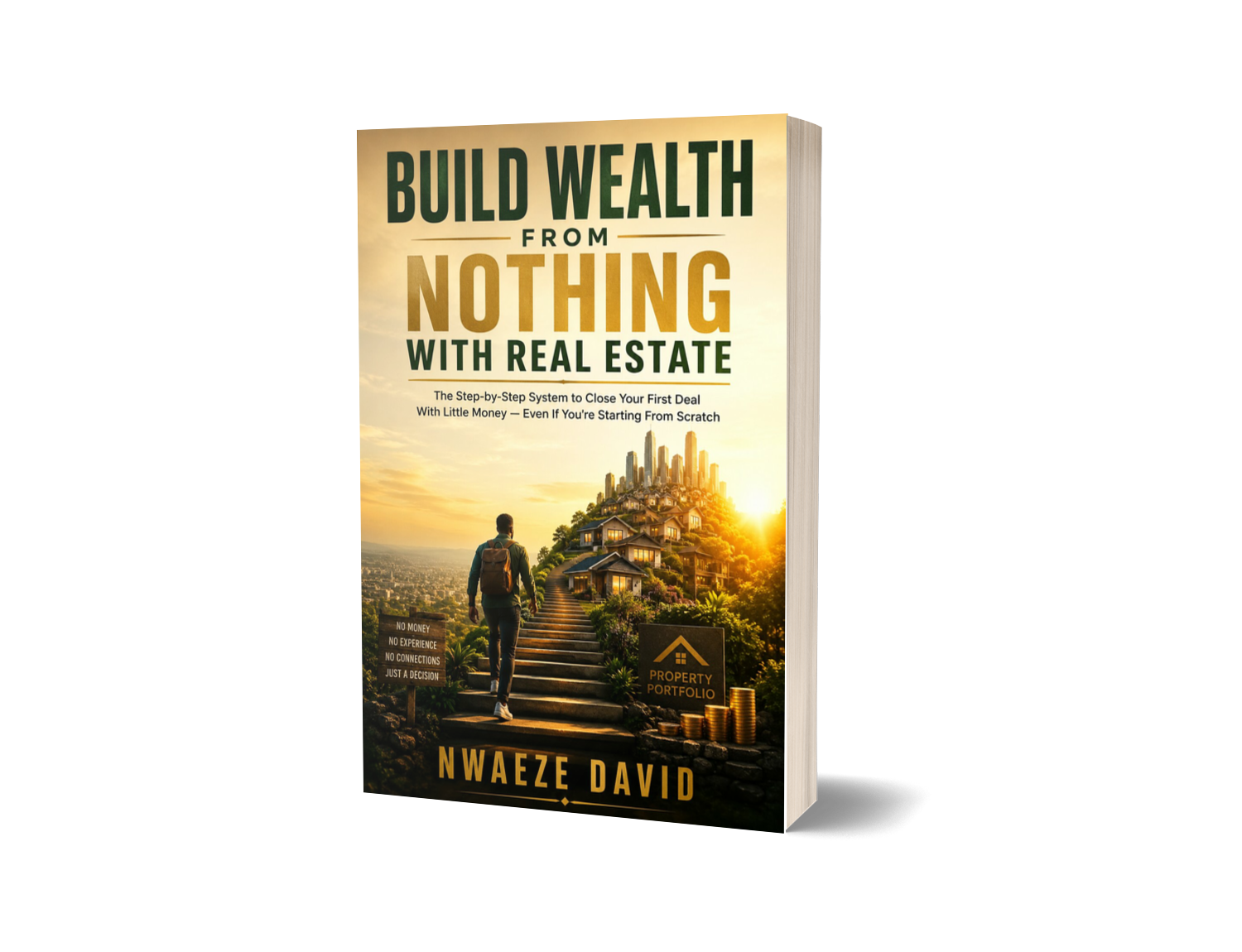
"You don't need a big deposit, perfect credit, or family money to build wealth in real estate. You need a system, the resourcefulness to work it, and the courage to start."
Get Your Copy →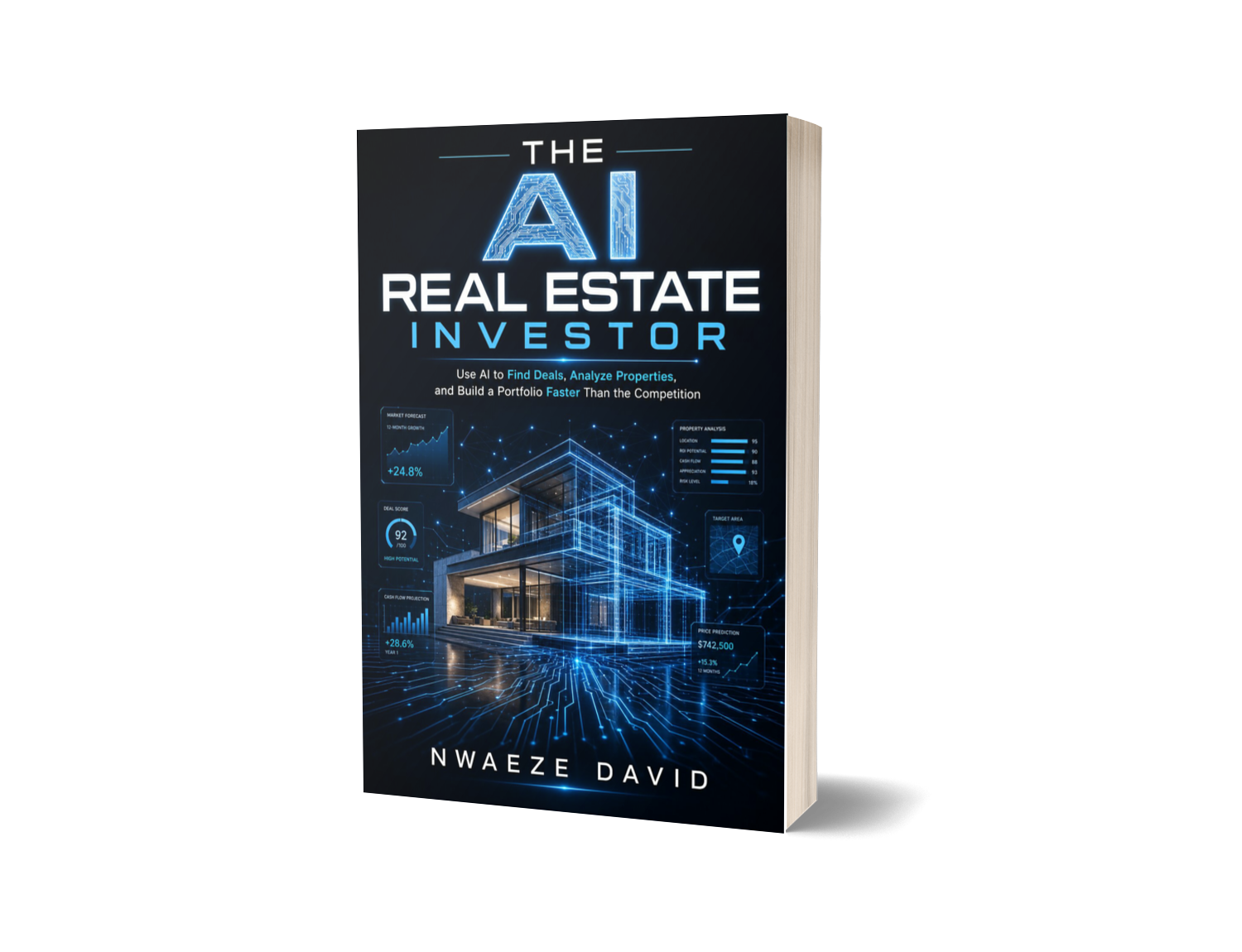
"The AI Real Estate Investor gives you that system. It shows you exactly how to point AI at the parts of your business that actually make money."
Get Your Copy →
"The Diaspora Property Blueprint is the complete, step-by-step system for buying land and building wealth back home safely, from anywhere in the world."
Get Your Copy →Get honest market reads, not hype
Join the newsletter for clear, no-hype breakdowns of what the current market actually means for your money, then step inside the private community where we talk through real deals and whether they clear the bar right now.
Keep learning: real estate market trends · real estate vs stocks · real estate investing for beginners · is now a good time to buy a house? · real estate investing in a recession.
Education only, not financial advice or a forecast guarantee. Real estate markets vary enormously by city and neighborhood, and every figure cited reflects data available at the time of publishing, it will change. Comparisons to cash, treasury bills, and other alternatives are illustrative, not personalized recommendations. Speak to a licensed financial professional and verify current data before making any investment decision.

Written by
Nwaeze David
Nigerian digital entrepreneur, educator and author of three real estate books. He writes practical, honest guides for new investors, working realtors and Africans building back home from abroad.